Loading, please wait...
Details
LOT 2463
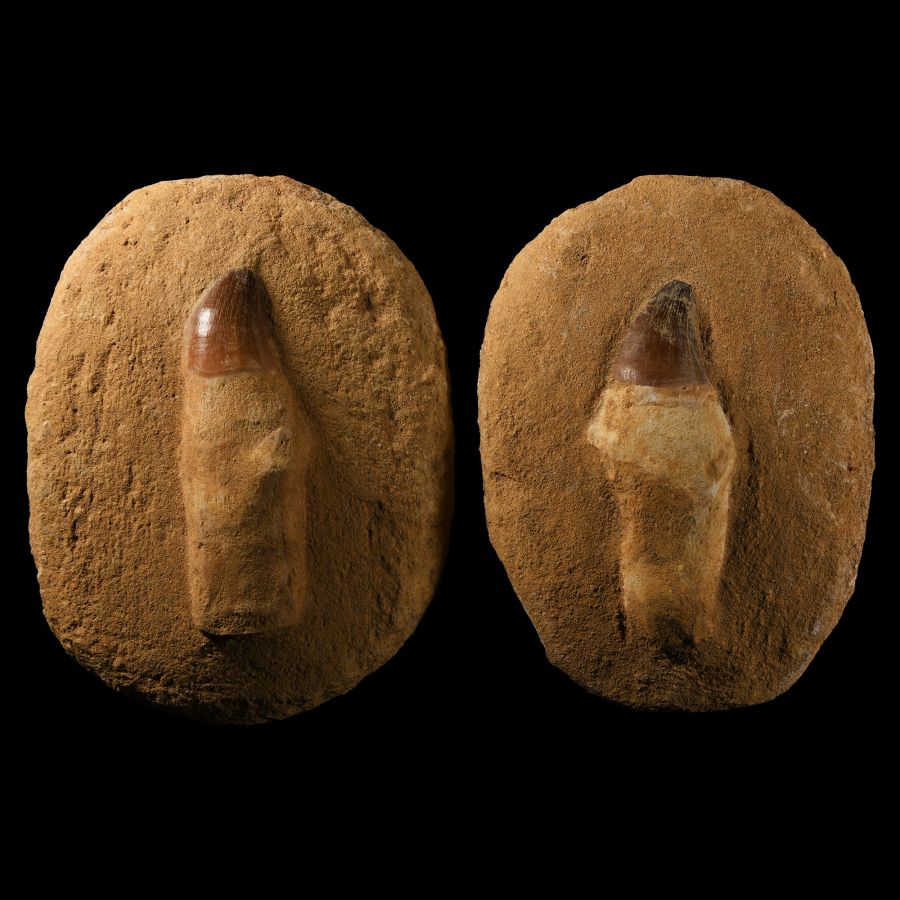
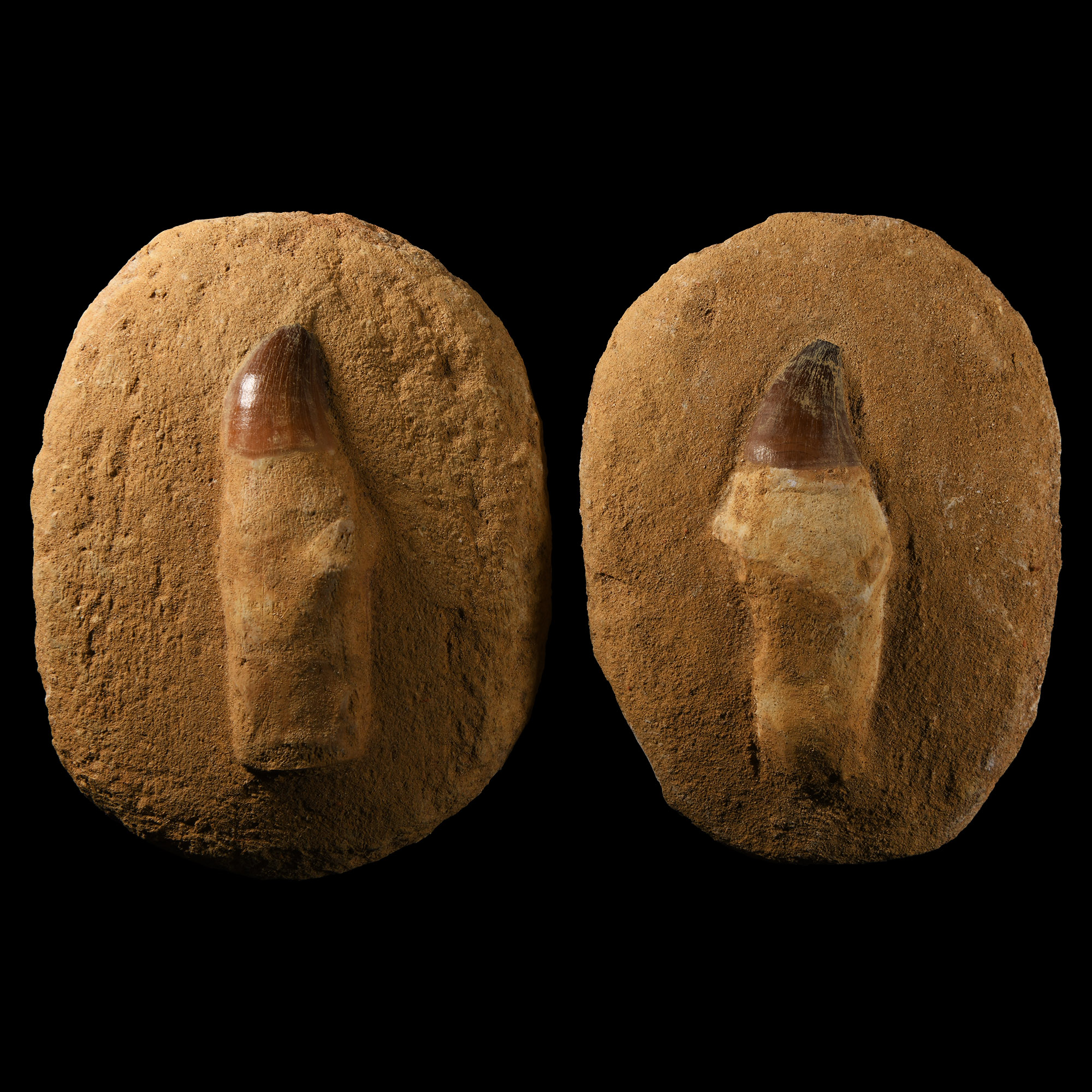
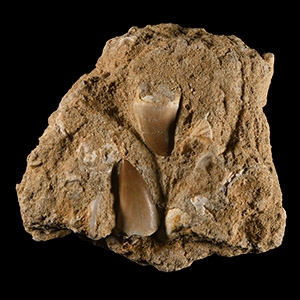
Natural History - Fossil Mosasaur Tooth Pair
CRETACEOUS PERIOD, 145-65 MILLION YEARS B.P.
5 1/4 - 5 3/8 in. (1.3 kg total, 13.4-13.7 cm).
With root, each tooth set in composite rock matrix. [2, No Reserve]
Provenance
From a Cambridgeshire, UK, collection.
CONDITIONVETTING:
TimeLine Auctions follows a vetting process to ensure the authenticity and legality of all items, reinforcing our commitment to integrity and responsible trading. Each antiquity, antique, and coin lot undergoes thorough examination by a vetting committee of at least ten external specialists, professional trade association members, scientists, and archaeologists: Our Vetting Process
AUCTIONS:
TimeLine is a leading auction house specialising in antiquities, ancient art, collectables, natural history, coins, medals, and books. Our auctions offer museums, collectors, historians, and enthusiasts the opportunity to acquire unique and historically significant pieces.
RELATED LOTS
-
Natural History - Fossil Diplomystus Fish
Eocene Period, 56-33 million years B.P.Sold for (Inc. bp): £33
In a matrix. 112 grams, 13.2 x 8.5 cm
Fine condition.
From the Green River Formation, Lincoln County, Wyoming, U.S.A. From an old Lincoln collection.
Seasonally, some 56 million years ago, in the Green River Region of Wyoming, torrential rains fell on the mountains. The rain flowed down the mountain sides, forming wide shallow lakes in the valley below. During the dry season, these lakes evaporated (similar to certain parts of Africa today). Millions of fish died in this short period of time. This climatic cycle happened over a 20-thousand-year period. Layer upon layer of mud was deposited over these years, entombing huge numbers of fish. At a much later date volcanic activity uplifted this area to expose their fossils. -
Natural History - Knightia Fossil Fish in Matrix
Eocene Period, 58-33 million years B.P.Sold for (Inc. bp): £46
Displaying a fossil Knightia sp. fish. 621 grams, 15.5 cm
Acquired during the 1980s. From the Pradi Collection, Boston, U.S.A.
In southwest Wyoming (and parts of Colorado and Utah) in the Green River Formation are found some of the world's most outstanding specimens of fossil fish. The Green River system was composed of three lakes: Lake Ulinta, Lake Gosiute and Fossil Lake. These Eocene lakes lay in a series of intermountain basins formed by geological events that uplifted the Rocky Mountains during the early Tertiary time. The climate was much different from the desert-like climate of this area today. Both the fauna (crocodiles, alligators, boa constrictors and some subtropical fish families) and the flora (such as large palm trees) indicate a climate much like that found along the Gulf Coast today. Large amounts of ash found in the sediments indicate that volcanoes were particularly active at this time. -
Natural History - Campo del Cielo Meteorite Group
Fell 6000-5000 years B.P.Sold for (Inc. bp): £72
Two nickel iron (IAB) meteorites with irregular surfaces and a composition of 92.9% iron, 6.7% nickel. 4.3 grams total, 18-20 mm
Discovered 1576 A.D., Chaco Province, Argentina. Ex German dealer 2018. UK private collection. Accompanied by a previous dealer's identification card.
A crater field of roughly 26 craters was found in the vicinity of this crater, which is estimated to date to 4-5 thousand years BP. The age of the meteorite itself is thought to be c.4.5 billion years, formed as part of the development of this solar system. The largest two fragments, the 30.8 ton Gancedo and 28.8 ton El Chaco, are among the heaviest meteorite masses ever recovered on Earth. In 1576, the governor of a province in Northern Argentina commissioned the military to search for a large mass of iron, which it was believed local people claimed had fallen from the sky and which they used for their weapon production. The expedition discovered a large mass of metal which was assumed to be an iron mine and brought back a few samples, which were described as being of unusual purity. Following the legends, in 1774 Don Bartolomé Francisco de Maguna rediscovered the iron mass. He himself did not believe that the stone had fallen from the sky and assumed that it had formed by a volcanic eruption. However, he sent the samples to the Royal Society of London. In 1990 it became protected by law.