Loading, please wait...

Use mousewheel to zoom in and out, click to enlarge

Details

LOT 2232

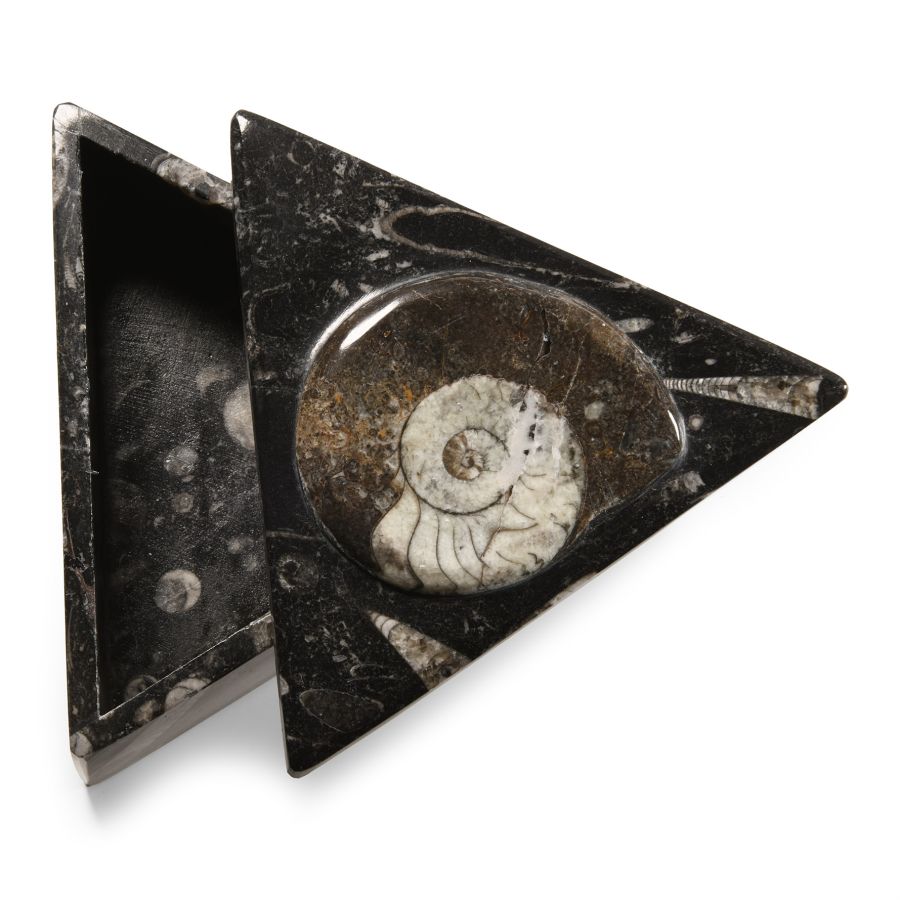
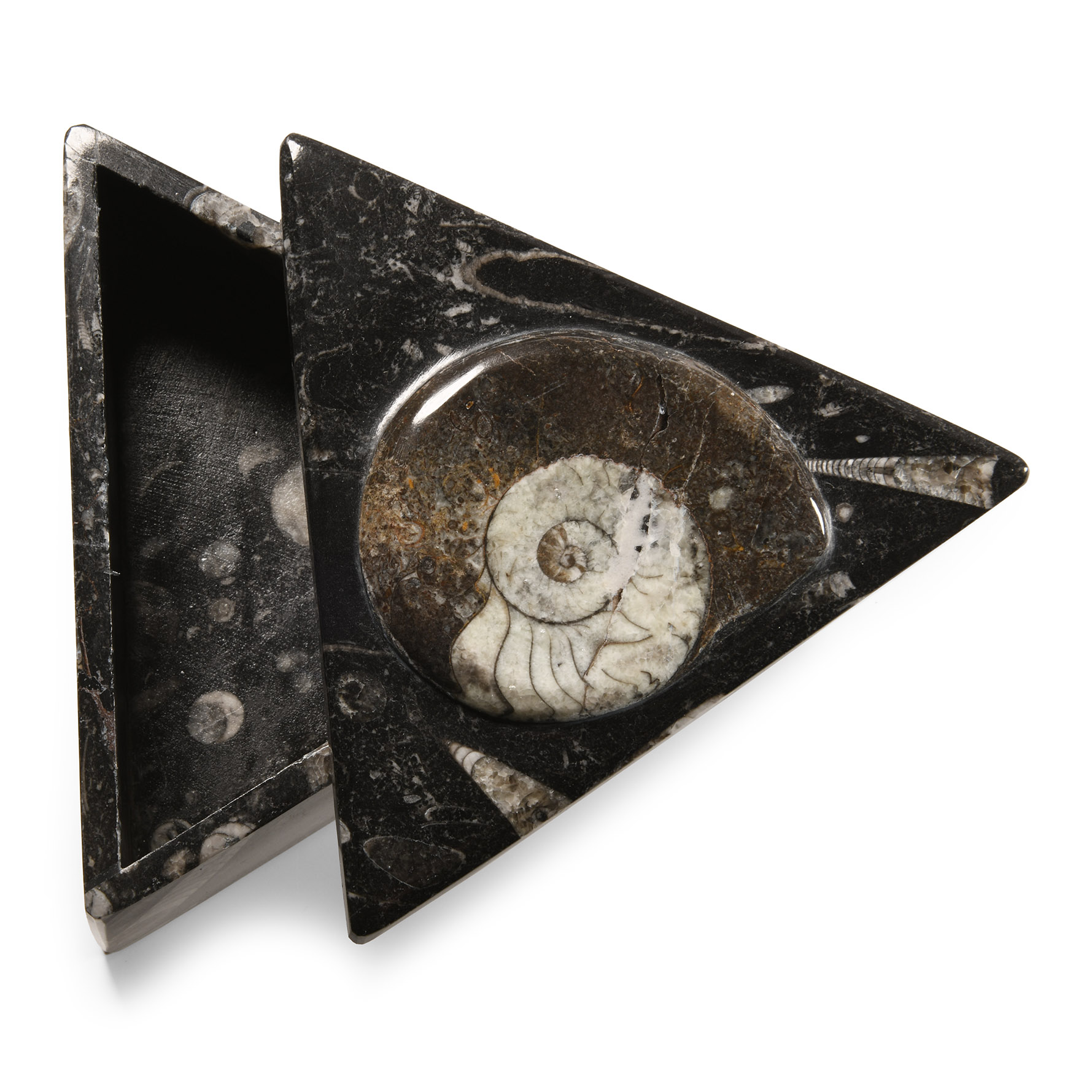
Natural History - Fossil Goniatite Lidded Trinket Box

DEVONIAN PERIOD, CIRCA 417-354 MILLION YEARS B.P.

4 3/4 in. (470 grams, 12 cm).

The triangular box and lid carved from fossiliferous stone containing Orthoceras sp. and Goniatite sp. fossils; the lid set with a large goniatite fossil. [No Reserve]

Provenance

From a Cambridgeshire, UK, collection.
Property of a Cambridgeshire, UK, gentleman.

CONDITION

VETTING:

TimeLine Auctions follows a vetting process to ensure the authenticity and legality of all items, reinforcing our commitment to integrity and responsible trading. Each antiquity, antique, and coin lot undergoes thorough examination by a vetting committee of at least ten external specialists, professional trade association members, scientists, and archaeologists: Our Vetting Process


AUCTIONS:

TimeLine is a leading auction house specialising in antiquities, ancient art, collectables, natural history, coins, medals, and books. Our auctions offer museums, collectors, historians, and enthusiasts the opportunity to acquire unique and historically significant pieces.

LOT 2232

Natural History - Fossil Goniatite Lidded Trinket Box

Sold for (Inc. bp): £13

Print page

RELATED LOTS

  • Natural History - Sikhote Alin Meteorite
    Natural History - Sikhote Alin Meteorite
    Fell 12th February 1947 A.D.

    Sold for (Inc. bp): £85

    A coarse octahedrite class IIB iron meteorite from a witnessed fall in the former USSR, showing exceptional ablation forms and surface preservation, cleaned. 11.7 grams, 19 mm


    Acquired from Steve Arnold, co-star of 'Meteorite Men'. Ian Wilkinson collection, Nottinghamshire, UK.

    Sikhote-Alin is an iron meteorite that fell on February, 13, 1947 on the Sikhote-Alin Mountains in eastern Siberia. Though large iron meteorite falls had been witnessed previously and fragments recovered, never before in recorded history had a fall of this magnitude been observed. An estimated 70 tonnes of material survived the fiery passage through the atmosphere and reached the Earth. The strewn field for this meteorite covered an elliptical area of about 1.3 km2 (0.50 sq mi). Some of the fragments made impact craters, the largest of which was about 26 m (85 ft) across and 6 m (20 ft) deep. Fragments of the meteorite were also driven into the surrounding trees. The Soviet Union issued a stamp for the 10th anniversary of the Sikhote-Alin meteorite shower and this reproduces a painting by P. J. Medvedev, a Soviet artist who witnessed the fall: he was sitting in his window starting a sketch when the fireball appeared, so he immediately began drawing what he saw.

    Lot Details

  • Natural History - Polished Seymchan Meteorite Slab
    Natural History - Polished Seymchan Meteorite Slab
    Found June 1967 A.D.

    Sold for (Inc. bp): £286

    A highly polished rectangular slice of the Seymchan meteorite with an exceptional number of transparent olivine inclusions, repaired. 62.4 grams, 12 cm


    From the private collection of a London gentleman, from his grandfather's collection formed before the early 1970s.

    The main mass of 272.3 kilograms was found during a survey in June 1967 by geologist F. A. Mednikov. The mass was a triangular-shaped thumb printed meteorite lying among the stones of the brook bed. A second specimen of 51 kilograms was found with a mine detector at a distance of 20 meters from the first in October 1967 by I. H. Markov. During a new expedition in 2004, Dmitri Kachalin recovered about 50 kilograms of new material. Remarkably, about 20% of the new specimens were found to contain olivine crystals, and so revealed the silicate nature of the meteorite. The pallasitic structure was not previously discovered during studies on small metal-only sections of the original mass. The distortion of the Widmanstatten patterns is interpreted as shearing of the superheated meteorite as it broke up in the Earth's atmosphere.

    Lot Details

  • Natural History - Fossil Rastellum Bivalve
    Natural History - Fossil Rastellum Bivalve
    Jurassic Period, circa 155 million years B.P.

    Sold for (Inc. bp): £7

    A Rastellum carinatum fossil bivalve. 121 grams, 66 mm


    From a Cambridgeshire, UK, collection. Property of a Cambridgeshire, UK, gentleman.

    Rastellum carinatum specimens have wide, angled ribs that have led to it being called the 'denture clam'; the zig-zag join between the two shells stopped coarse dirt and debris entering the shell and damaging its soft body. Like modern oysters, it lived in shallow coastal waters including the interstitial zone and fed on food particles that it filtered out of the sea water.

    Lot Details

Stay up-to-date with the latest from TimeLine Auctions by joining our mailing list