
Loading, please wait...
LOT 2322
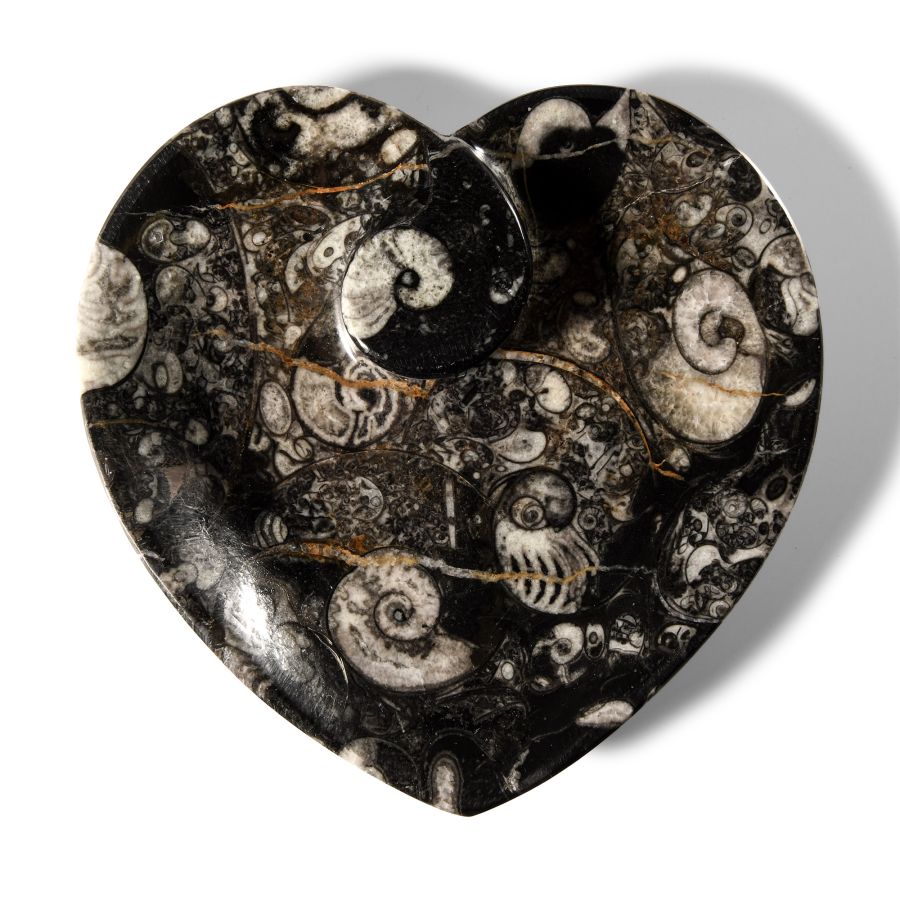
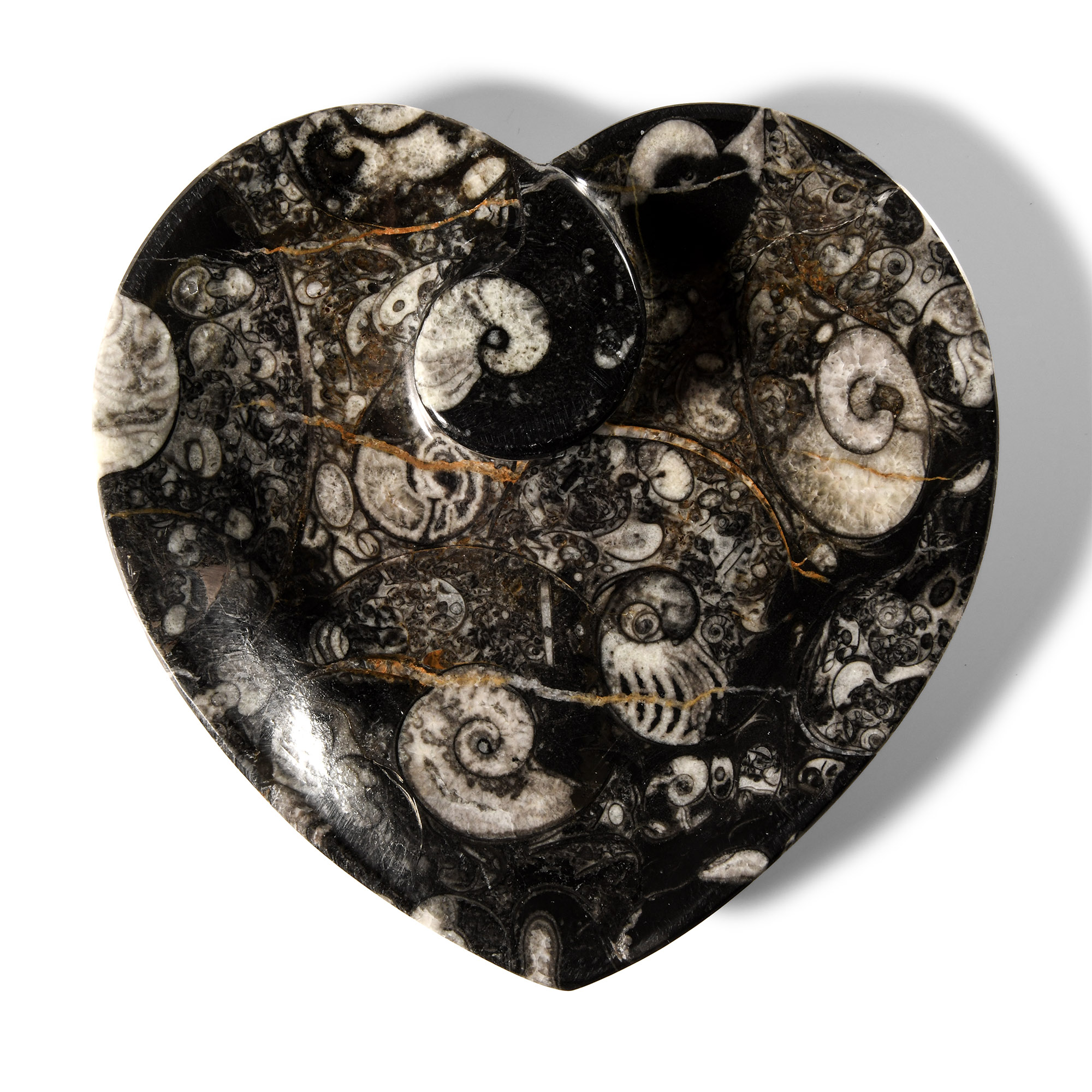
Natural History - Fossil Goniatite Heart-Shaped Trinket Tray
DEVONIAN PERIOD, CIRCA 417-354 MILLION YEARS B.P.
6 1/2 in. (524 grams, 16.5 cm).
The fossiliferous matrix with convex body displaying several fossils with a raised pedestal at the top, set with a single Goniatite sp. fossil. [No Reserve]
ProvenanceFrom a Cambridgeshire, UK, collection.
Property of a Cambridgeshire, UK, gentleman.
TimeLine Auctions follows a vetting process to ensure the authenticity and legality of all items, reinforcing our commitment to integrity and responsible trading. Each antiquity, antique, and coin lot undergoes thorough examination by a vetting committee of at least ten external specialists, professional trade association members, scientists, and archaeologists: Our Vetting Process
AUCTIONS:
TimeLine is a leading auction house specialising in antiquities, ancient art, collectables, natural history, coins, medals, and books. Our auctions offer museums, collectors, historians, and enthusiasts the opportunity to acquire unique and historically significant pieces.
LOT 2322
Natural History - Fossil Goniatite Heart-Shaped Trinket Tray
Sold for (Inc. bp): £46
-
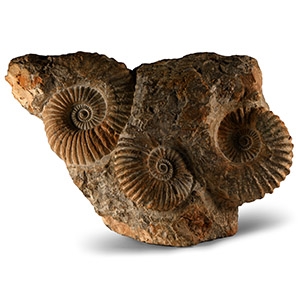
Natural History - Large Triple Agadir Fossil Ammonite Display
Cretaceous Period, 145-66 million years B.P.Sold for (Inc. bp): £234
Comprising three Mellitella sp. fossil ammonites with well preserved ribs. 20.2 kg, 46.5 cm
From a Cambridgeshire, UK, collection. Property of a Cambridgeshire, UK, gentleman. -
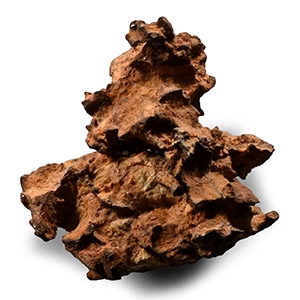
Natural History - Spectacular Imilac Pallasite Meteorite
Discovered in 2010 A.D.Sold for (Inc. bp): £234
Meteorite classified as a stony-iron pallasite, in collector's lidded box with documentation. 10.4 grams, 23 mm
Found in Chile's Atacama desert while filming an episode of the TV series Meteorite Men, the find was caught on camera and is shown in the Meteorite Men 'Chile' episode, at about the 14th minute. Acquired from Steve Arnold, co-star of 'Meteorite Men'. Ian Wilkinson collection, Nottinghamshire, UK. Accompanied by a signed certificate of authenticity card from Steve Arnold, a copy of the sales listing, and an aluminium identification plaque.
Imilac specimens are highly prized by meteorite collectors; the finding of this specimen was caught on camera and formed part of an episode of the TV show 'Meteorite Men'. -
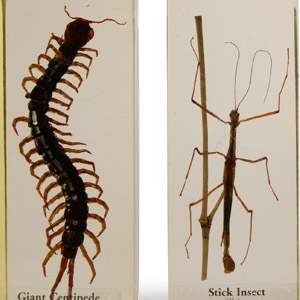
Natural History - Insect Paper Weight Group
20th century A.D.Sold for (Inc. bp): £39
Comprising two insect specimens set in a resin block: a giant centipede from Asia and a stick insect from China. 346 grams total, 11 x 4.4 cm each
Acquired from Newark Fossil and Gem Fair, circa 2012. Ian Wilkinson collection, Nottinghamshire, UK.
