
Loading, please wait...
LOT 0444
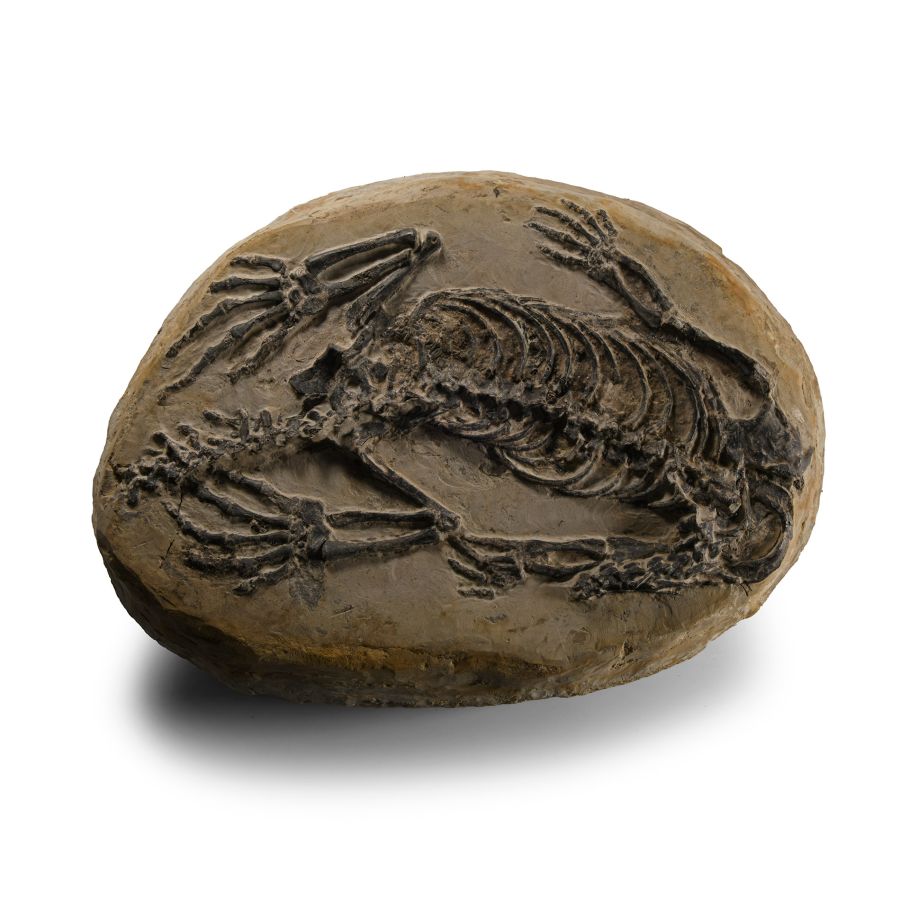
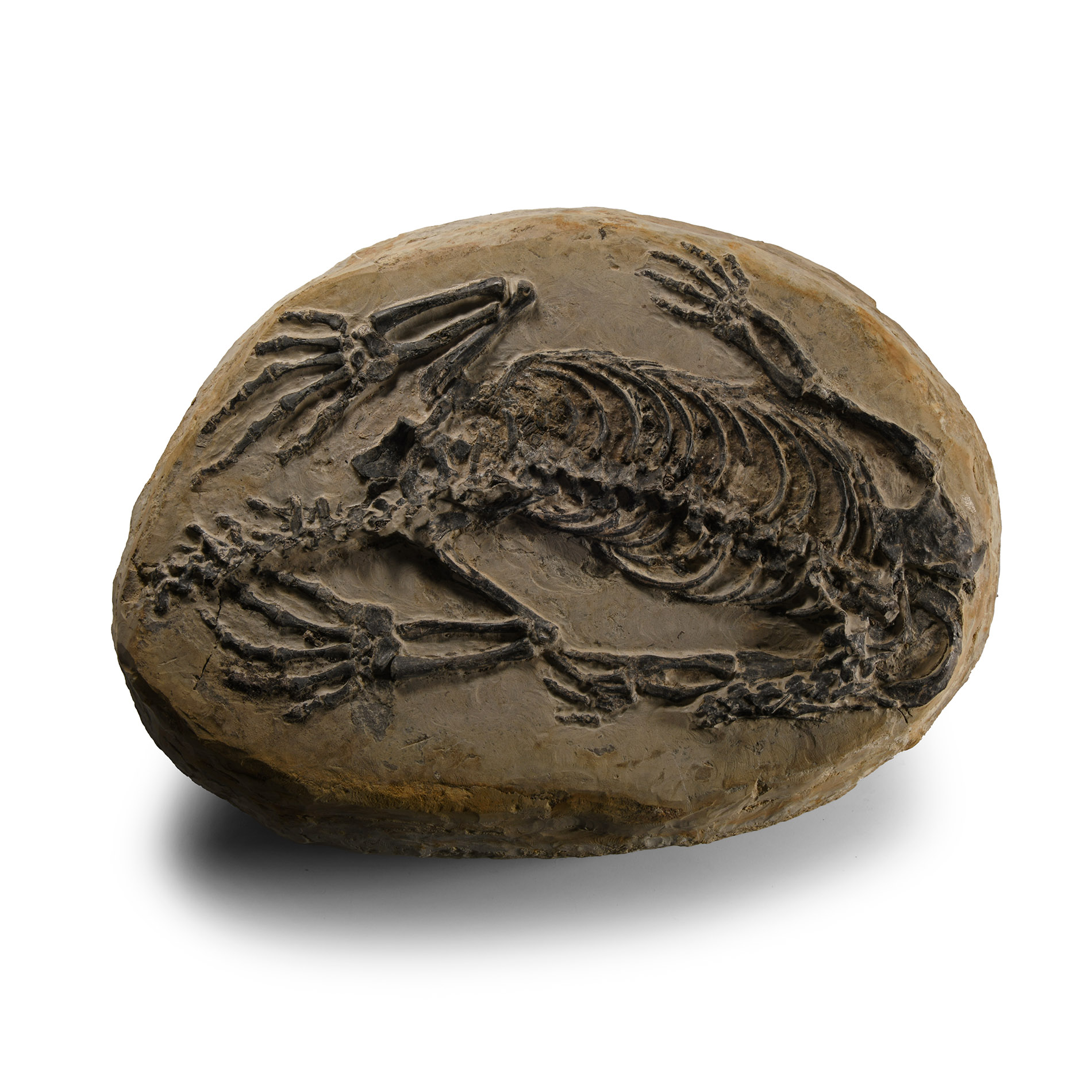
Natural History - Fossil Claudiosaurus Skeleton
LATE PERMIAN-EARLY TRIASSIC PERIOD, CIRCA 252-250 MILLION YEARS B.P.
12 3/4 in. (8.85 kg, 32.5 cm).
On a rounded matrix.
ProvenanceFrom Madagascar.
From a Cambridgeshire, UK, collection.
Claudiosaurus is an extinct genus of diapsid reptiles from the Late Permian Sakamena Formation of the Morondava Basin, Madagascar. It is theorised that this was a semi-aquatic, lizard-like dinosaur.
CONDITIONTimeLine Auctions follows a vetting process to ensure the authenticity and legality of all items, reinforcing our commitment to integrity and responsible trading. Each antiquity, antique, and coin lot undergoes thorough examination by a vetting committee of at least ten external specialists, professional trade association members, scientists, and archaeologists: Our Vetting Process
AUCTIONS:
TimeLine is a leading auction house specialising in antiquities, ancient art, collectables, natural history, coins, medals, and books. Our auctions offer museums, collectors, historians, and enthusiasts the opportunity to acquire unique and historically significant pieces.
-
Natural History - Fossil Sinosura Starfish Group
Jurassic Period, circa 199-145 million years B.P.Sold for (Inc. bp): £7
Comprising three possibly Sinosura kelheimense specimens, a pair on one matrix and the other with one specimen. 146 grams total, 63-70 mm
From Stonhoffen, Germany. From a Lincolnshire, UK, collection. -
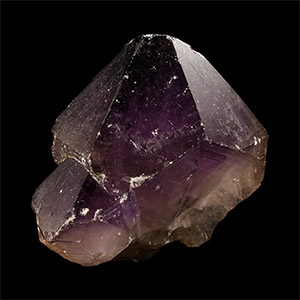
Natural History - Massive Amethyst Crystal Point
Sold for (Inc. bp): £91
The prismatic point in dark purple colour. 710 grams, 10.8 cm
From Brazil. Ex Mineral Imports, London, UK. Gregory, Bottley & Lloyd (Gregory's). -
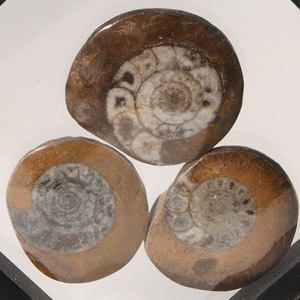
Natural History - Polished Fossil Goniatite Group
Devonian Period, circa 417-354 million years B.P.Sold for (Inc. bp): £9
Comprising three polished, dome-shaped buttons, each with a central Goniatite sp. specimen; supplied with a display stand. 65 grams total, 29-31 mm
From the Atlas Mountains of Morocco, North Africa. From a Lincolnshire, UK, collection.
