
Loading, please wait...
LOT 2500
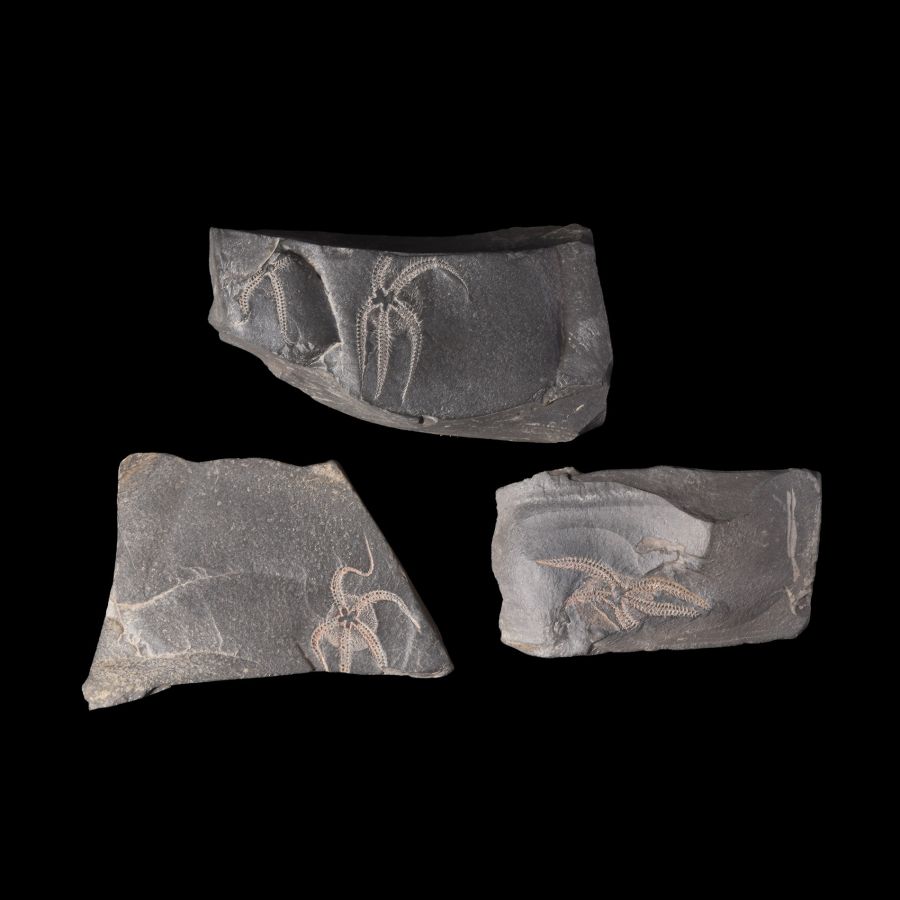
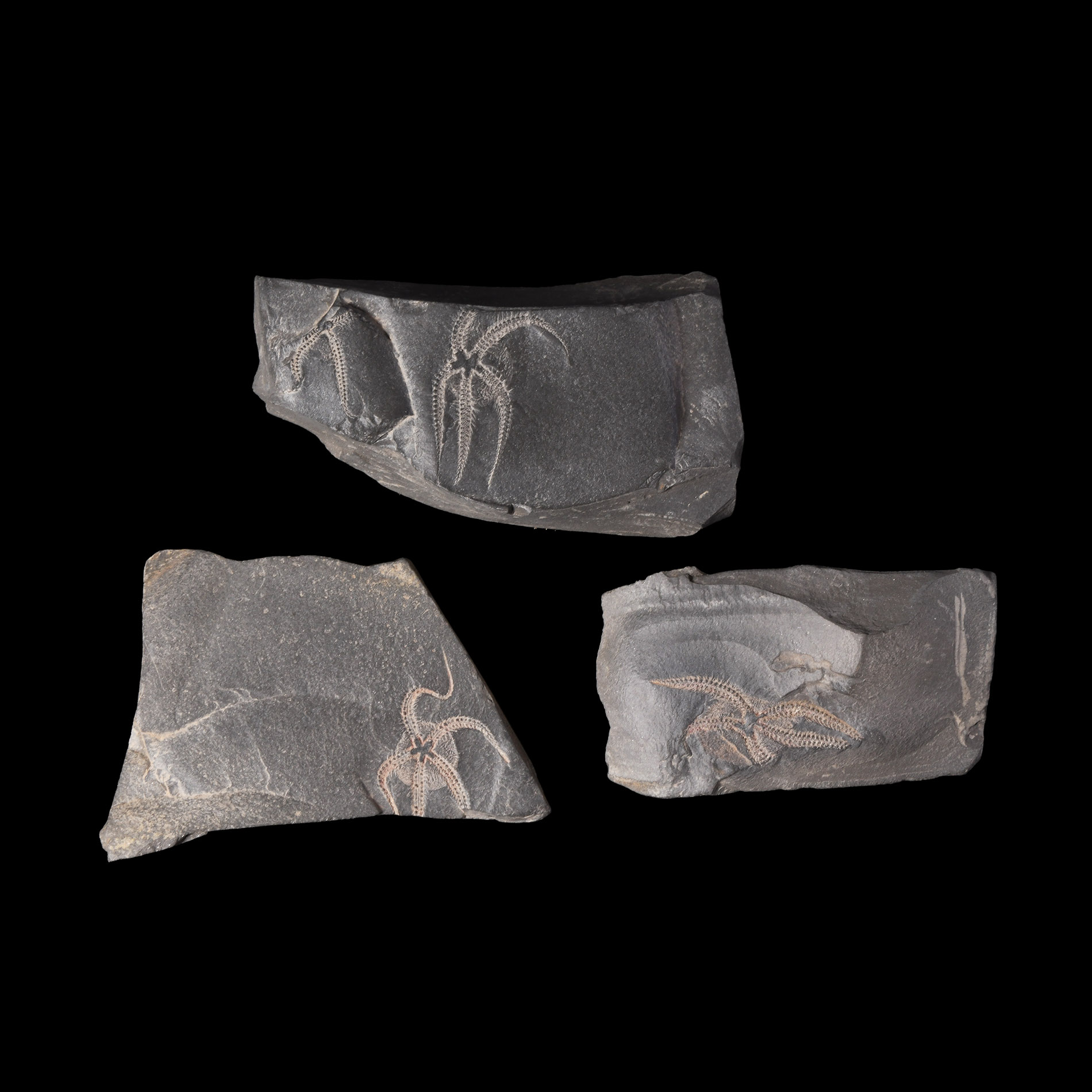
Natural History - Fossil Brittle Star Group
ORDOVICIAN PERIOD, 485-444 MILLION YEARS B.P.
3 1/8 - 3 7/8 in. (410 grams total, 79-97 mm).
Comprising three matrices displaying four partial Ophiuroidea sp. brittle stars; held in a white card collector's tray. [3, No Reserve]
ProvenanceFrom El Kaid Errami, Tafilalt, Morocco, North Africa.
Ex an old German paleontological collection.
TimeLine Auctions follows a vetting process to ensure the authenticity and legality of all items, reinforcing our commitment to integrity and responsible trading. Each antiquity, antique, and coin lot undergoes thorough examination by a vetting committee of at least ten external specialists, professional trade association members, scientists, and archaeologists: Our Vetting Process
AUCTIONS:
TimeLine is a leading auction house specialising in antiquities, ancient art, collectables, natural history, coins, medals, and books. Our auctions offer museums, collectors, historians, and enthusiasts the opportunity to acquire unique and historically significant pieces.
-

Natural History - Fossil Rainbow Shell Ammonite
Middle Cretaceous Period, 150 million years B.P.Sold for (Inc. bp): £26
Displaying iridescence, possibly Beudanticeras sp. 200 grams, 91 mm
From Madagascar. Collected between 1930 and 1960. From the collection of the palaeontologist R Gledhill. -

Natural History - Mosasaur Fossil Tooth Group
Cretaceous Period, 145-65 million years B.P.Sold for (Inc. bp): £20
Of three teeth from Prognathodon sp., mosasaur specialised in eating tough shelled prey. 29.2 grams, 32-39 mm
UK collection since the 1990s. Property of a Sussex, UK, teacher. -

Natural History - Mosasaur Fossil Jaw Section
Late Cretaceous Period, 70 million years B.P.Sold for (Inc. bp): £26
Comprising a partial jaw and two teeth from Igdamanosaurus aegyptiacus. 110 grams, 72 mm
From the Oulad Abdoun Basin, Morocco, North Africa. Collected between 1930 and 1960. From the collection of the palaeontologist R Gledhill.
Most Mosasaurs had sharp teeth that had evolved to grab slippery prey such as fish. Igdamanosaurus had semi-spherical teeth with rounded points, which were better suited for crushing tough-armoured prey such as turtles, ammonites, nautili, and bivalves.
