
Loading, please wait...
LOT 2303
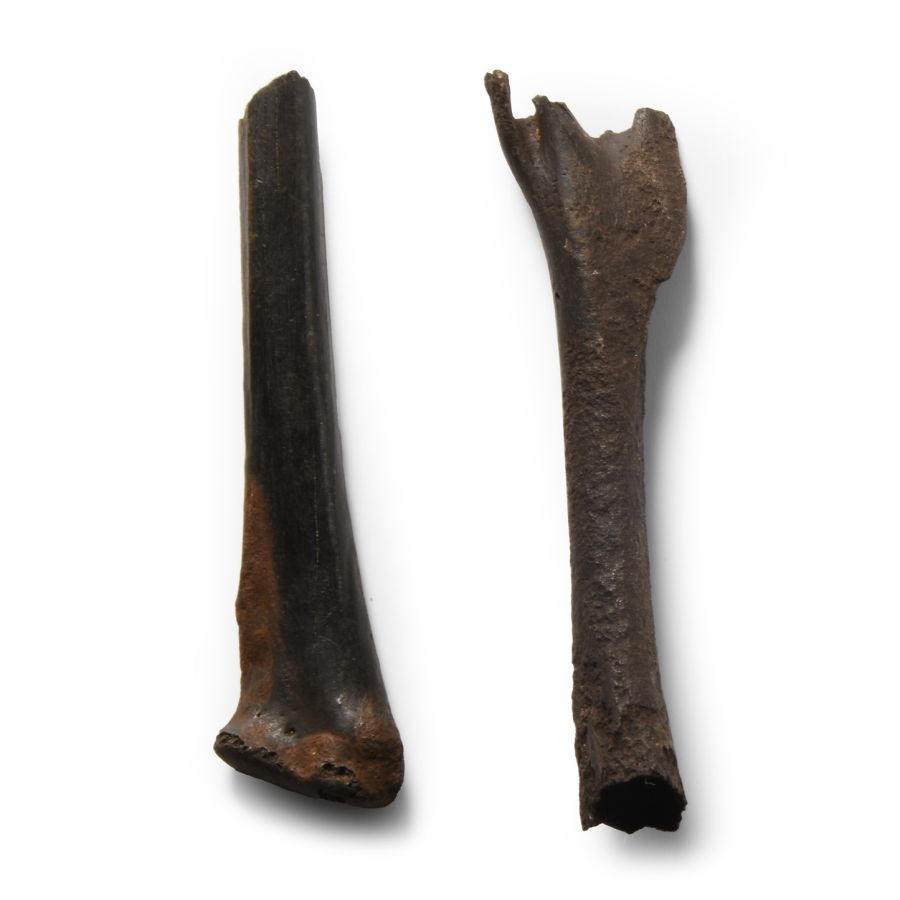
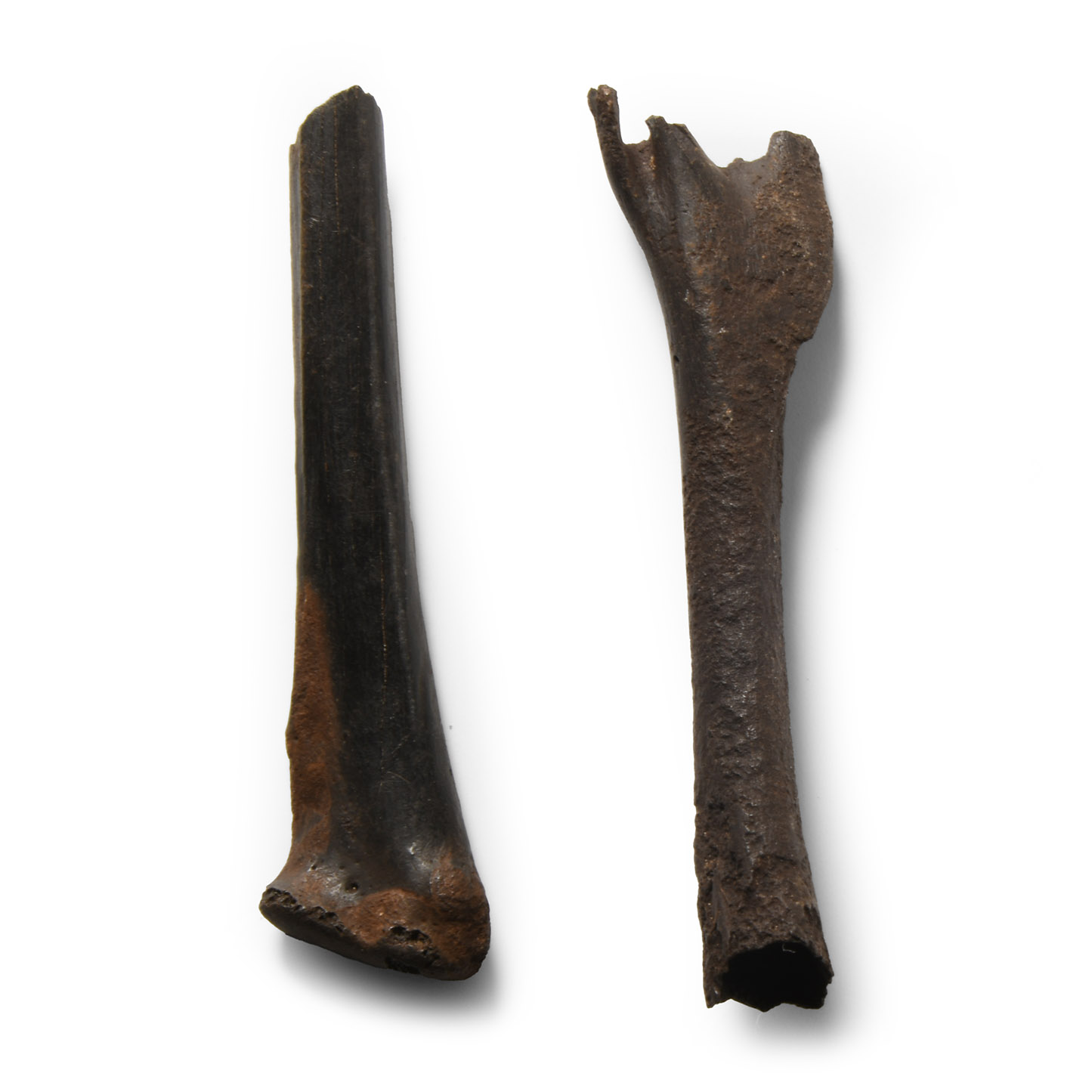
Natural History - Fossil Bird Bone Group
PLEISTOCENE PERIOD, CIRCA 2 MILLION YEARS B.P.
3 - 3 1/8 in. (12.3 grams total, 75-79 mm).
Comprising two large fragments of hollow wading bird bones. [2, No Reserve]
ProvenanceFrom the Rancho La Brea Formation, Maricopa Co., California, USA.
Acquired 1950s-1960s.
From an old Bristol, UK, palaeontological collection.
TimeLine Auctions follows a vetting process to ensure the authenticity and legality of all items, reinforcing our commitment to integrity and responsible trading. Each antiquity, antique, and coin lot undergoes thorough examination by a vetting committee of at least ten external specialists, professional trade association members, scientists, and archaeologists: Our Vetting Process
AUCTIONS:
TimeLine is a leading auction house specialising in antiquities, ancient art, collectables, natural history, coins, medals, and books. Our auctions offer museums, collectors, historians, and enthusiasts the opportunity to acquire unique and historically significant pieces.
-

Natural History - Amethyst Crystal Geode Section Group [10]
Sold for (Inc. bp): £13
Comprising ten cut sections with lavender to dark purple crystal formations. 1.06 kg total, 49-73 mm
From Brazil. Ex Mineral Imports, London, UK. Gregory, Bottley & Lloyd (Gregory's). -

Natural History - Amethyst Crystal Geode Cut Half Collection [6]
Sold for (Inc. bp): £20
Comprising six examples with this outer walls and the internal cavity filled with small lavender-coloured crystals. 338 grams total, 50-75 mm
From Brazil. Ex Mineral Imports, London, UK. Gregory, Bottley & Lloyd (Gregory's). -

Natural History - Daira Fossil Crab
Miocene Period, Messinian, circa 6.5-5 million years B.P.Sold for (Inc. bp): £98
Beautifully preserved Daira speciosa crab on a matrix showing the distinctive surface granulation of the shell; partial shell of another specimen visible on the lower part of the matrix. 114 grams, 70 mm
From Spain. From a Lincolnshire, UK, collection.
The genus is easily recognised by the extreme pustulose nature of the carapace and claws.
