
Loading, please wait...
LOT 2525
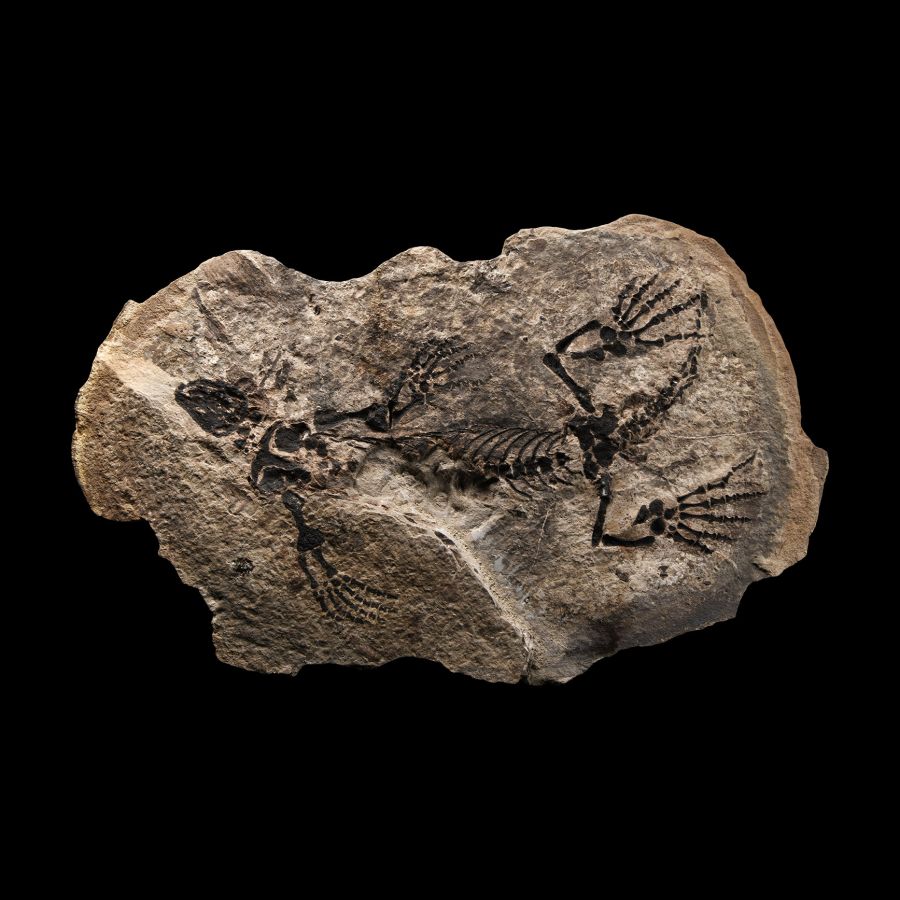
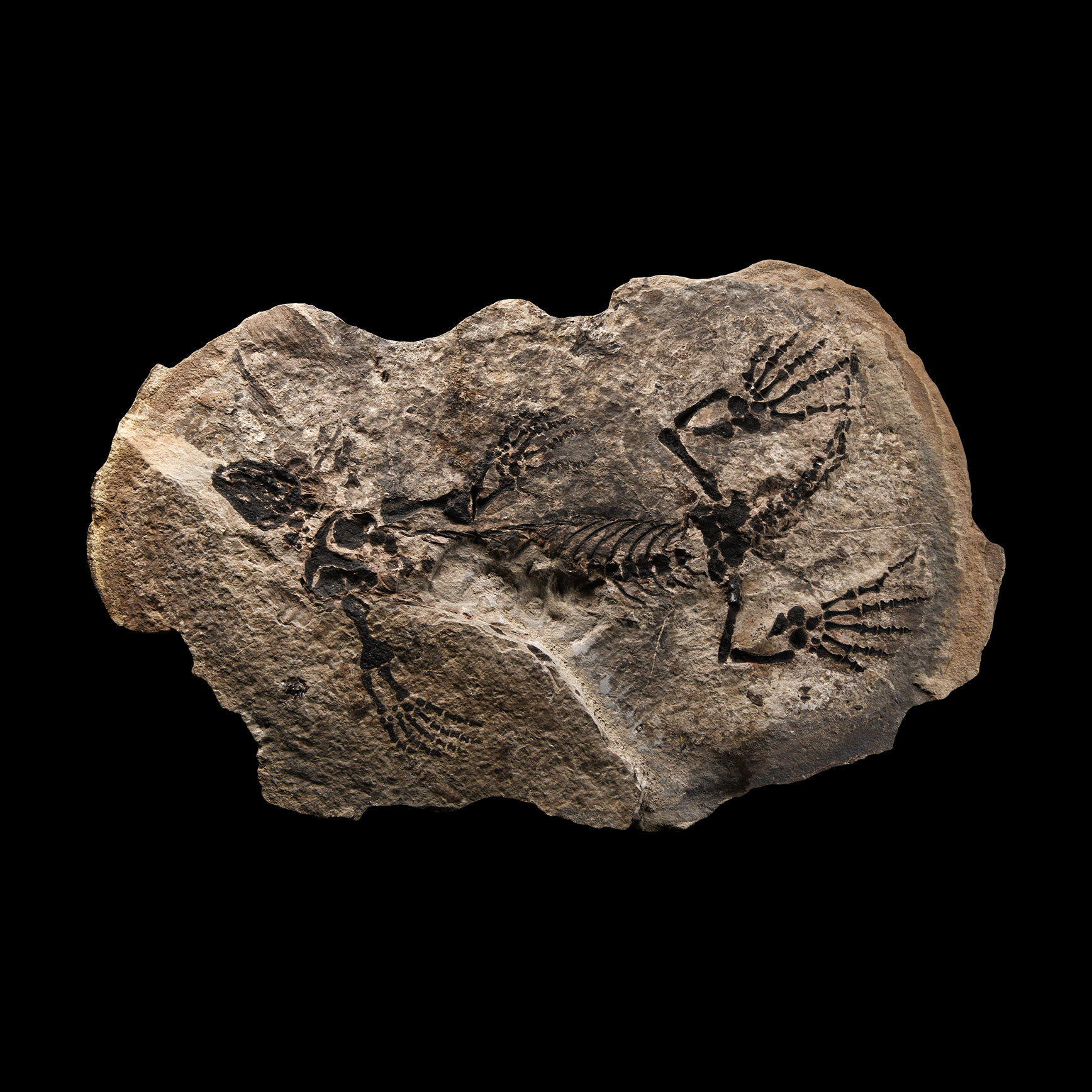
Natural History - Fossil Barasaurus Skeleton
LATE PERMIAN-EARLY TRIASSIC PERIOD, 255 MILLION YEARS B.P.
9 7/8 in. (915 grams, 24.7 cm).
Barasaurus besairiei reptile on a matrix.
ProvenanceFrom Plateau de I'lsala, Madagascar.
Acquired 1950s-1960s.
From an old Bristol, UK, paleontological collection.
Barasaurus is an extinct genus of the Owenettid procolophonoid parareptile.
CONDITIONTimeLine Auctions follows a vetting process to ensure the authenticity and legality of all items, reinforcing our commitment to integrity and responsible trading. Each antiquity, antique, and coin lot undergoes thorough examination by a vetting committee of at least ten external specialists, professional trade association members, scientists, and archaeologists: Our Vetting Process
AUCTIONS:
TimeLine is a leading auction house specialising in antiquities, ancient art, collectables, natural history, coins, medals, and books. Our auctions offer museums, collectors, historians, and enthusiasts the opportunity to acquire unique and historically significant pieces.
LOT 2525
Natural History - Fossil Barasaurus Skeleton
Estimate £400 - 600€460 - 700 (for guidance only)$540 - 810 (for guidance only)
-
.jpg)
Natural History - Woolly Mammoth Bone Bead Necklace String
Devensian Period, 110,000-12,000 years B.P.Sold for (Inc. bp): £72
Restrung using polished Mammuthus primigenius bone beads. 93 grams, 64 cm long
Ex private collection of a Shropshire, UK, gentleman, 1990s. -

Natural History - Polished Fossil Goniatite Display
Devonian Period, 417-354 million years B.P.Sold for (Inc. bp): £39
Comprising three polished specimens on a freestanding matrix. 1.2 kg, 18.5 cm high
From a Cambridgeshire, UK, collection. -
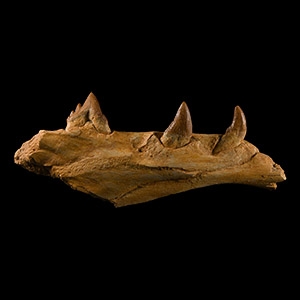
Natural History - Fossil Basilosaurus Jaw Fragment
Eocene Period, 41-34 million years B.P.Sold for (Inc. bp): £260
Comprising three teeth on a jaw fragment. 205 grams, 18.5 cm
From a Cambridgeshire, UK, collection.
Basilosaurus was a large predatory whale that hunted for sharks, large fish and other marine mammals.
