
Loading, please wait...
LOT 0395
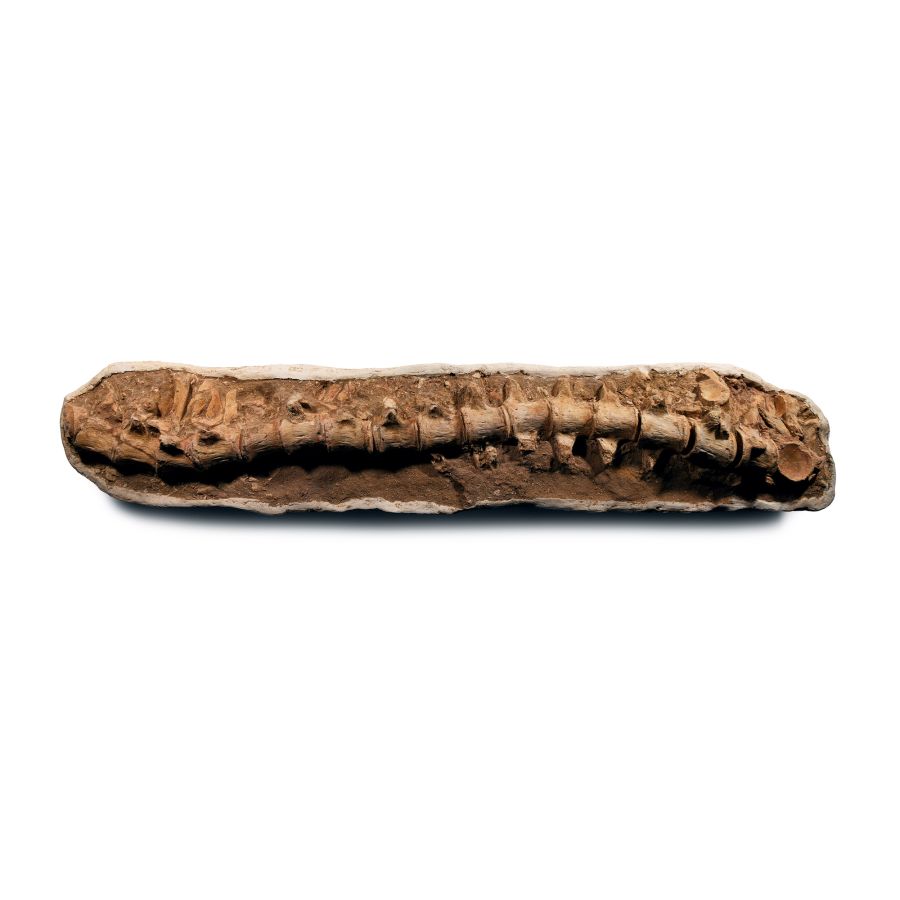
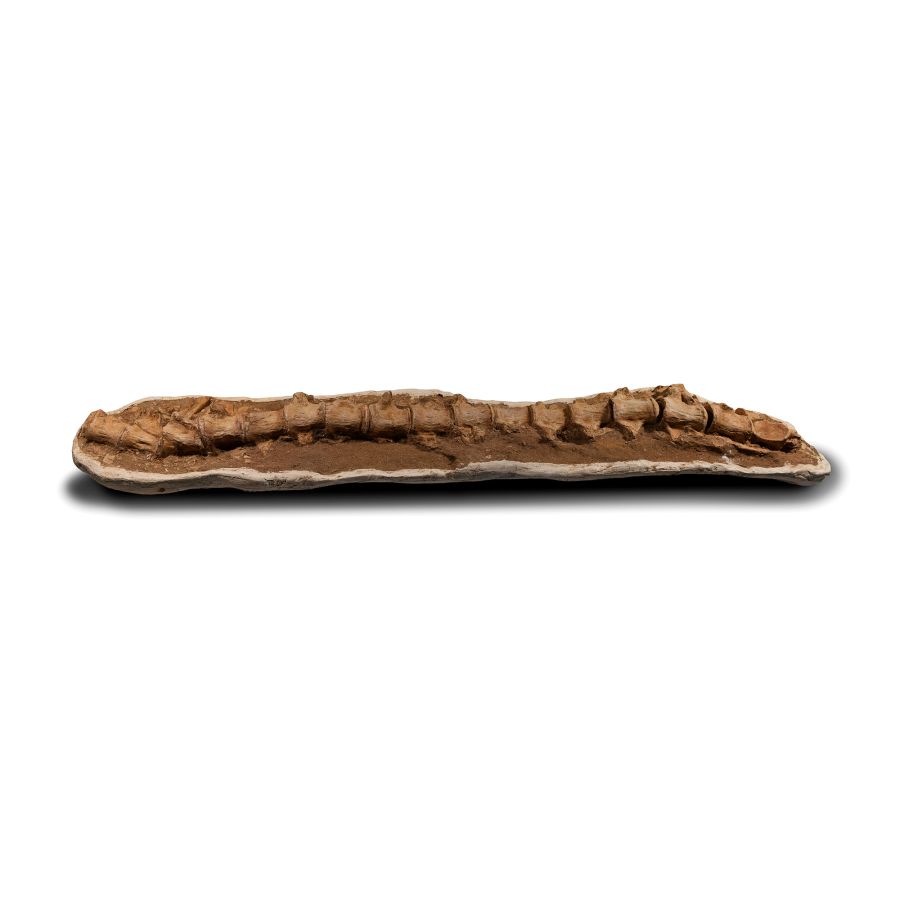
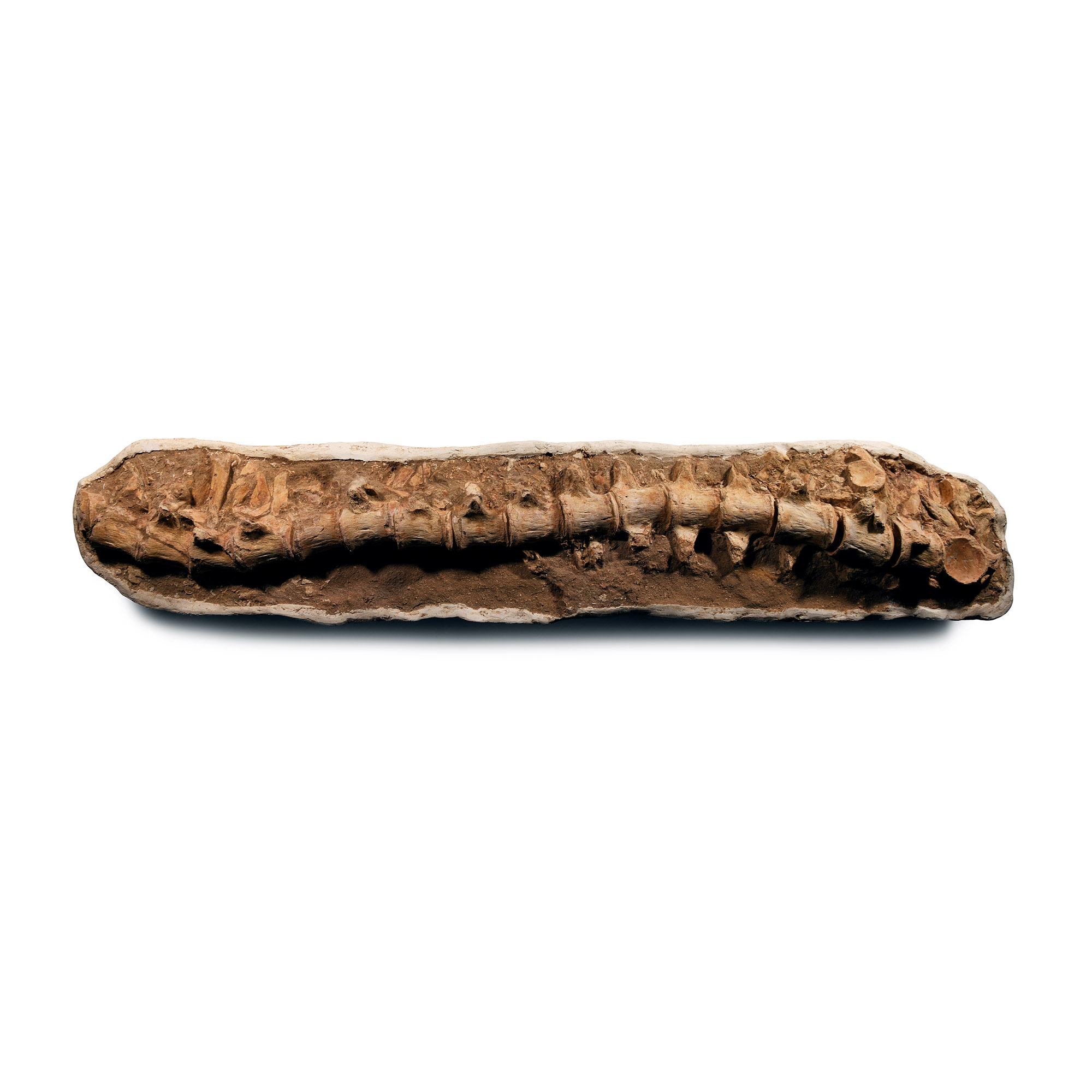
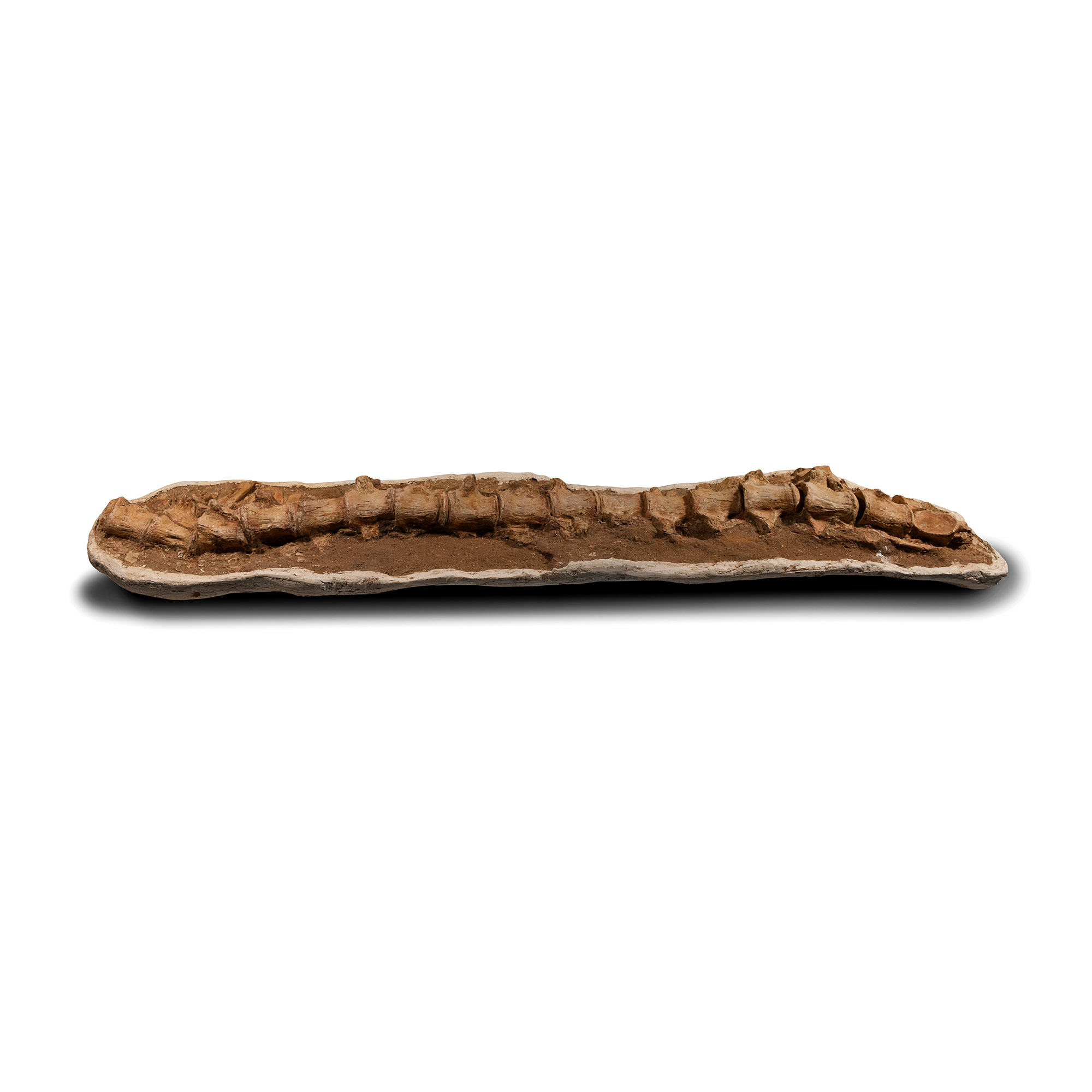
Natural History - Enormous Two Metre Section of Fossil Mosasaur 'Marine Dinosaur' Spine
CRETACEOUS PERIOD, 145-65 MILLION YEARS B.P.
70 1/2 in. (60 kg, 1.79 m).
The spine section comprising sixteen large, perfectly lined dorsal vertebrae with transverse processes with another at each end lying flat, various other vertebrae and rib sections resting next to the spine; on a sedimentary matrix wrapped in a plaster field jacket.
ProvenanceFrom a Cambridgeshire, UK, collection.
Property of a Cambridgeshire, UK, gentleman.
Mosasaurs (from the Greek for 'lizard') were aquatic dinosaurs which probably gave birth to live young.
CONDITIONTimeLine Auctions follows a vetting process to ensure the authenticity and legality of all items, reinforcing our commitment to integrity and responsible trading. Each antiquity, antique, and coin lot undergoes thorough examination by a vetting committee of at least ten external specialists, professional trade association members, scientists, and archaeologists: Our Vetting Process
AUCTIONS:
TimeLine is a leading auction house specialising in antiquities, ancient art, collectables, natural history, coins, medals, and books. Our auctions offer museums, collectors, historians, and enthusiasts the opportunity to acquire unique and historically significant pieces.
LOT 0395
Natural History - Enormous Two Metre Section of Fossil Mosasaur 'Marine Dinosaur' Spine
Sold for (Inc. bp): £910
-
.jpg)
Natural History - Giant British Fossil Belemnite Collection
Jurassic Period, circa 200-145 million years B.P.Sold for (Inc. bp): £72
Comprising six bullet-shaped rostra of Belemnite cylindroteuthis. 368 grams total, 10.2-17.5 cm
Found near Peterborough, Cambridgeshire, UK. Stone Treasures, Midlands, UK, 2017. Ian Wilkinson collection, Nottinghamshire, UK. -
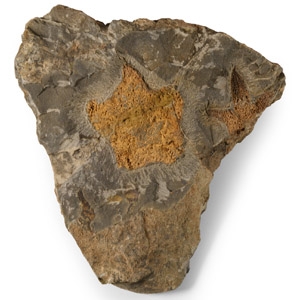
Natural History - Fossil Petraster Starfish on Matrix
Ordovician Period, circa 485-444 million years B.P.Sold for (Inc. bp): £7
Showing a complete and a partial Petraster sp. specimen; repaired. 711 grams, 15.5 cm
From a Cambridgeshire, UK, collection. Property of a Cambridgeshire, UK, gentleman. -
Natural History - Mifflin Meteorite
Found 14 April 2010 A.D.Sold for (Inc. bp): £20
Mifflin meteorite crumb in a drum-shaped capsule. 0.005 grams, 2 mm
Found in Wisconsin, USA, while filming an episode of the TV series Meteorite Men. Acquired from Steve Arnold, co-star of 'Meteorite Men'. Ian Wilkinson collection, Nottinghamshire, UK. Accompanied by an authenticity card signed by Steve Arnold.
