
Loading, please wait...
.JPG_900x900.jpg "Natural History - Diogenite NWA 5480 Meteorite Slice")
.JPG_200x200.jpg "Natural History - Diogenite NWA 5480 Meteorite Slice")
.JPG "Natural History - Diogenite NWA 5480 Meteorite Slice")
LOT 2617
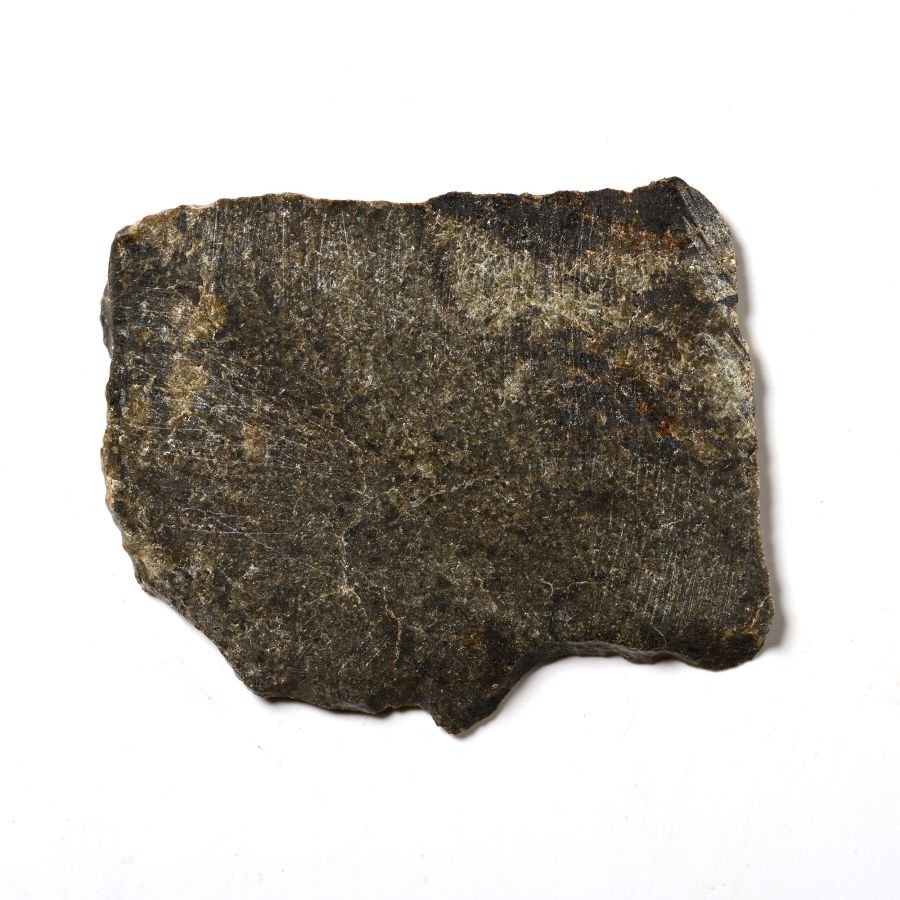
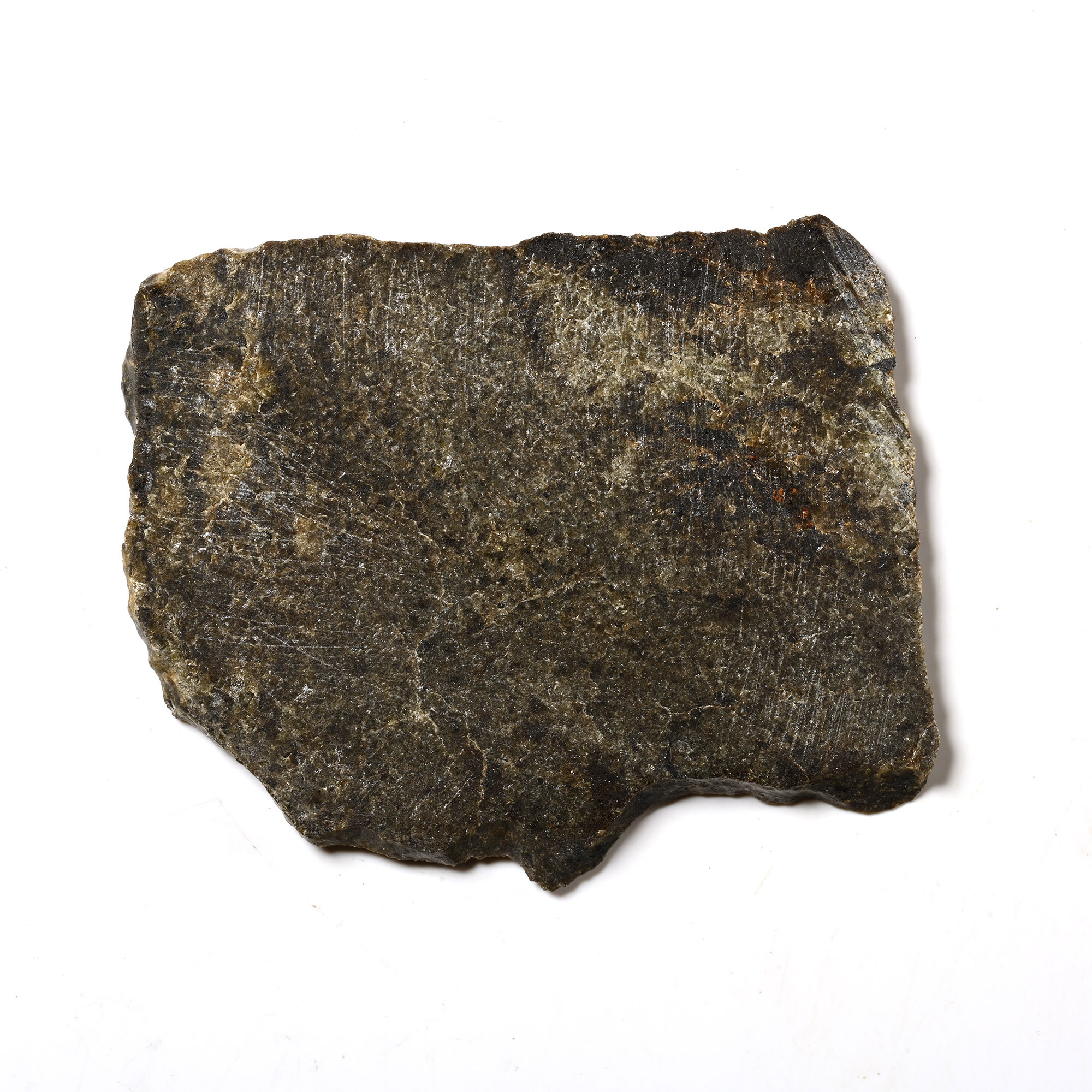
Natural History - Diogenite NWA 5480 Meteorite Slice
FOUND 2008 A.D.
1 7/8 in. (3 7/8 x 3 in.) (11.7 grams, 48 mm (58 grams total, 99 x 75 including case)).
A cut slice of scarce achondrite from the diogenite group recorded as: Northwest Africa 5480; displayed in a Swiss membrane box. [No Reserve]
ProvenanceFrom the Sahara, N.W. Africa.
Ex Hupe collection, U.S.A.
From a Leicestershire, UK, collection.
The total known mass of the meteorite found in Mali was 4.91 kg. Mineralogically, the diogenites are primarily composed of magnesium-rich orthopyroxene, with minor amounts of plagioclase and olivine. The pyroxenes are usually coarse-grained, suggesting a cumulate origin for the diogenites in magma chambers within the deeper regions of Vesta's crust. The achondrites of this group are named after a 5th century B.C. Greek philosopher Diogenes of Apollonia, who was the first to suggest that meteorites originate from outer space.
CONDITIONTimeLine Auctions follows a vetting process to ensure the authenticity and legality of all items, reinforcing our commitment to integrity and responsible trading. Each antiquity, antique, and coin lot undergoes thorough examination by a vetting committee of at least ten external specialists, professional trade association members, scientists, and archaeologists: Our Vetting Process
AUCTIONS:
TimeLine is a leading auction house specialising in antiquities, ancient art, collectables, natural history, coins, medals, and books. Our auctions offer museums, collectors, historians, and enthusiasts the opportunity to acquire unique and historically significant pieces.
-

Natural History - Historic Mineral Specimen Collection
Sold for (Inc. bp): £13
Comprising: a large biotite specimen, collection number 101; septarian nodule fragment from Horsenden Hill, Ealing, Middlesex, England, collection number 216; picrite from Cornwall, England, collection number 426; sard from North Transvaal, South Africa, collection number 197; danburite from Maglovec, East Czechoslovakia, collection number 527; fluorite from Derbyshire, England, collection number 200; chalcedony from Cornwall, England, collection number 25; translucent from selenite from Sahara Desert, Libya, collection number 349; quartz 'sceptre' from Beaverhead County, Montana, USA, collection number 581. 292 grams total, 1.1-18.8 cm
Acquired on the UK mineral and fossil market, since 1970. From the historic mineral collection of Richard Valentine Cain, London, UK, thence by descent. Six specimens accompanied by an original historic index file card. -

Natural History - Freeform Limestone Gogotte
Sold for (Inc. bp): £91
A natural flowing limestone accretion with nodules and inclusions. 464 grams total, 13.1 cm
From the family collection of a Maida Vale lady, UK.
Gogottes were displayed at the chateau of Fontainebleau, France, collected by King Louis XIV (1638 -1715). They were used to decorate the formal gardens of the royal residence at Versailles, especially l’Encelade, Les Trois Fontaines and La Salle de Bal. Elsewhere, they were treasured in Song Dynasty China (960-1127 A.D.) In the 20th century, natural forms inspired the sculptor Henry Moore and others. -

Natural History - Fossil Goniatite Display Stand
Devonian Period, circa 417-354 million years B.P.Sold for (Inc. bp): £33
Comprising four Goniatite sp. specimens on a textured freestanding matrix. 2.19 kg, 21.2 cm
From a Cambridgeshire, UK, collection.
