
Loading, please wait...
![Natural History - Cut and Polished Agate Crystal Geode End Group [4]](https://timelineauctions.com/zoom_images/zoomthumb/2/1/211349_900x900.jpg "Natural History - Cut and Polished Agate Crystal Geode End Group [4]")
![Natural History - Cut and Polished Agate Crystal Geode End Group [4]](https://timelineauctions.com/zoom_images/zoommap/2/1/211349_200x200.jpg "Natural History - Cut and Polished Agate Crystal Geode End Group [4]")
![Natural History - Cut and Polished Agate Crystal Geode End Group [4]](https://timelineauctions.com/upload/images/items/211349.jpg "Natural History - Cut and Polished Agate Crystal Geode End Group [4]")
LOT 2422
Natural History - Cut and Polished Agate Crystal Geode End Group [4]
3 5/8 - 4 1/4 in. (653 grams total, 9.1-10.8 cm).
Comprising four cut and polished ends, one with light coloured banding; one with milky white layer above dark brown banding; one with dark rounded formations forming a 'Mickey Mouse' head; one with light grey and yellow banding forming a 'happy face'. [4, No Reserve]
ProvenanceFrom Brazil.
Ex Mineral Imports, London, UK.
Gregory, Bottley & Lloyd (Gregory's).
TimeLine Auctions follows a vetting process to ensure the authenticity and legality of all items, reinforcing our commitment to integrity and responsible trading. Each antiquity, antique, and coin lot undergoes thorough examination by a vetting committee of at least ten external specialists, professional trade association members, scientists, and archaeologists: Our Vetting Process
AUCTIONS:
TimeLine is a leading auction house specialising in antiquities, ancient art, collectables, natural history, coins, medals, and books. Our auctions offer museums, collectors, historians, and enthusiasts the opportunity to acquire unique and historically significant pieces.
LOT 2422
Natural History - Cut and Polished Agate Crystal Geode End Group [4]
Sold for (Inc. bp): £13
-
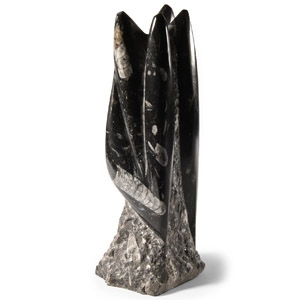
Natural History - Polished Fossil Orthoceras Column
Devonian Period, circa 417-354 million years B.P.Sold for (Inc. bp): £85
Comprising polished Orthoceras sp. specimens on a textured freestanding matrix. 1.85 kg, 24 cm high
From the Atlas Mountains of Morocco, North Africa. From a Cambridgeshire, UK, collection. -
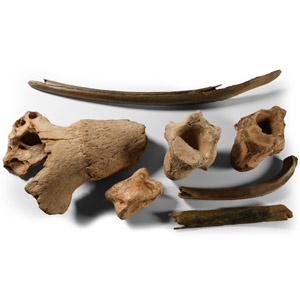
Natural History - British Fossil Bison Bone Collection
Pleistocene Period, circa 2.6 million-11,700 years B.P.Sold for (Inc. bp): £7
Comprising sections of ribs, vertebrae and other bones from Bison priscus. 1.32 kg total, 7.5-40 cm
From Oxfordshire, UK. From a Norfolk, UK, collection. -
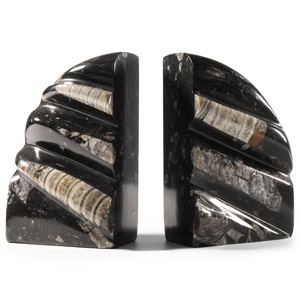
Natural History - Polished Orthoceras Fossil Book End Pair
Devonian Period, circa 417-354 million years B.P.Sold for (Inc. bp): £26
Each polished and cut from a single block containing multiple Orthoceras sp. and other fossil specimens. 3.5 kg total, 15.3 cm high
From Morocco, North Africa. From a Cambridgeshire, UK, collection.
