
Loading, please wait...
![Natural History - Chrysocolla Mineral Sample Group [8]](https://timelineauctions.com/zoom_images/zoomthumb/2/1/211471_900x900.jpg "Natural History - Chrysocolla Mineral Sample Group [8]")
![Natural History - Chrysocolla Mineral Sample Group [8]](https://timelineauctions.com/zoom_images/zoommap/2/1/211471_200x200.jpg "Natural History - Chrysocolla Mineral Sample Group [8]")
![Natural History - Chrysocolla Mineral Sample Group [8]](https://timelineauctions.com/upload/images/items/211471.jpg "Natural History - Chrysocolla Mineral Sample Group [8]")
LOT 2420
Natural History - Chrysocolla Mineral Sample Group [8]
1 1/4 - 2 in. (192 grams total, 33-49 mm).
Comprising eight irregular dark green pieces. [8, No Reserve]
ProvenanceEx Mineral Imports, London, UK.
Gregory, Bottley & Lloyd (Gregory's).
TimeLine Auctions follows a vetting process to ensure the authenticity and legality of all items, reinforcing our commitment to integrity and responsible trading. Each antiquity, antique, and coin lot undergoes thorough examination by a vetting committee of at least ten external specialists, professional trade association members, scientists, and archaeologists: Our Vetting Process
AUCTIONS:
TimeLine is a leading auction house specialising in antiquities, ancient art, collectables, natural history, coins, medals, and books. Our auctions offer museums, collectors, historians, and enthusiasts the opportunity to acquire unique and historically significant pieces.
-
![Natural History - Large Dravite Tourmaline Crystal Specimen Group [8]](https://timelineauctions.com/upload/images/items/small/211398-s.jpg)
Natural History - Large Dravite Tourmaline Crystal Specimen Group [8]
Sold for (Inc. bp): £20
Comprising variously sized prismatic crystals in mica. 1.32 kg total, 53-76 mm
Ex Mineral Imports, London, UK. Gregory, Bottley & Lloyd (Gregory's). -
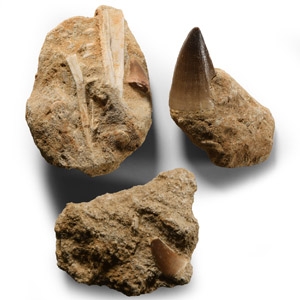
Natural History - Fossil Mosasaur Teeth and Fish Bone Group
Cretaceous Period, circa 145-65 million years B.P.Sold for (Inc. bp): £52
Comprising three Mosasaur prognathodon sp. teeth and various fish bone fragments on a sandstone matrices. 336 grams total, 78-89 mm
From in the phosphate mine region, Khouribga, Morocco, North Africa. From a Cambridgeshire, UK, collection.
The Mosasaur is an extinct, large marine reptile dinosaur with a snake-like body, long snout and paddle-like limbs. Found worldwide, they competed with other well-known sea predators of the Late Cretaceous, such as plesiosaurs and ichthyosaurs, for food, existing primarily on a diet of ammonoids, cuttlefish and fish. -
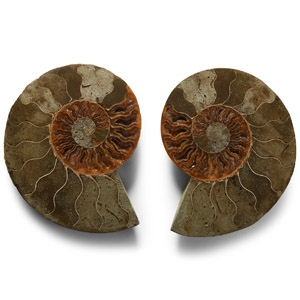
Natural History - Cut and Polished Fossil Ammonite
Middle Cretaceous Period, circa 150 million years B.P.Sold for (Inc. bp): £20
Cleoniceras sp. displaying the distinctive pattern of the cross-section chambers. 360 grams total, 11.3-11.5 cm
From Madagascar. Collected between 1930 and 1960. From the collection of the palaeontologist R Gledhill.
