
Loading, please wait...
_900x900.jpg "Natural History - Bead Necklace String")
_200x200.jpg "Natural History - Bead Necklace String")
.jpg "Natural History - Bead Necklace String")
LOT 2475
Natural History - Bead Necklace String
20TH CENTURY A.D.
19 1/4 in. (800 grams, 49 cm long).
Composed of graduated polished coral or glass beads of drum type. [No Reserve]
ProvenanceUK gallery, early 2000s.
CONDITIONTimeLine Auctions follows a vetting process to ensure the authenticity and legality of all items, reinforcing our commitment to integrity and responsible trading. Each antiquity, antique, and coin lot undergoes thorough examination by a vetting committee of at least ten external specialists, professional trade association members, scientists, and archaeologists: Our Vetting Process
AUCTIONS:
TimeLine is a leading auction house specialising in antiquities, ancient art, collectables, natural history, coins, medals, and books. Our auctions offer museums, collectors, historians, and enthusiasts the opportunity to acquire unique and historically significant pieces.
-
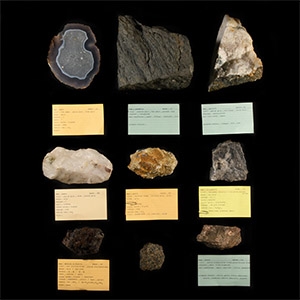
Natural History - Historic Mineral Specimen Collection
Sold for (Inc. bp): £26
Comprising: a cut and polished agate geode section, collection number 335; a large section of ignimbrite, collection number 87; quartz from Rhandir-Mwyn, near Llandovery, Dyfed, Wales, collection number 331; white quartz, collection number 403; schist from Skiathos Island, Greece, collection number 513; quartzite, collection number 86; siderite in chlorite from Devon, England, collection number 281; boulangerite from Noche Bvena, Zacatecas, Mexico, collection number 619, with an old Richard Tayler Minerals label; granite from the A40 construction works, Middlesex, England, collection number 503. 11 kg total, 7-19 cm
Acquired on the UK mineral and fossil market, since 1970. From the historic mineral collection of Richard Valentine Cain, London, UK, thence by descent. Eight specimens accompanied by an original historic index file card. -
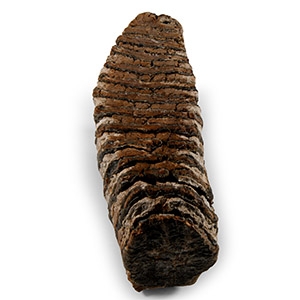
Natural History - Large Fossil Woolly Mammoth Tooth
Pleistocene Period, 2.6 million-11,700 years B.P.Sold for (Inc. bp): £130
A complete Mammuthus primigenius tooth. 2.5 kg, 22 cm
Acquired on the UK art market. Property of a Cambridgeshire, UK, gentleman. -
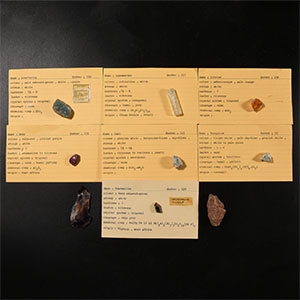
Natural History - Historic Mineral Specimen Collection
Sold for (Inc. bp): £33
Comprising: ruby from East Africa, collection number 172; orange citrine, collection number 296; aventurine, collection number 306; colourless aquamarine from Minas Gerais, Brazil, collection number 157; blue opal, collection number 141; a cut and polished amethyst slice from Brazil, collection number 360; deep seaweed-green tourmaline from Nigeria, West Africa, collection number 329; turquoise from Cornwall, England, collection number 22; agate from North Transvaal, South Africa, collection number 198. 53 grams total, 13-55 mm
Acquired on the UK mineral and fossil market, since 1970. From the historic mineral collection of Richard Valentine Cain, London, UK, thence by descent. Seven specimens accompanied by an original historic index file card.
