
Loading, please wait...
LOT 2365
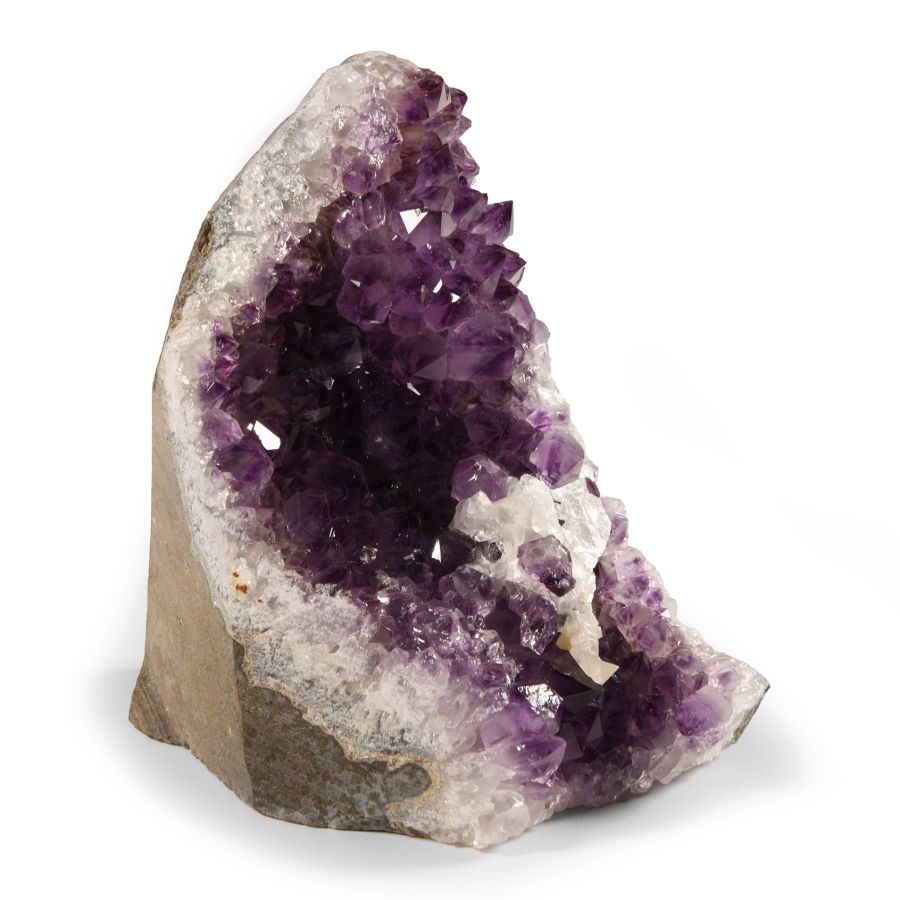
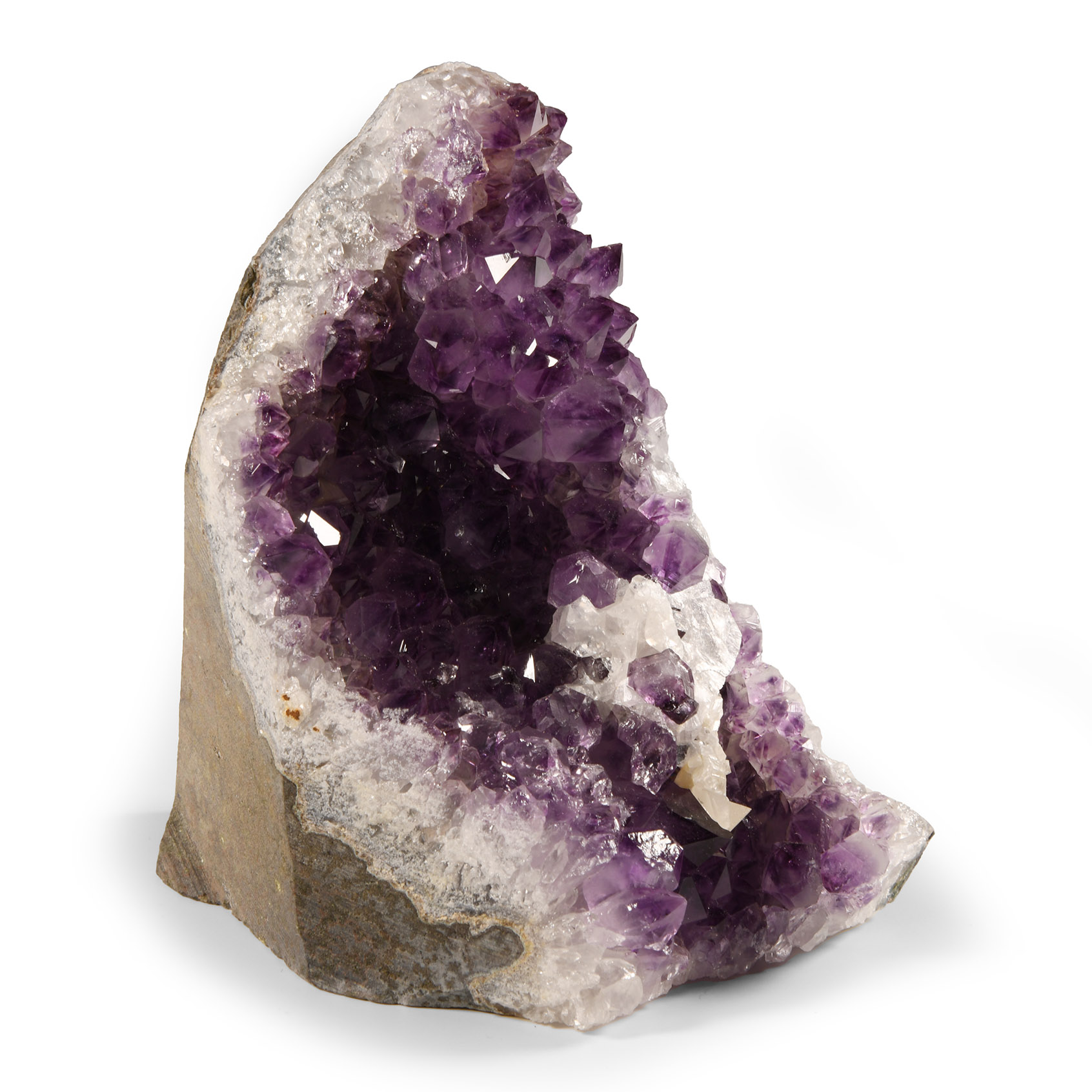
Natural History - Amethyst Crystal Specimen
4 1/4 in. (774 grams, 11 cm high).
Comprising well-formed deep purple crystals with a cluster of white quartz crystals; on a facetted freestanding matrix. [No Reserve]
ProvenanceFrom a Lincolnshire, UK, collection.
Property of a Cambridgeshire, UK, gentleman.
TimeLine Auctions follows a vetting process to ensure the authenticity and legality of all items, reinforcing our commitment to integrity and responsible trading. Each antiquity, antique, and coin lot undergoes thorough examination by a vetting committee of at least ten external specialists, professional trade association members, scientists, and archaeologists: Our Vetting Process
AUCTIONS:
TimeLine is a leading auction house specialising in antiquities, ancient art, collectables, natural history, coins, medals, and books. Our auctions offer museums, collectors, historians, and enthusiasts the opportunity to acquire unique and historically significant pieces.
-
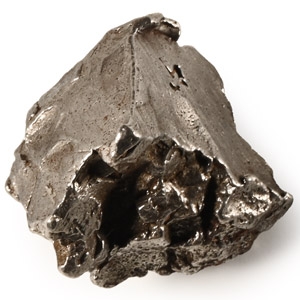
Natural History - Sikhote Alin Meteorite
Fell 12th February 1947 A.D.Sold for (Inc. bp): £104
Sikhote Alin meteorite in a drum-shaped capsule. 13.7 grams, 18 mm
Acquired from Steve Arnold, co-star of 'Meteorite Men'. Ian Wilkinson collection, Nottinghamshire, UK. -
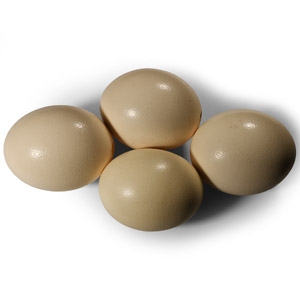
Natural History - Ostrich Egg Collection
20th century A.D.Sold for (Inc. bp): £52
Comprising four glossy cream-coloured eggs with drilled holes to the base. 969 grams total, 14.5-15.5 cm
Acquired from various sources within the UK. Ian Wilkinson collection, Nottinghamshire, UK, formed since 1985. -
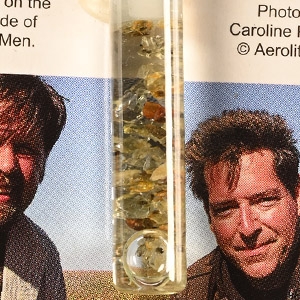
Natural History - Palladot Rough from an 'Alpha' Pallasite Meteorite
Found circa 2010 A.D.Sold for (Inc. bp): £130
Palladite peridot gem rough crystals in a glass phial. 3.91 grams total, 86 x 49 mm including card
Found while filming an episode of the TV series Meterorite Men. Acquired from Steve Arnold, co-star of 'Meteorite Men'. Ian Wilkinson collection, Nottinghamshire, UK. Accompanied by a authenticity card signed by Steve Arnold.
