
Loading, please wait...
LOT 0297
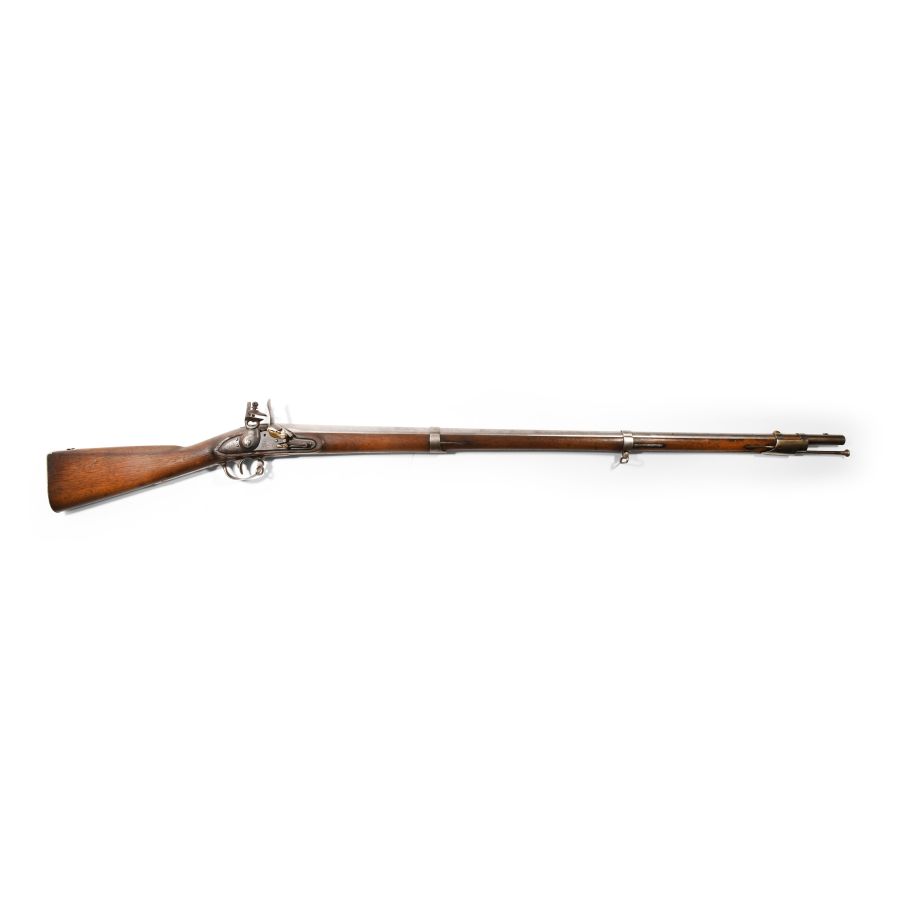
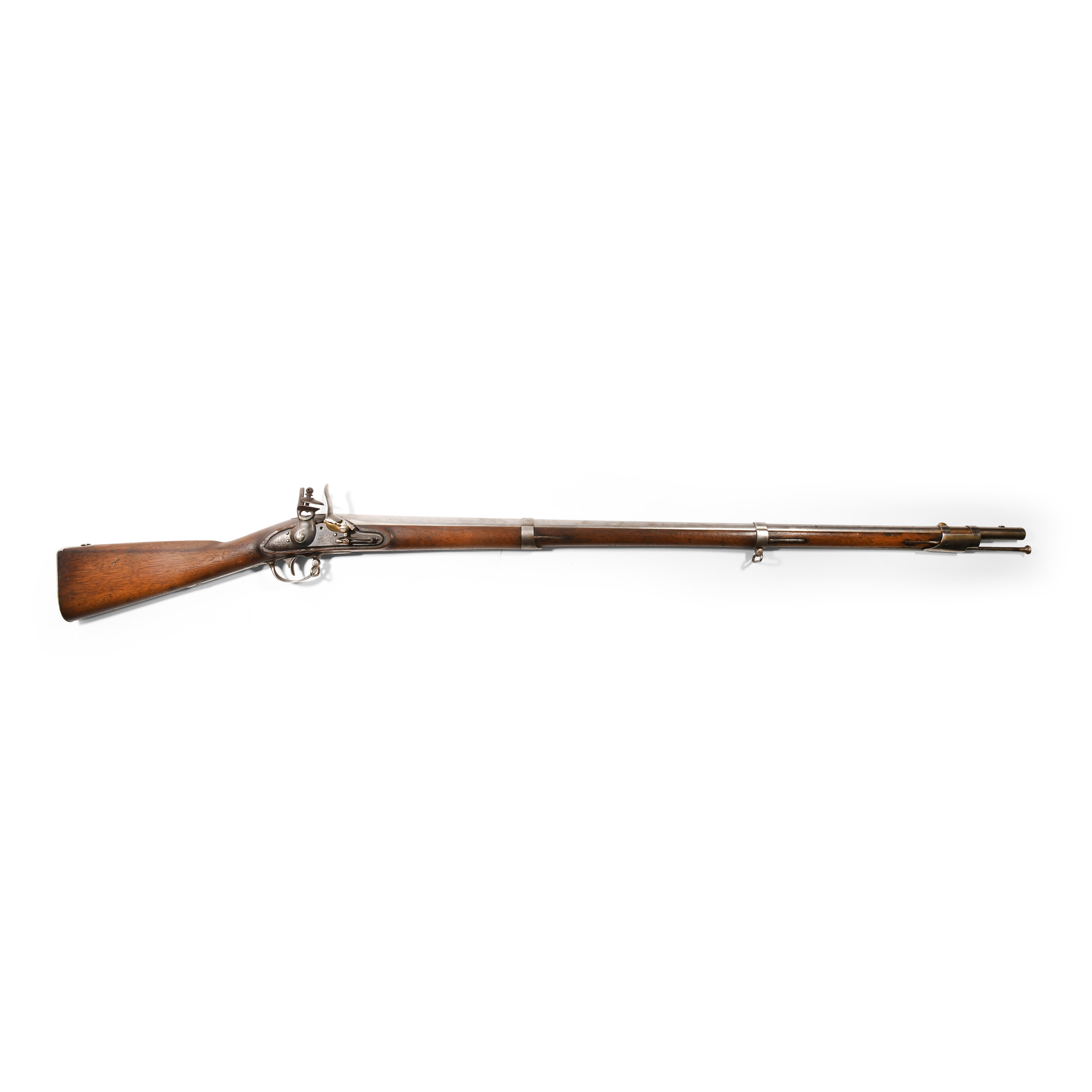
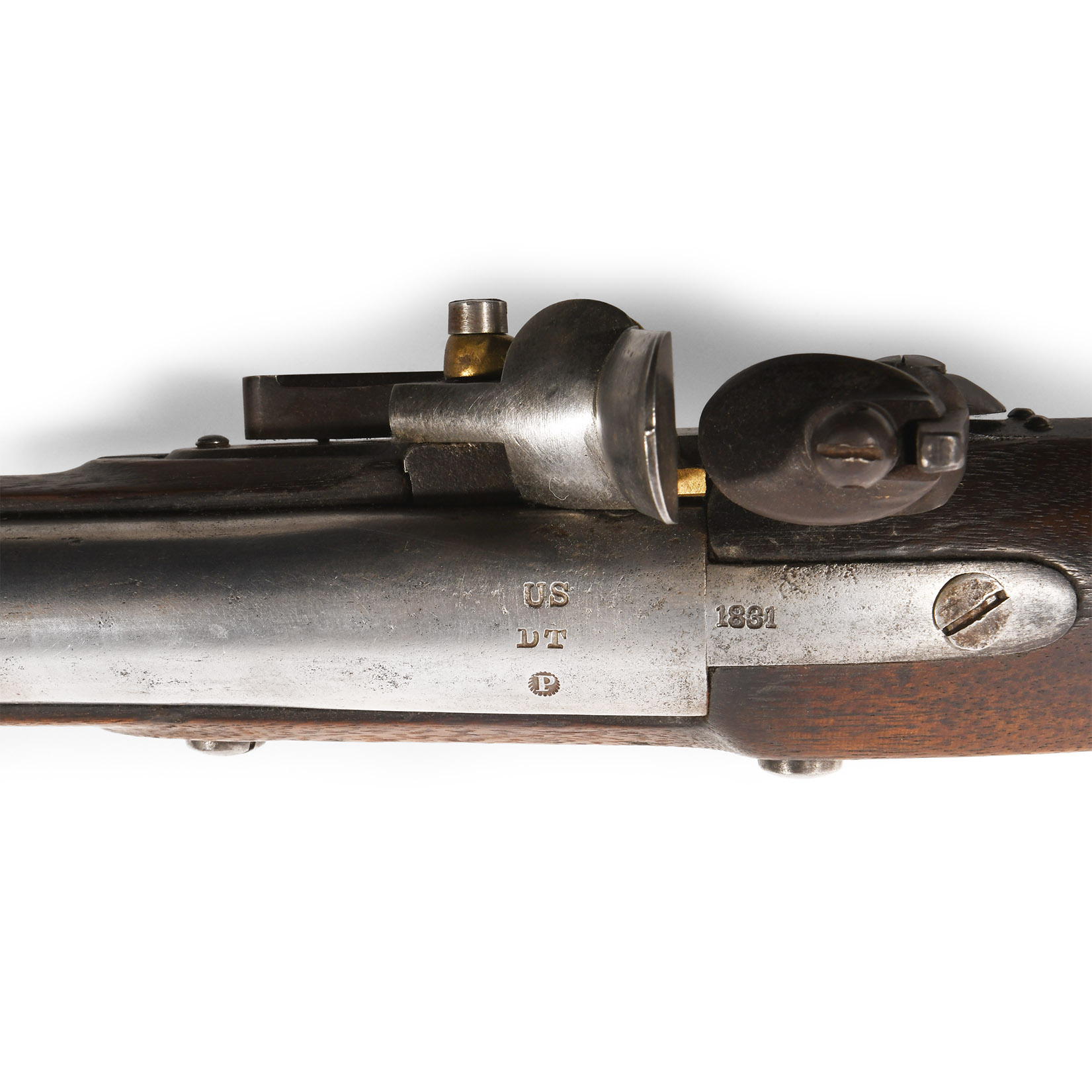
Nathan Starr 1816 Pattern Musket
1832 A.D.
58 1/4 in. (4.10 kg, 148 cm).
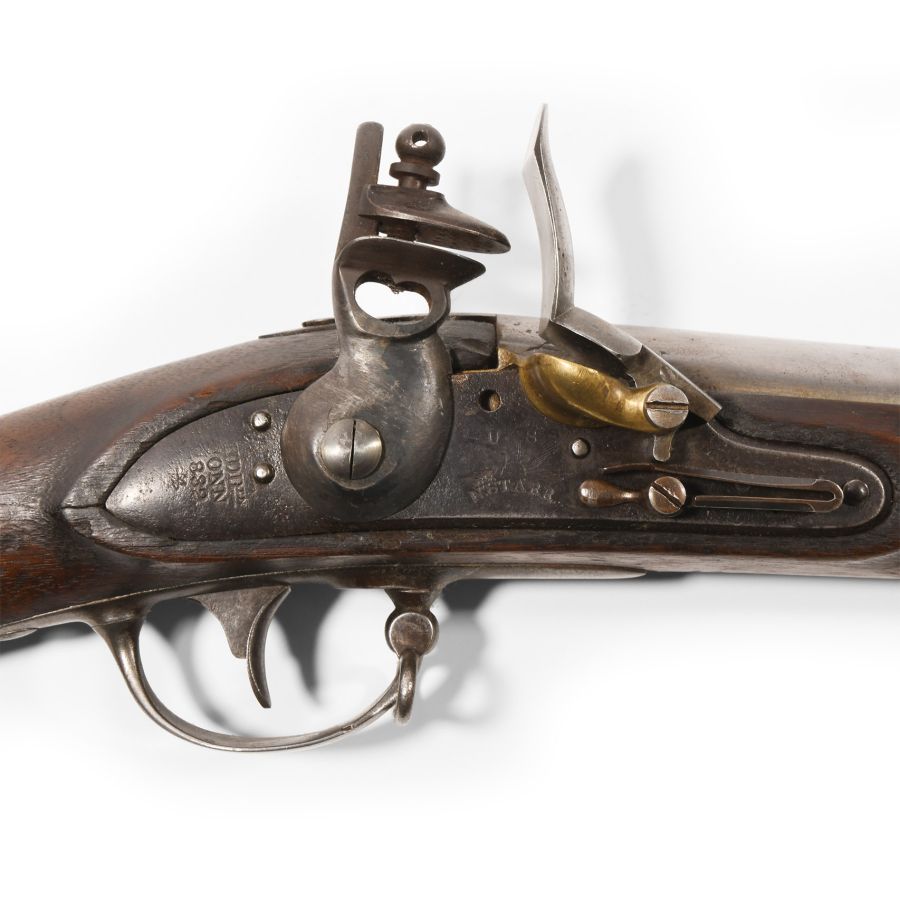
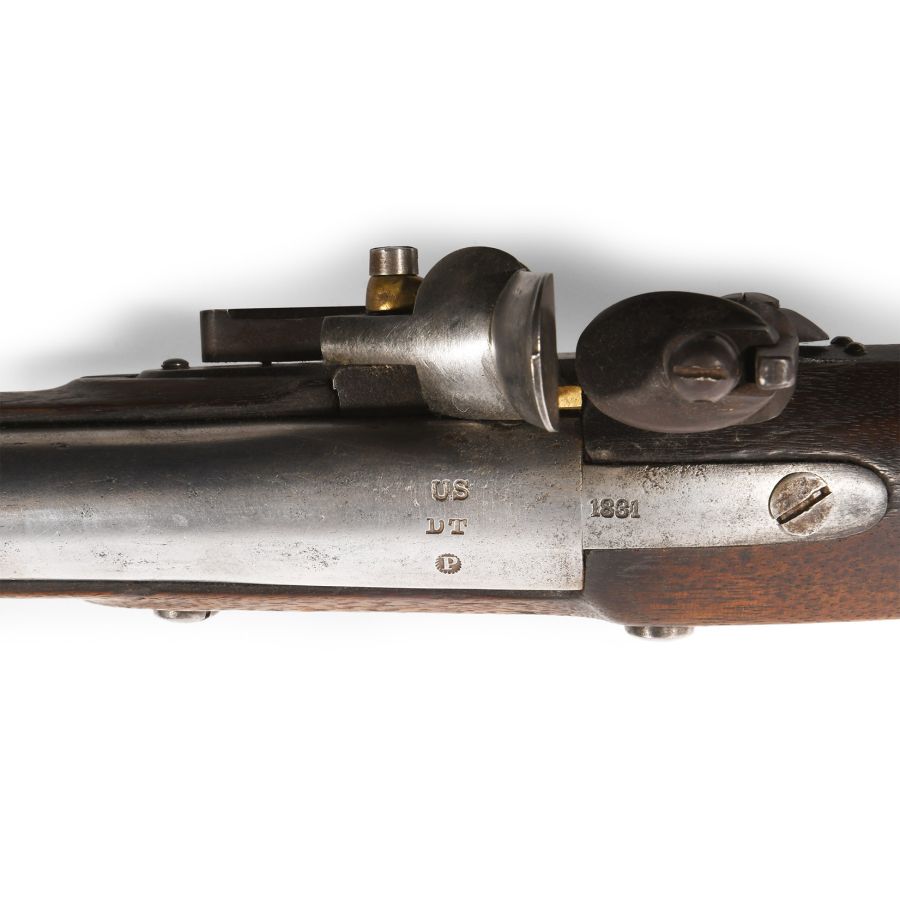
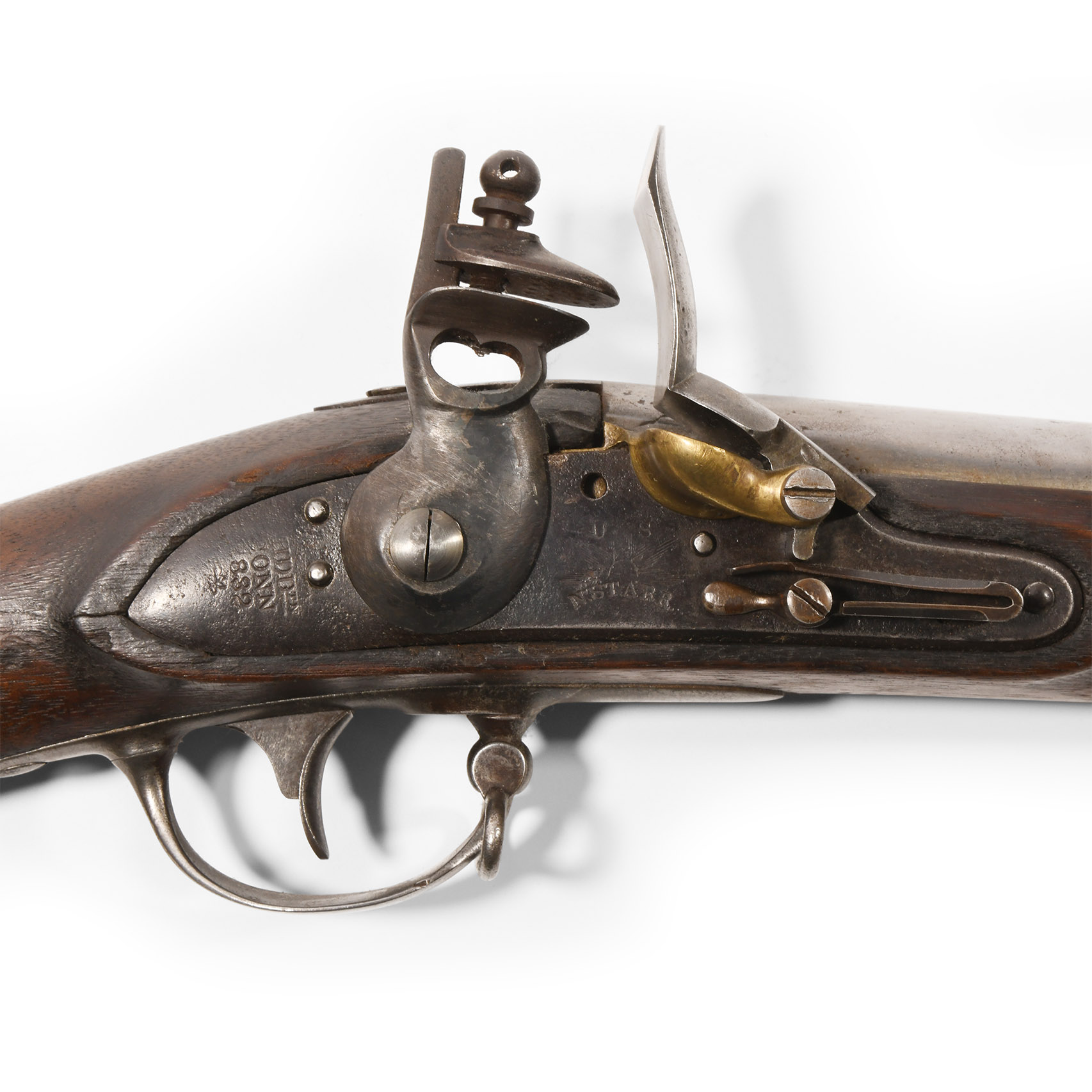
Type III, made under contract by Nathan Starr of Middletown, CT; with .69 calibre, 107 cm (42”) browned barrel with side lock marked with Starr’s earlier style of 'US / (ornate sunburst) / N. STARR' ahead of the cock and 'MIDDTN / CONN / 1832 / (rosette)' to the rear with 'US / JM' over a raised 'P' in sunken circular cartouche to top of breech, with various inspection and other small marks, fitted with sling swivels (upper possibly a replacement), steel ramrod with flared tip, full wood stock with steel butt plate, trigger guard, side-plate, barrel rings and fore-end, lock with brass pan; action in good working order.
ProvenanceAcquired from M J Noble Ltd, UK, 2015.
The Kusmirek Collection, UK.
Accompanied by the Noble purchase invoice and listing.
See Flayderman, N., Guide to Antique American Firearms, 9th edition, 2007, pp. 553-554, for information on this type and those made by contractors; see Reilly, R.M., United States Martial Flintlocks, p.103, stating that though Starr only produced Type III muskets a 'number of unusual finishes have been noted on some of these arms' including browned.
FootnotesSold as an exempt item under Section 58 (2) of the Firearms Act, 1968, to be held as a curiosity or ornament. No license required but buyer must be over 18 years of age. Overseas bidders should note that, due to UK regulations governing export of all firearms, overseas buyers will need to make arrangements for shipping this lot out of the UK directly, by air freight, with a specialist company or agent.
CONDITIONTimeLine Auctions follows a vetting process to ensure the authenticity and legality of all items, reinforcing our commitment to integrity and responsible trading. Each antiquity, antique, and coin lot undergoes thorough examination by a vetting committee of at least ten external specialists, professional trade association members, scientists, and archaeologists: Our Vetting Process
AUCTIONS:
TimeLine is a leading auction house specialising in antiquities, ancient art, collectables, natural history, coins, medals, and books. Our auctions offer museums, collectors, historians, and enthusiasts the opportunity to acquire unique and historically significant pieces.
-
Viking Age Bronze Dagger Hilt with Scabbard
10th-11th century A.D.Sold for (Inc. bp): £130
The scabbard with bronze hoop reinforcements to the upper third decorated with bands of punched holes; lateral suspension flap between bronze plates with reserved interlace motifs on hatched field; hilt with Borre Style ring-chain motifs to the upper end; hollow to the upper face. 119 grams, 24 cm
From the collection of a North American gentleman, formed in the 1990s. -
Roman Iron Plumbata Mamillata
4th-5th century A.D.Sold for (Inc. bp): £442
The barbed head with tapering cylindrical stem and biconical lead weight. 85 grams, 15 cm
Ex J. Layne collection, 1990s.
The lead-weighted darts known as plumbatae mamillatae, (or breasted javelin) were short darts mounted upon a shaft, of the same shape, and thrown from a short distance. A Roman soldier would typically carry around 5-6 of these darts at any one time, fastened to the back of his shield. They could be thrown overhand or underhand, with an effective throwing range of up to 60 meters by trained soldiers. -
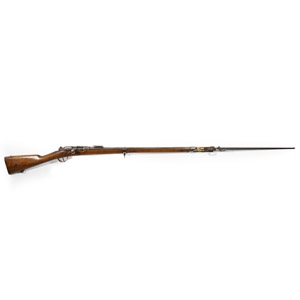
1866/74 Model Gras Rifle and Bayonet
Dated 1868 A.D.Estimate: £500 - 700 (+bp*)
Opening Bid: £222
Round rifled 90cm (35½") barrel of 11mm calibre with folding rear sight (without slide), bolt action with serial no.52431 to breech; fitted with full wood stock with steel butt cap, trigger guard, sling swivels and fore-end, steel cleaning rod; with correct Gras bayonet inscribed 'M[--] d'Armes de St Etienne 8bre 1878' to back and steel scabbard. 4.8 kg, 1.84 m
Acquired from Czerny's Auctions, Italy, 2019. The Kusmirek Collection, UK. Accompanied by a copy of Czerny's invoice and listing.
Sold as an exempt item under Section 58 (2) of the Firearms Act, 1968, to be held as a curiosity or ornament. No license required but buyer must be over 18 years of age. Overseas bidders should note that, due to UK regulations governing export of all firearms, overseas buyers will need to make arrangements for shipping this lot out of the UK directly, by air freight, with a specialist company or agent.
