
Loading, please wait...

LOT 2371
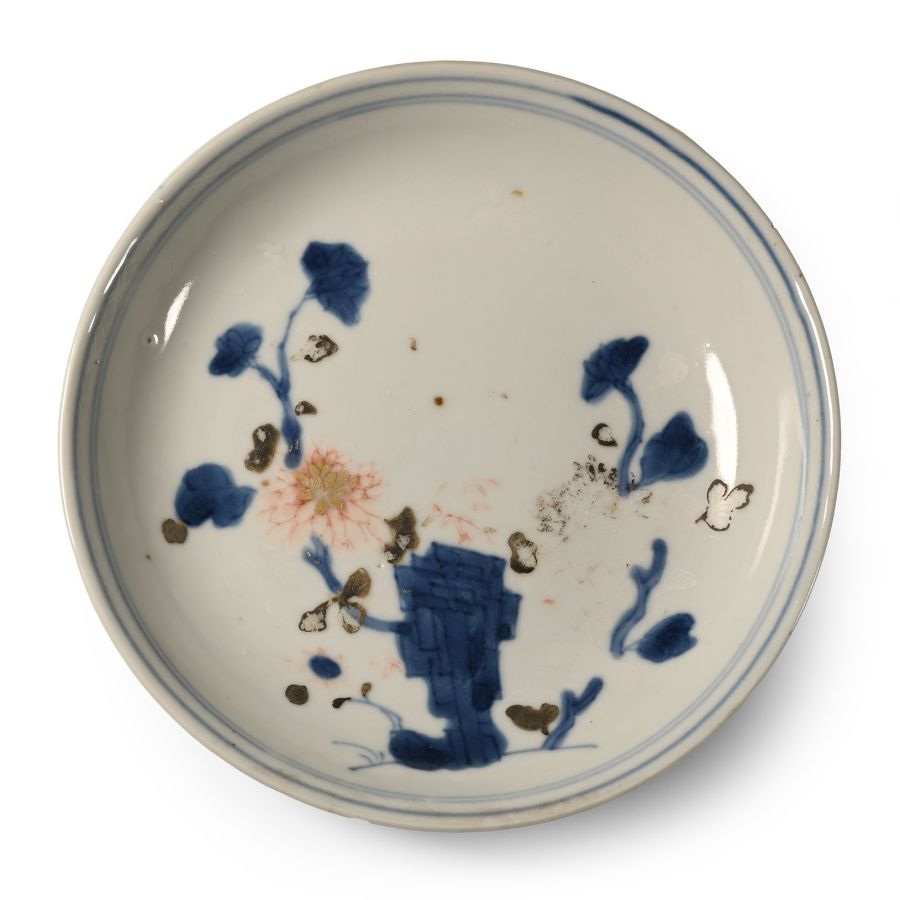
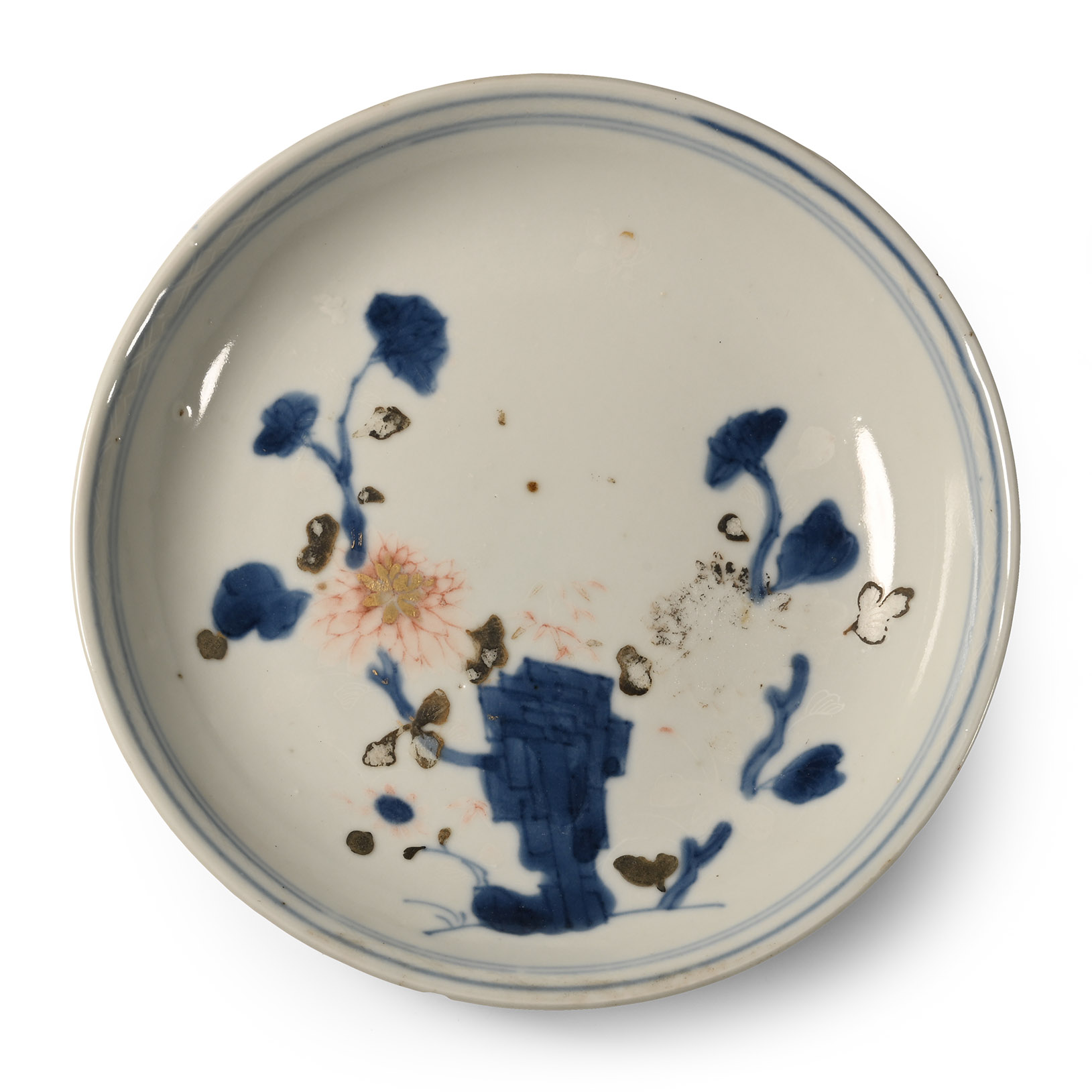
Nanking Cargo Shipwreck Gilt Glazed Blue and White Dish
EARLY 18TH CENTURY A.D.
5 1/4 in. (107 grams, 13.4 cm).
Of wide profile with shallow foot, painted floral motifs with a gilt lotus flower. [No Reserve]
ProvenanceEx Christie's, Amsterdam, 28 April-2 May 1985.
Accompanied by an illustrated information sheet about the Nanking shipwreck.
On Monday 3rd January 1752, the Dutch East India Company ship Geldermalsen, struck a reef on her return journey to the Netherlands and sank in the South China Sea. The cargo of Chinese porcelain was originally potted in Jingdezhen, Jiangzi province. The cargo was recovered by Captain Michael Hatcher and his team in 1985.
CONDITIONTimeLine Auctions follows a vetting process to ensure the authenticity and legality of all items, reinforcing our commitment to integrity and responsible trading. Each antiquity, antique, and coin lot undergoes thorough examination by a vetting committee of at least ten external specialists, professional trade association members, scientists, and archaeologists: Our Vetting Process
AUCTIONS:
TimeLine is a leading auction house specialising in antiquities, ancient art, collectables, natural history, coins, medals, and books. Our auctions offer museums, collectors, historians, and enthusiasts the opportunity to acquire unique and historically significant pieces.
-
.jpg)
Western Tibetan Fresco of Hayagriva
Circa 14th century A.D. or laterEstimate: £3,000 - 4,000 (+bp*)
Opening Bid: £1,350
Painted on stone in vibrant polychrome; on a wooden display base. 3.55 kg total, 38 x 33 cm
Ex London gallery stock. This lot has been checked against the Interpol Database of stolen works of art and is accompanied by search certificate number no.11917-206181. -
.jpg)
Timor Ancestral Property Marker
Mid 20th century A.D. or earlierSold for (Inc. bp): £143
With drum-shaped head and tapering upper body, incised circular eyes and slit mouth; diagonal line to the chest indicating a cloak; band of high-relief triangular panels to the lower body; mounted on a wooden plaque; from Indonesia. 1.16 kg total, 21 cm high including stand
Ex Welsh country estate, 1960s-1970s. Acquired from Mark Davis of Chepstow, Monmouthshire, Wales, UK. From the 30-year-old sculpture collection of N. Churchill, Pembrokeshire, South-West Wales, UK. Property of Mr A.B., an American collector. -
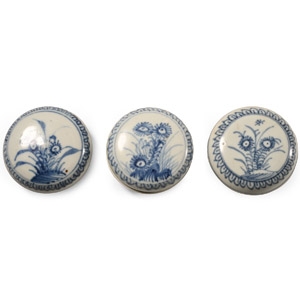
Ca Mau Cargo Shipwreck Glazed Blue and White Lidded Box Set of Three
Early 18th century A.D.Sold for (Inc. bp): £221
Comprising three powder boxes with painted floral motif to the lid and radiating petals around the low foot. 224 grams total, 64-67 mm
Ex Sotheby's, Amsterdam, 29-31 January 2007. Accompanied by an illustrated information sheet about the Ca Mau shipwreck.
The Ca Mau shipwreck refers to a cargo of Chinese porcelain sunk between 1723 and 1735 off the coast of Vietnam. The wreck was discovered by Vietnamese fishermen in 1998. It is believed the wreck was a merchant’s junk on its way from Canton (Guangzhou) to Batavia when it caught fire and sank. The ship was carrying goods destined for Dutch traders who had limited access to China and its ports.
