
Loading, please wait...
LOT 1838
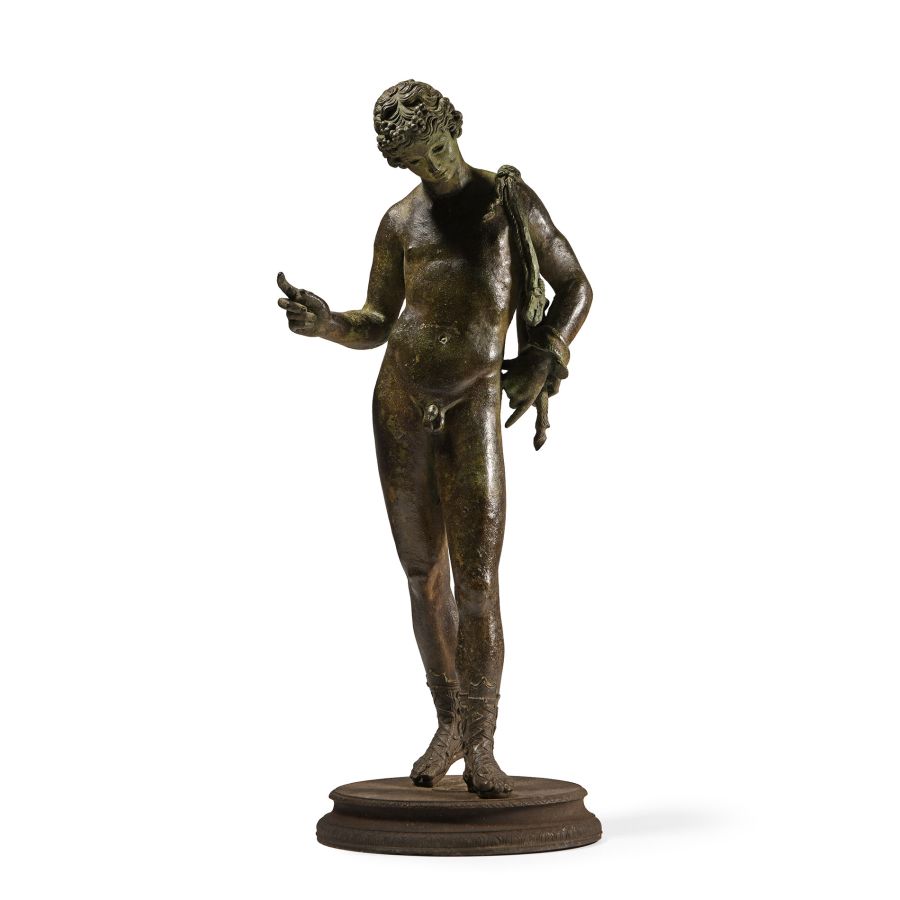
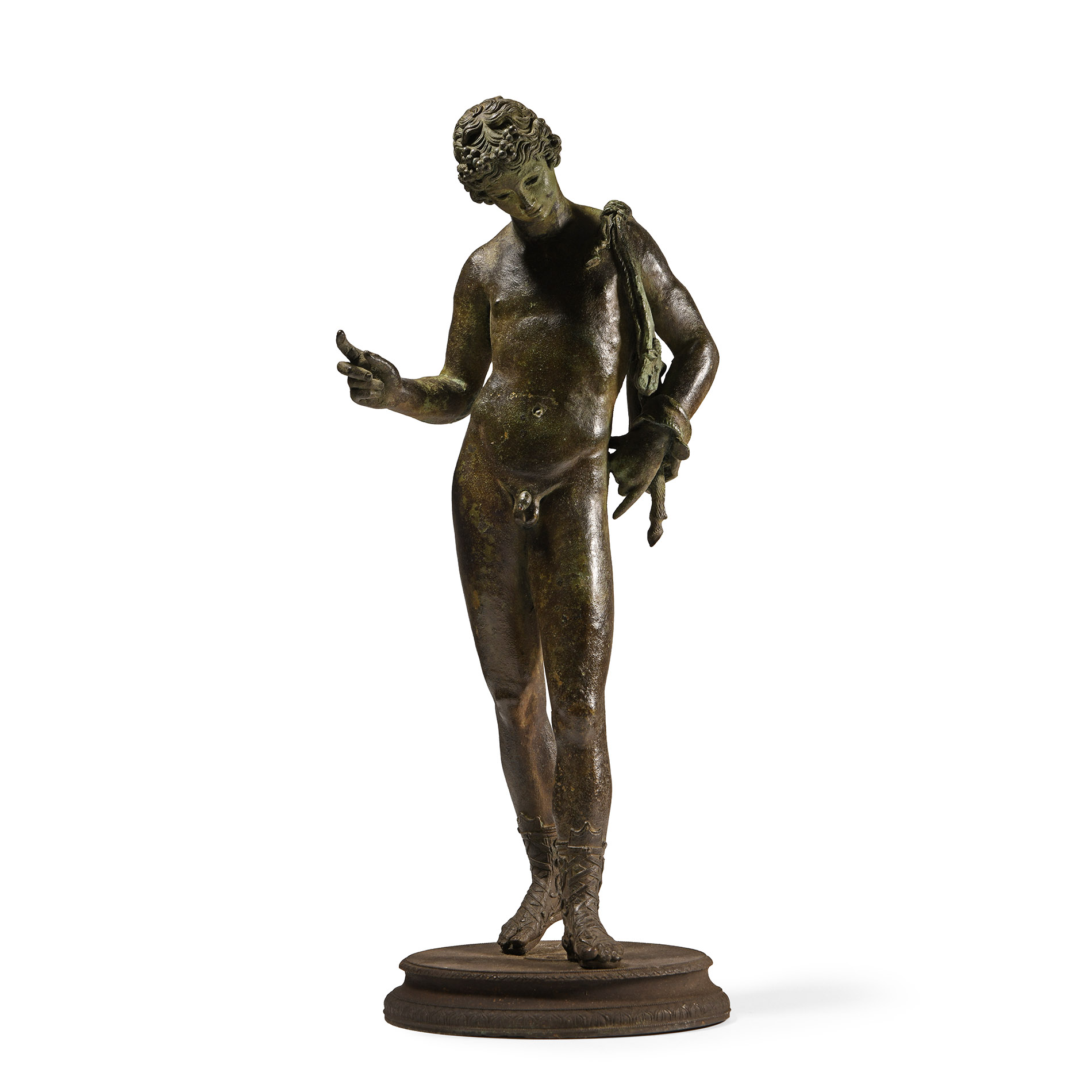
Naked Statue of Narcissus
NAPLES, LATE 19TH-EARLY 20TH CENTURY A.D.
15 3/4 in. (3.66 kg total, 40 cm including stand).
A metal statue of Narcissus standing nude looking down, with goatskin mantle draped on the left shoulder, cothumus sandals laced to the feet, wreath of berries in the hair, left hand with thumb and finger on hip and right hand with thumb and forefinger extended; stepped discoid base with leaf patterning. [No Reserve]
ProvenanceAcquired from Sworders, Stansted Mountfitchet, 14 July 2010, lot 1352.
From an important Cambridgeshire estate; thence by descent.
In Greek mythology, Narcissus was a hunter from Thespiae in Boeotia who was known for his beauty. He was proud, in that he disdained those who loved him, causing some to commit suicide in order to prove their unrelenting devotion to his striking beauty.
CONDITIONTimeLine Auctions follows a vetting process to ensure the authenticity and legality of all items, reinforcing our commitment to integrity and responsible trading. Each antiquity, antique, and coin lot undergoes thorough examination by a vetting committee of at least ten external specialists, professional trade association members, scientists, and archaeologists: Our Vetting Process
AUCTIONS:
TimeLine is a leading auction house specialising in antiquities, ancient art, collectables, natural history, coins, medals, and books. Our auctions offer museums, collectors, historians, and enthusiasts the opportunity to acquire unique and historically significant pieces.
-
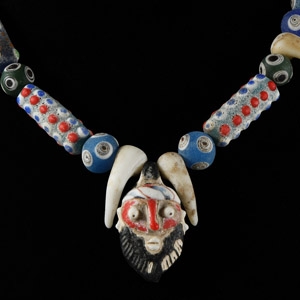
Phoenician Style Glass Bead and Pendant Necklace
20th century A.D.Sold for (Inc. bp): £46
Including tubular and spherical beads, claw-shaped pendants and a mask with applied detailing. 121 grams, 28 cm
From an old English deceased estate. Acquired on the London art market in the early 1990s. Property of a London, UK, collector. -
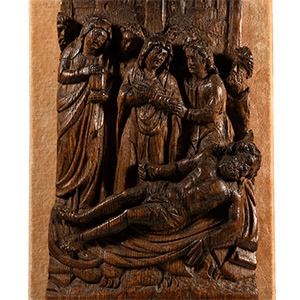
Flemish Oak Altar Fragment Depicting the Lamentation
Netherlands, 16th century A.D.Sold for (Inc. bp): £286
Carved figural panel depicting a group of six standing figures gazing mournfully at the prostrate figure of Christ on a sheet resting on rough ground; the leftmost figure holding a jar of unguent; the body with prominent holes to the hands and feet; in the background, three crosses and portion of the city wall; on a wooden display stand with fabric-covered backing panel. 3.78 kg total, 44 cm including stand
Private North American collection. -
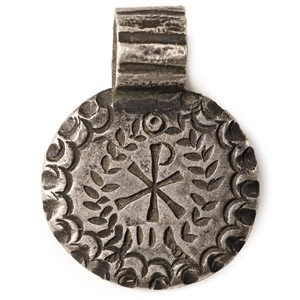
Post Medieval Silver Pendant with Chi Rho in Wreath
16th-17th century A.D.Sold for (Inc. bp): £169
Comprising a discoid body with piecrust edges, central motif a Chi Rho within a wreath; large fluted suspension loop. 6.37 grams, 25 mm
Ex German art market, 2000s. Acquired from an EU collector living in London. From the collection of Surrey, UK, gentleman.
