
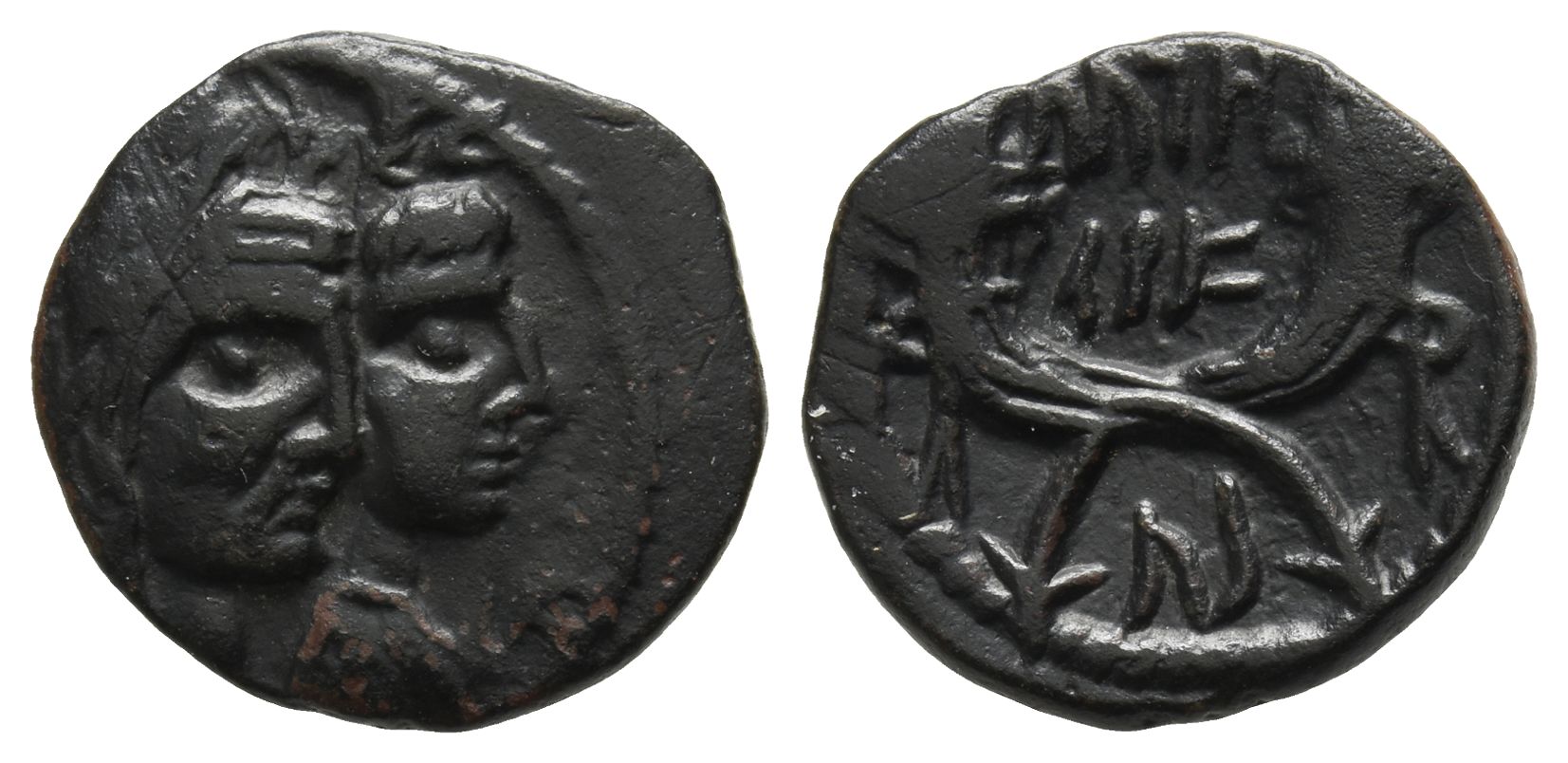
LOT 2832
Nabataea, Aretas IV, with Shaqilat AE 18mm. 9 BC-AD 40.
Petra mint; struck AD 20-40. Jugate busts of Aretas and Shaqilat to right; [H]-F in Aramaic across fields / Crossed cornucopiae; legend in Aramaic between and below. Meshorer, Nabataea 114. Good Very Fine.(3.58gr, 18mm, 12h.).
ProvenanceFrom the collection of a gentleman, acquired on the London art market in the 1990s.
TimeLine Auctions follows a vetting process to ensure the authenticity and legality of all items, reinforcing our commitment to integrity and responsible trading. Each antiquity, antique, and coin lot undergoes thorough examination by a vetting committee of at least ten external specialists, professional trade association members, scientists, and archaeologists: Our Vetting Process
AUCTIONS:
TimeLine is a leading auction house specialising in antiquities, ancient art, collectables, natural history, coins, medals, and books. Our auctions offer museums, collectors, historians, and enthusiasts the opportunity to acquire unique and historically significant pieces.
-
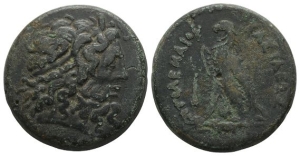
Ptolemaic Kingdom of Egypt, Ptolemy IV Philopator AE Hemidrachm. 222-205/4 BC.
Sold for (Inc. bp): £33
Tyre mint. Diademed head of Zeus-Ammon to right / ΠΤΟΛΕΜΑΙΟΥ ΒΑΣΙΛΕΩΣ, eagle with closed wings standing to left on thunderbolt; club to left, ΛΙ(?) between legs. Svoronos 1130; Weiser -; SNG Copenhagen -; cf. Noeske 95 var. (ΔΙ) 30.14gr, 34mm, 12h.
Near Very Fine.
Private collection, acquired 1980–1985. -
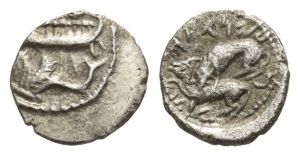
Phoenicia. Byblos, 'Aynel (Enylos) AR 1/16 Shekel. Circa 350-316/5 BC.
Sold for (Inc. bp): £31
Two hoplites, holding shields, on galley to left above waves, prow ending in lion's head; below, hippocamp to left / Lion attacking bull to left. E&E-B Series IV.4.2; HGC 10, 139. 0.68gr, 10mm, 4h.
Very Fine.
Private collection, acquired 1980-1985. -
![Group of Two [2] AR Tetradrachms of Kings of Parthia.](https://timelineauctions.com/upload/images/items/small/236235s.jpg)
Group of Two [2] AR Tetradrachms of Kings of Parthia. 1st century BC.
Sold for (Inc. bp): £85
Various types. 23.65gr total.
Condition as seen.
UK private collection before 2000. Acquired on the UK art market. Private collection, London.
