
LOT 2929
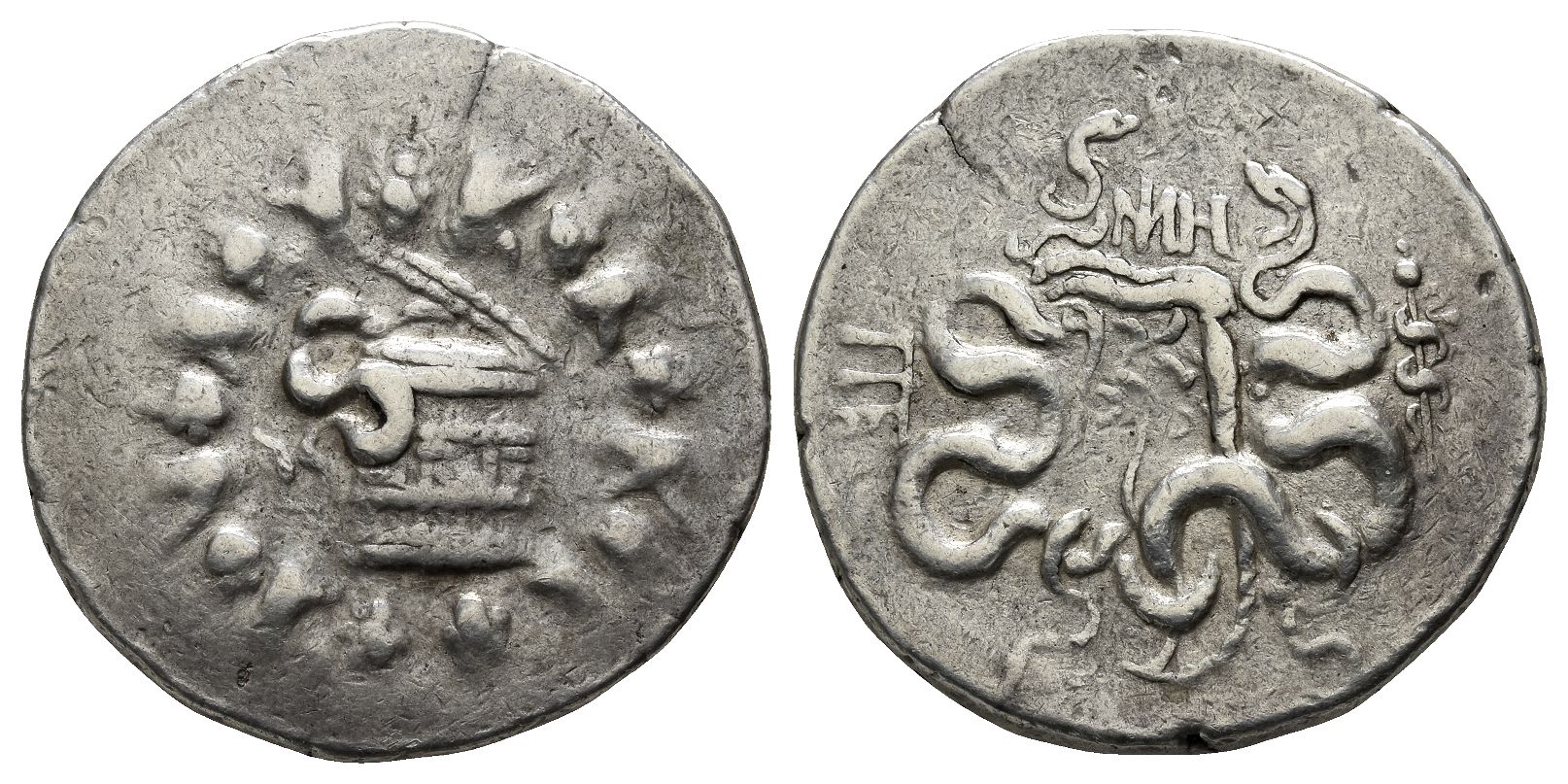
Mysia, Pergamon AR Cistophoric Tetradrachm. 166-67 BC.
Struck circa 123-95 BC. Group 2. Basket (cista mystica), with half-open lid, from which snake coils, around, ivy wreath with fruits / Two snakes coiled around a bow case ornamented with aplustre, and containing a strung bow, between the snake heads, MIH monogram, civic monogram of ΠΕΡ to left, serpent-entwined staff to right. Kleiner, Hoard 184 = ANS 1944.100.37470; Pinder 103. Very Fine. Extremely rare variant; seemingly the first to be offered at auction for over twenty years.(12.59gr, 26mm, 2h). [No Reserve]
ProvenanceAcquired on the UK art market before 2000;
Property of an Essex, UK, gentleman.
TimeLine Auctions follows a vetting process to ensure the authenticity and legality of all items, reinforcing our commitment to integrity and responsible trading. Each antiquity, antique, and coin lot undergoes thorough examination by a vetting committee of at least ten external specialists, professional trade association members, scientists, and archaeologists: Our Vetting Process
AUCTIONS:
TimeLine is a leading auction house specialising in antiquities, ancient art, collectables, natural history, coins, medals, and books. Our auctions offer museums, collectors, historians, and enthusiasts the opportunity to acquire unique and historically significant pieces.
-
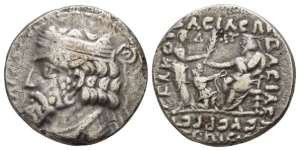
Kings of Parthia, Artabanos III AR Tetradrachm. Circa AD 10-38.
Sold for (Inc. bp): £221
Seleukeia on the Tigris mint. Dated Daisios SE 334 (May AD 23). Diademed and draped bust to left; before, ΔΛT (date) / ΒΑΣΙΛΕΩΣ ΒΑΣΙΛΕΩΝ ΑΡΣΑΚΟΥ ΕΥΕΡΓΕΤΟΥ, Artabanos enthroned to left, receiving palm from Tyche standing to right and diadem from man between them who kneels to right; in field above, ΔΛT (date); ΔΑΙΣΙΟΥ in exergue. 10.91gr, 27mm, 12h
Very Fine.
From a UK private collection. -
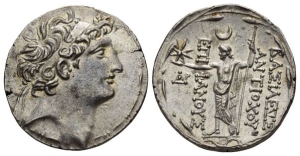
Seleukid Empire, Antiochos VIII Epiphanes (Grypos) AR Tetradrachm. 121/0-97/6 BC.
Estimate: £800 - 1,000 (‡+bp*)
Opening Bid: £400
Ake-Ptolemais mint; struck circa 121-113 BC. Diademed head to right; within fillet border / ΒAΣΙΛEΩΣ ΑNTIOXOY EΠIΦANOYΣ, Zeus Ouranios, draped, standing facing, head to left, holding star in outstretched right hand and long sceptre in left; crescent above, monogram of ΔΑΡ in field; all within laurel wreath border. SC 2336.2; HGC 9, 1197h. 16.59gr, 30mm, 12h
Extremely Fine. Lustrous metal, lightly toned.
Acquired in the USA, November 2010. -
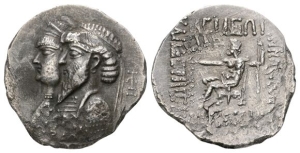
Kings of Elymais, Kamnaskires III, with Anzaze Fourree Tetradrachm. Circa 82/1-73/2 BC.
Estimate: £350 - 450 (+bp*)
Opening Bid: £175
Seleukeia on the Hedyphon, undated issue. Conjoined busts to right of Kamnaskires, diademed, draped, wearing long beard and torque and to left Queen Anzaze, draped, wearing stephane and necklace; Seleukid anchor behind / BACIΛEΩC [KA]MNACKI[POY] KAI BACIΛICCH[C ANZAZHC]; Zeus seated to left on throne, holding Nike, who crowns him, with his right hand and sceptre with left. For prototype cf. van't Haaff Type 7.1.1-1-6a. 11.50gr, 28mm, 1h
Good Very Fine. Areas of delamination and double struck of reverse.
Acquired on the UK market before 2000; Property of a London, UK, gentleman.
