
Loading, please wait...
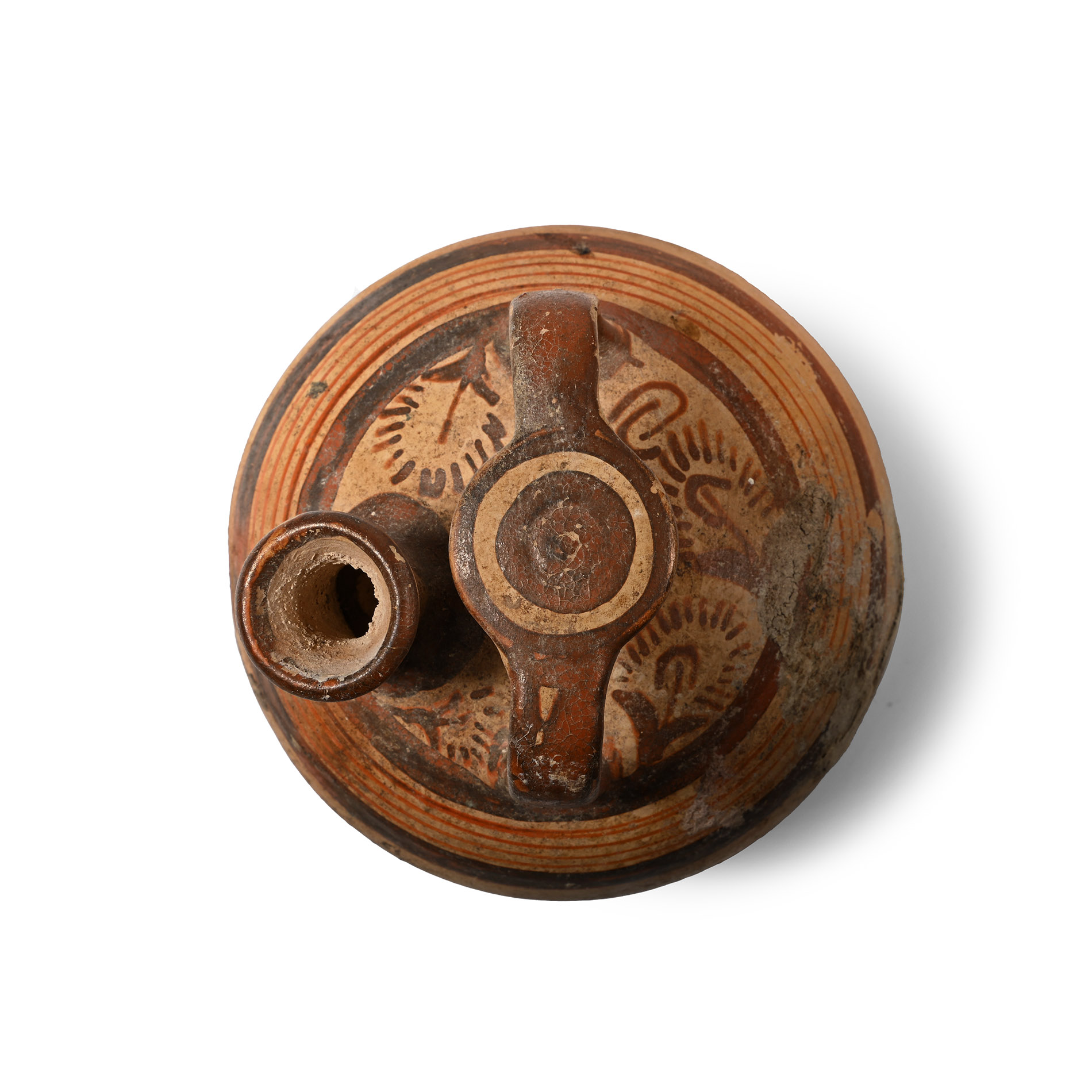
LOT 0026
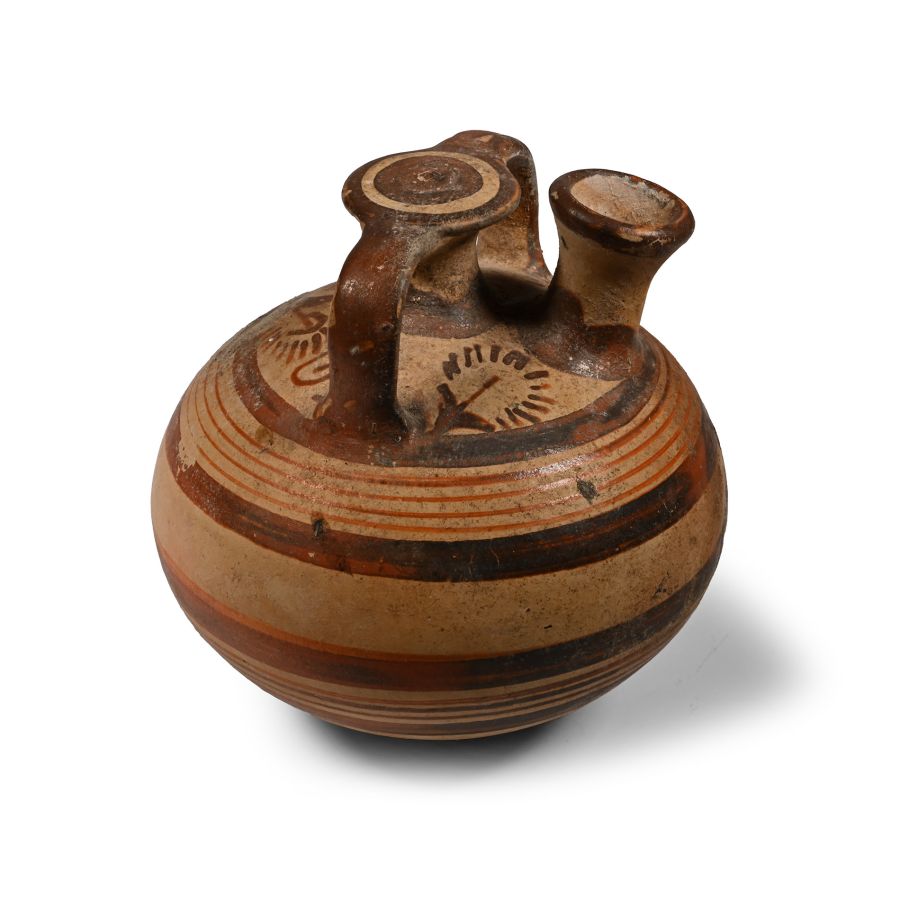
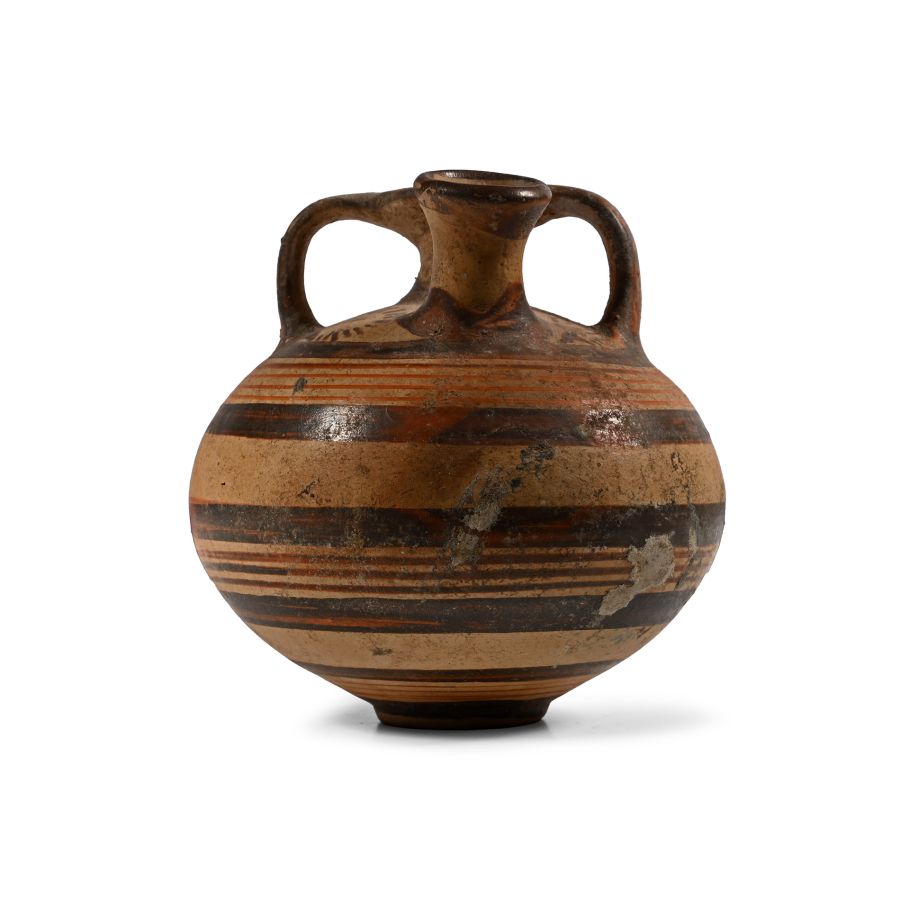
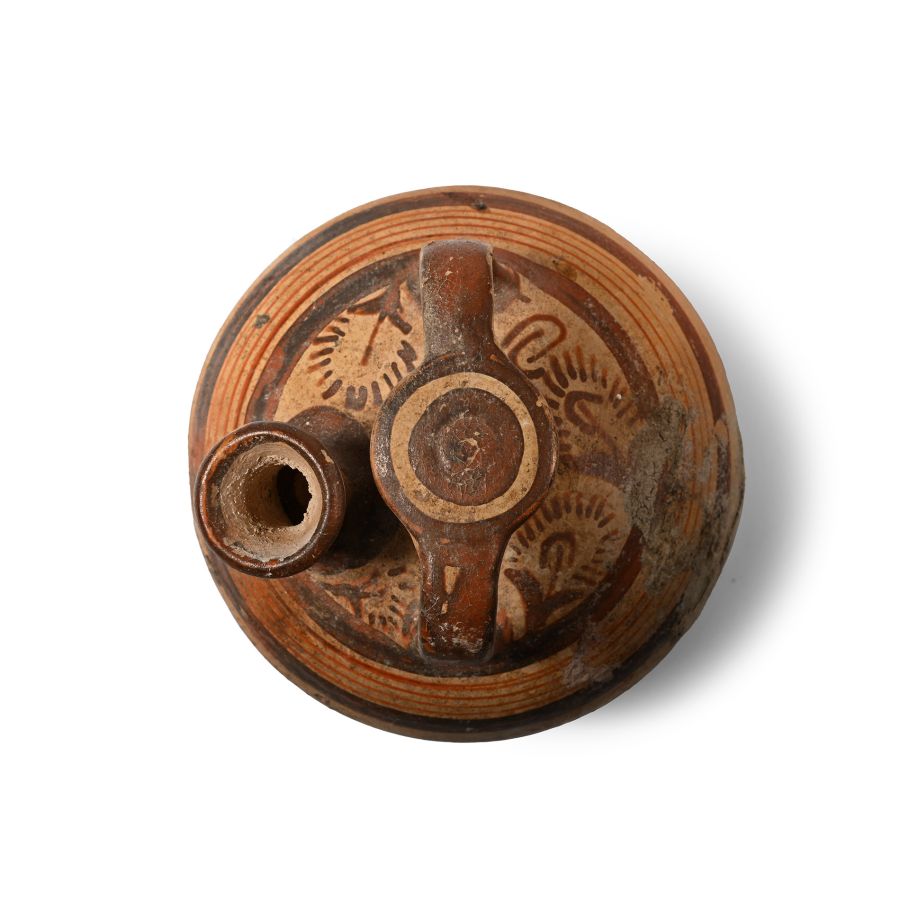
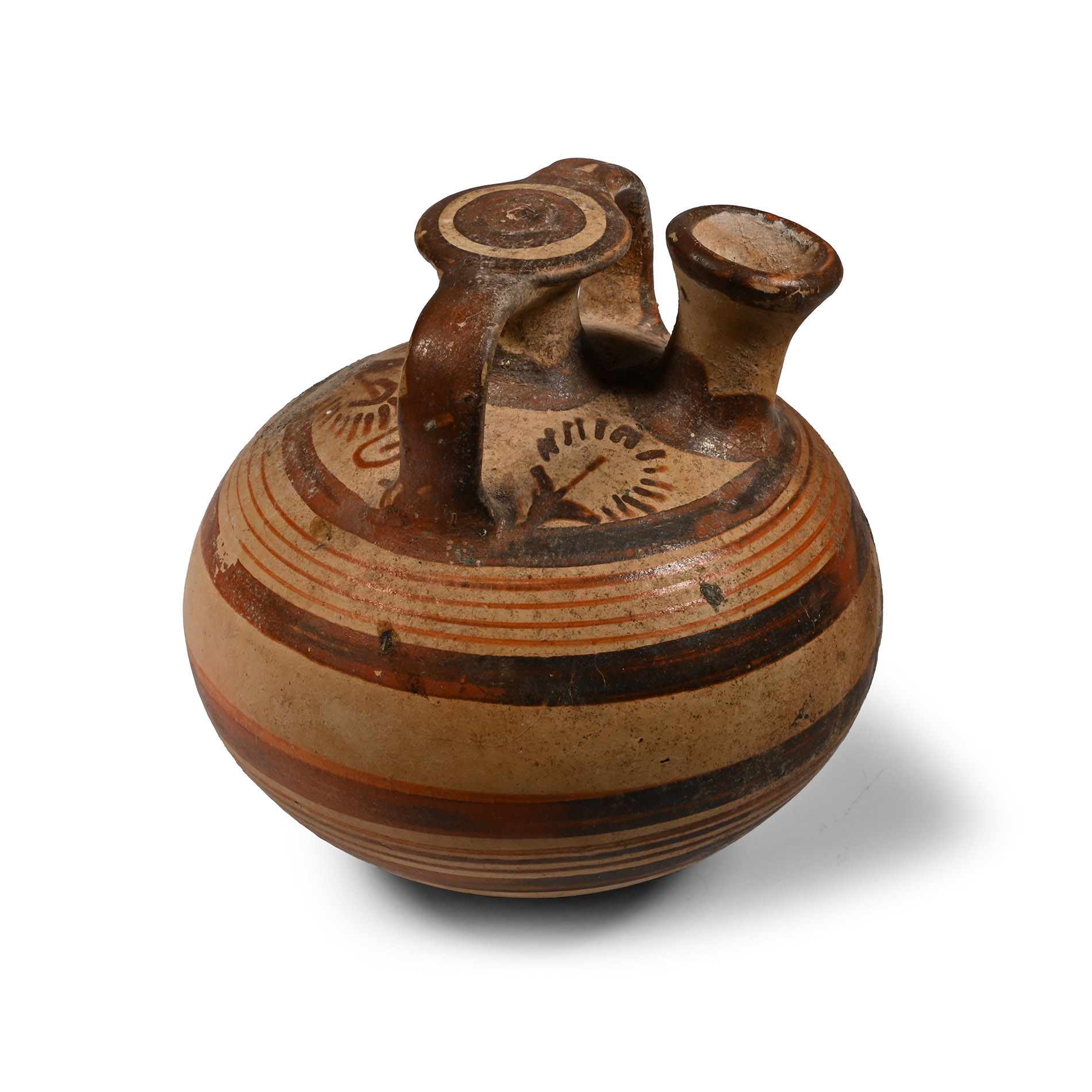
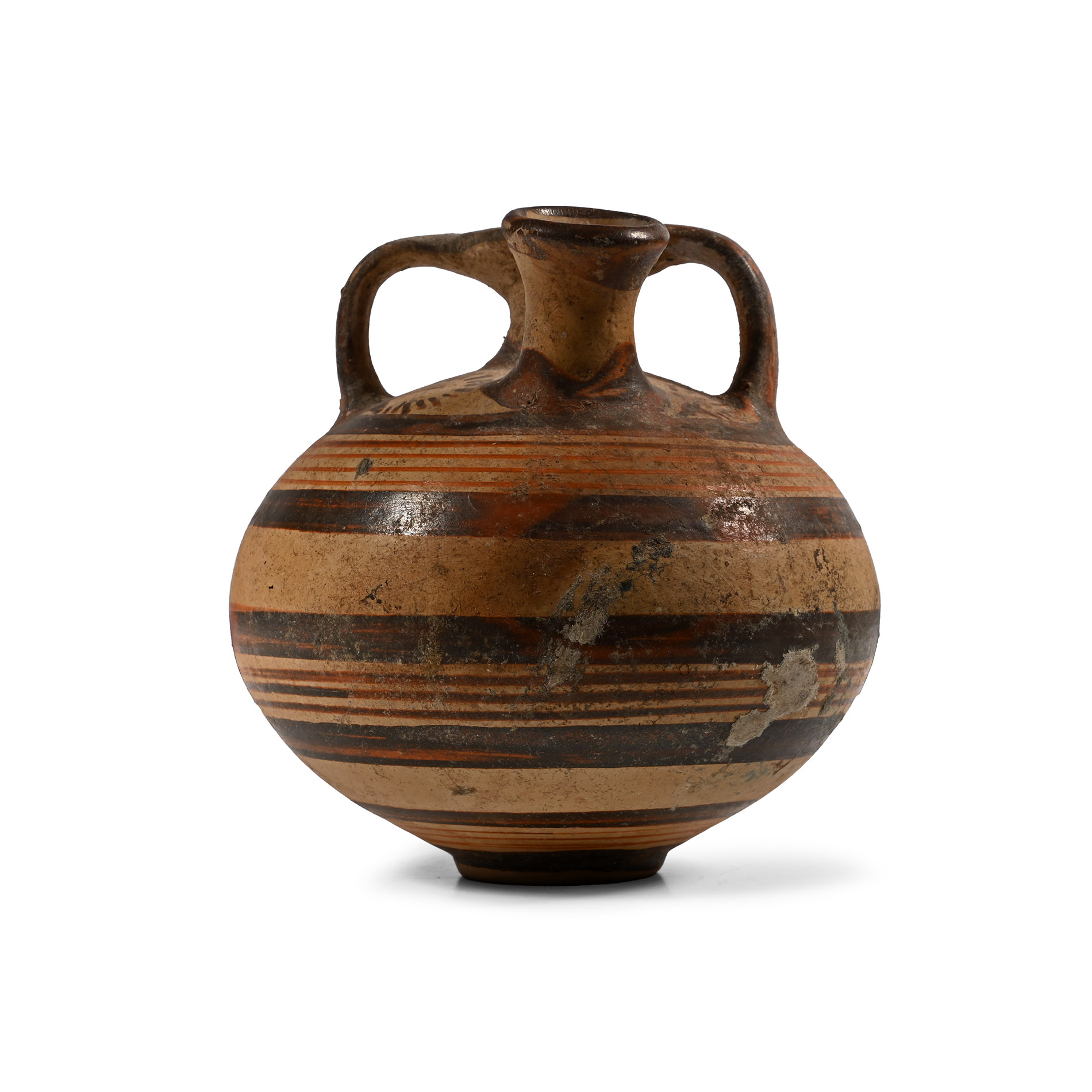
Mycenaean Terracotta Stirrup Jar
14TH-13TH CENTURY B.C.
3 3/4 in. (144 grams, 94 mm).
Comprising a squat body, slender waisted spout and neck and similar central stem with two flanking handles; painted geometric ornament composed of concentric bands and clusters of blossom to the shoulder.
ProvenanceRobert Hecht Jr, New York, 2004.
Acquired by the present owner from the above.
Cf. The Metropolitan Museum, New York, accession numbers 74.51.5905 and 74.51.768, for similar.
CONDITIONTimeLine Auctions follows a vetting process to ensure the authenticity and legality of all items, reinforcing our commitment to integrity and responsible trading. Each antiquity, antique, and coin lot undergoes thorough examination by a vetting committee of at least ten external specialists, professional trade association members, scientists, and archaeologists: Our Vetting Process
AUCTIONS:
TimeLine is a leading auction house specialising in antiquities, ancient art, collectables, natural history, coins, medals, and books. Our auctions offer museums, collectors, historians, and enthusiasts the opportunity to acquire unique and historically significant pieces.
-
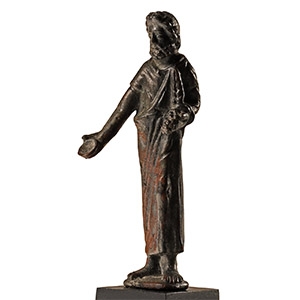
Etruscan Bronze Statuette of a Priest Offering
4th-2nd century B.C.Sold for (Inc. bp): £1,430
Modelled standing barefoot on an irregular base, wearing an ankle-length chlamys over a short-sleeved tunic; the left arm supporting a bunch of grapes, the right hand with a patera; the hair and beard neatly dressed; mounted on a custom-made stand. 279 grams total, 14 cm including stand
From a collection acquired on the UK art market from various auction houses and collections mostly before 2000. From an important Cambridgeshire estate; thence by descent. This lot has been checked against the Interpol Database of stolen works of art and is accompanied by search certificate no.12317-214667.
Lares were supernatural guardians revered in ancient Roman, the cult probably adapted from an Etruscan predecessor; the word lar derives from Etruscan larth - a leader or overlord. They were believed to guard the family's wealth and look after their health and wellbeing. An offering-plate is usually modelled in one of the figure's hands, onto which small libations could be made. They were usually worshipped in groups, but offerings to individuals are also known. -
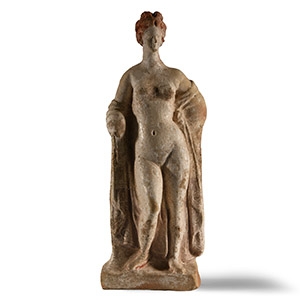
Hellenistic Painted Terracotta Figure of Aphrodite
Mid 4th-mid 3rd century B.C.Estimate: £2,500 - 3,500 (‡+bp*)
Opening Bid: £1,250
Bearing the weight of her body on her left leg, wearing a himation draped over her left and right arms, the right arm bent to grasp a part of the himation that falls behind her, leaving her shoulders uncovered and revealing her naked body; the head turned slightly to the left; the hair arranged in the typical flattering melon coiffure, parted into six large sections and gathered into a low bun; oval face with a small, fleshy mouth and a fine nose; wearing large circular earrings; her right hand resting on top of a small pillar, covered by the cloak; the lower part of the himation embroidered with volutes; the back flat with a square hole for attachment; red-brown pigment on the hair, white coating, traces of pink on the himation and red on the edges of the feet. 493 grams, 22.5 cm high
Collected in the 1950s-1990s. Ex R. Liechti collection (1934-2010), acquired in Geneva (Inventory No. R.788). Accompanied by an academic report by Raffaele D'Amato. This lot has been checked against the Interpol Database of stolen works of art and is accompanied by search certificate no.11999-211931.
In particular in South Italy, two types of female statuettes leaning on small pillars were widespread, derived from Tanagra prototypes: the first type dressed in a high-belted chiton with crowned head, the second consisting of partially draped or nude female figures identified as Aphrodite, like our specimen. The Tanagra production ended in about 200 B.C., but the models created by the Boeotian workshops would continue to be produced until the end of the 1st century B.C. The statuette shows extensive traces of the original polychromy, characterised by strongly contrasting hues in keeping with the local style. The Tanagrine elements are mainly identifiable in the ‘melon coiffure’, the intense red colour of the hair and the pose characterised by the turned hip. -

Etruscan Bronze Artefact Group
Circa 8th-7th century B.C.Sold for (Inc. bp): £65
Comprising: a ring brooch with addorsed horse-heads; crescent mount fragment with eagles' claws. 82 grams total, 74-84 mm
From a collection acquired on the UK art market from various auction houses and collections mostly before 2000. From an important Cambridgeshire estate; thence by descent.
