
Loading, please wait...
LOT 0541
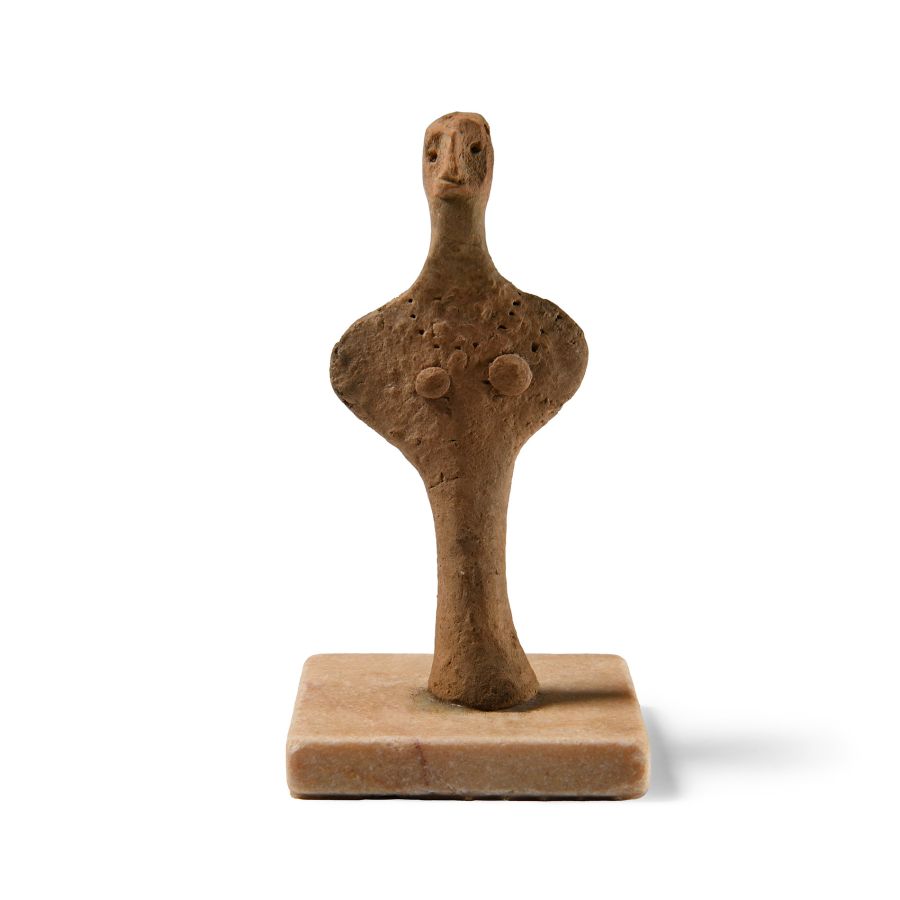
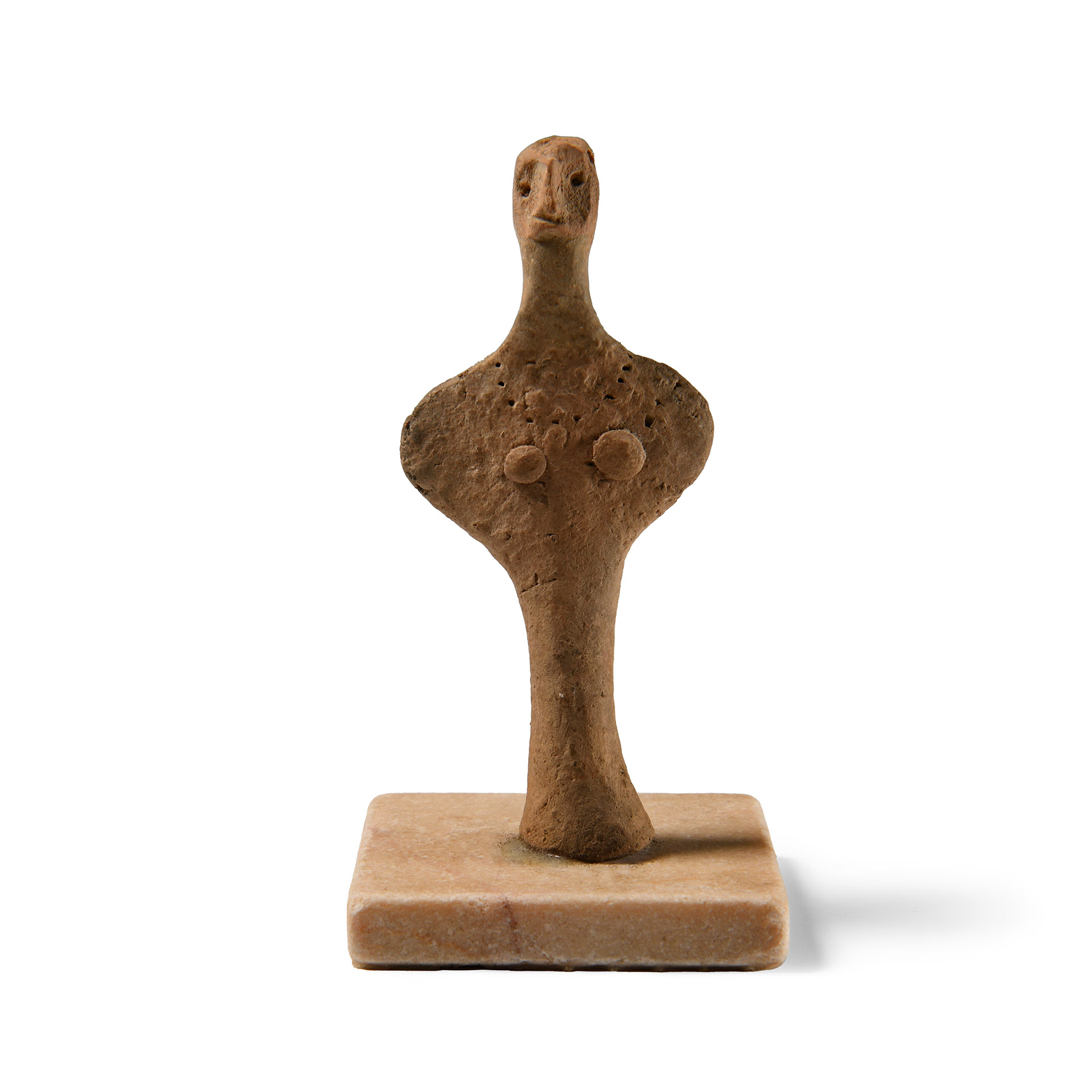
Mycenaean Terracotta Goddess Figure
CIRCA 13TH CENTURY B.C.
3 5/8 in. (69 grams total, 92 mm including stand).
Standing on a conical foot with rounded upper body, applied disc breasts, impressed necklace, pinched facial features, old label '24' to reverse; mounted on a custom-made stand. [No Reserve]
ProvenanceFrom a collection acquired on the UK art market from various auction houses and collections mostly before 2000.
From an important Cambridgeshire estate; thence by descent.
TimeLine Auctions follows a vetting process to ensure the authenticity and legality of all items, reinforcing our commitment to integrity and responsible trading. Each antiquity, antique, and coin lot undergoes thorough examination by a vetting committee of at least ten external specialists, professional trade association members, scientists, and archaeologists: Our Vetting Process
AUCTIONS:
TimeLine is a leading auction house specialising in antiquities, ancient art, collectables, natural history, coins, medals, and books. Our auctions offer museums, collectors, historians, and enthusiasts the opportunity to acquire unique and historically significant pieces.
-
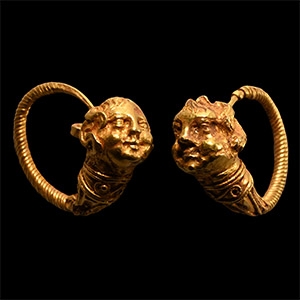
Hellenistic Gold Earrings with Eros
4th-2nd century B.C.Sold for (Inc. bp): £1,300
Matched pair of earrings, each a head of Eros developing to a conical neck with applied filigree trails, coil to the curved shank. 4.02 grams total, 20 mm each
Private collection of Mr S.A., Switzerland, 1990s, thence by descent. This lot has been checked against the Interpol Database of stolen works of art and is accompanied by search certificate no.12111-211866. -
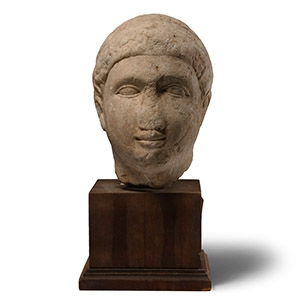
Cypriot Votive Limestone Head of a Young Man
6th-4th century B.C.Sold for (Inc. bp): £2,600
Modelled in the round with soft youthful features, short beard, small mouth and large lentoid eyes, tousled hair with a diadem above the brow; socket to the top of the head and remains of a spur to the reverse; mounted on a custom-made display stand. 3.86 kg total, 26.5 cm high including stand
Joseph Klein collection, formed in New York 1941-1980, thence by descent. Acquired from Bonhams, London, 24 October 2012, no.2. From an important Cambridgeshire estate; thence by descent. Accompanied by a copy of the relevant Bonhams catalogue pages. Accompanied by an academic report by Dr Raffaele D’Amato. This lot has been checked against the Interpol Database of stolen works of art and is accompanied by search certificate number no.12002-212101.
Votive sculptures were the commonest form of Cypriot sculptures of the period. They were erected within the precincts of temples or covered sanctuaries, around the altar at which the god was worshipped. Thus, on Cyprus, the statuary was conceived as an ex-voto, an image expressing the desire of the believer to enter into intimate communion with and reside under the eternal protection of the gods. -
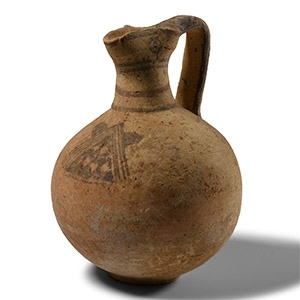
Cypriot 'Eyed' Trefoil-Mouthed Pottery Jug with Geometric Motif
Iron Age, circa 1200-600 B.C.Sold for (Inc. bp): £520
White ware globular jug with pinched trefoil mouth and strap handle to the rear; painted 'eye' detailing to mouth, serpent pattern to handle, hatched triangle motif to the body. 300 grams, 16 cm high
Ex Peter Cran collection, Scotland, who worked as an engineer for the Cypriot public works department 1931-1946; thence by descent. Acquired from Bonhams, London, 23 May 2012, no.6 (part). From an important Cambridgeshire estate; thence by descent. Accompanied by copies of the relevant Bonhams catalogue pages and original lot tag.
