
Loading, please wait...
LOT 0638
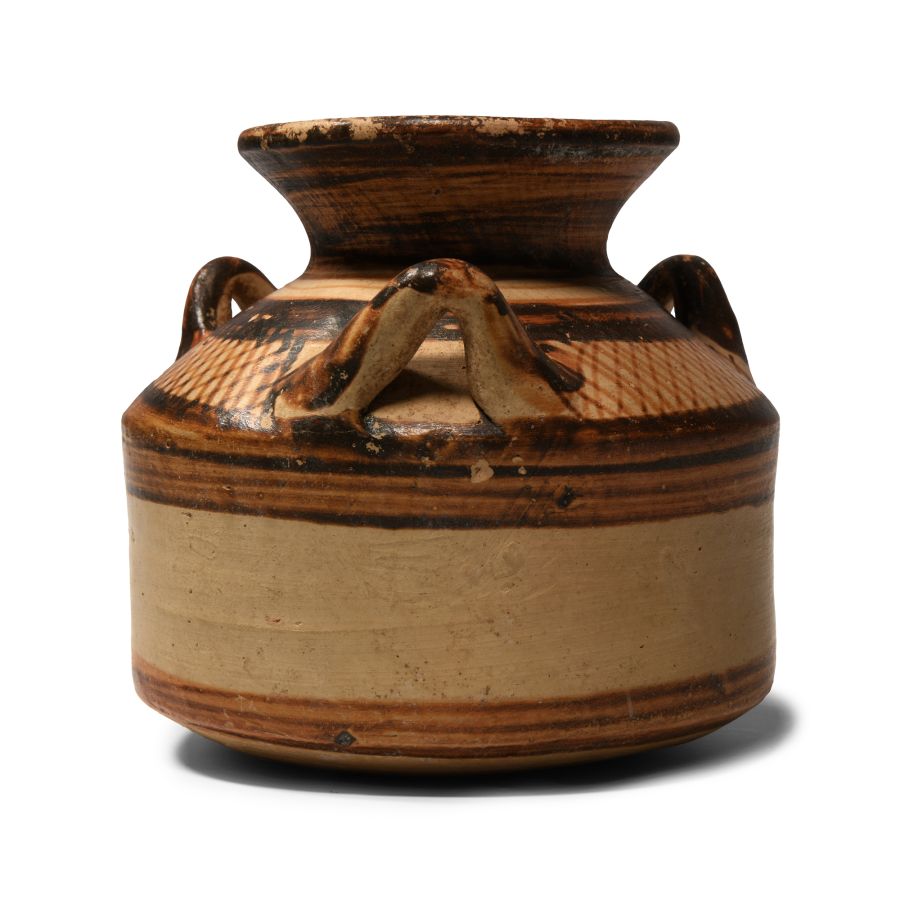
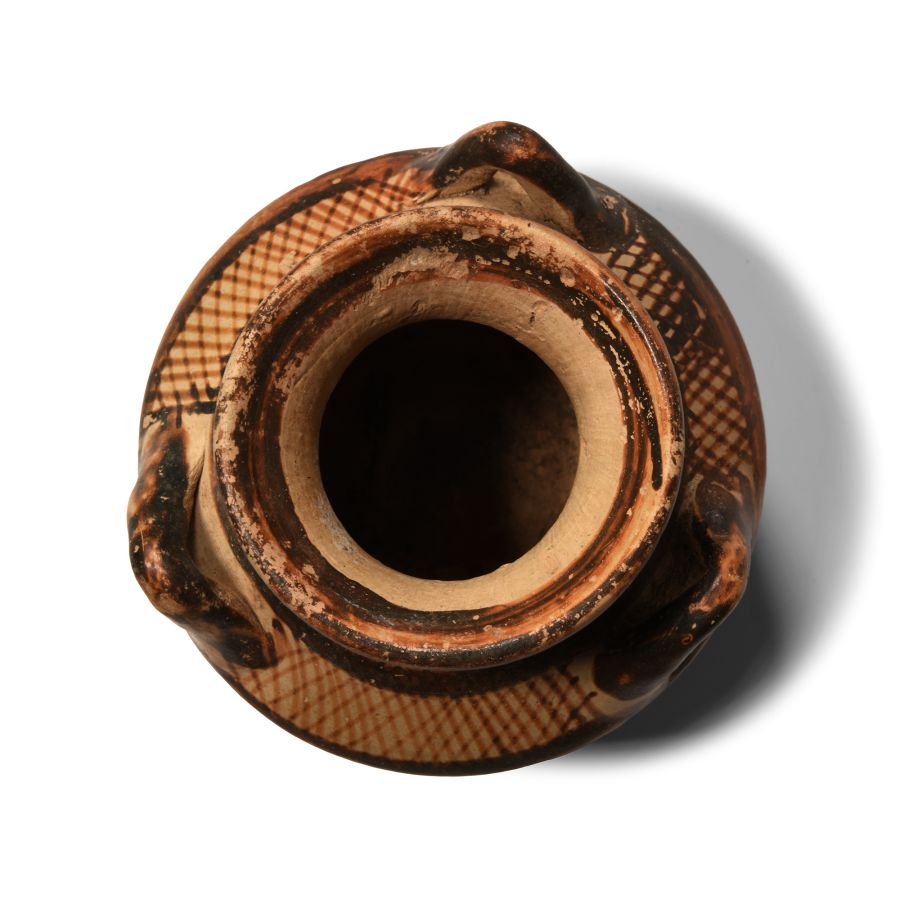
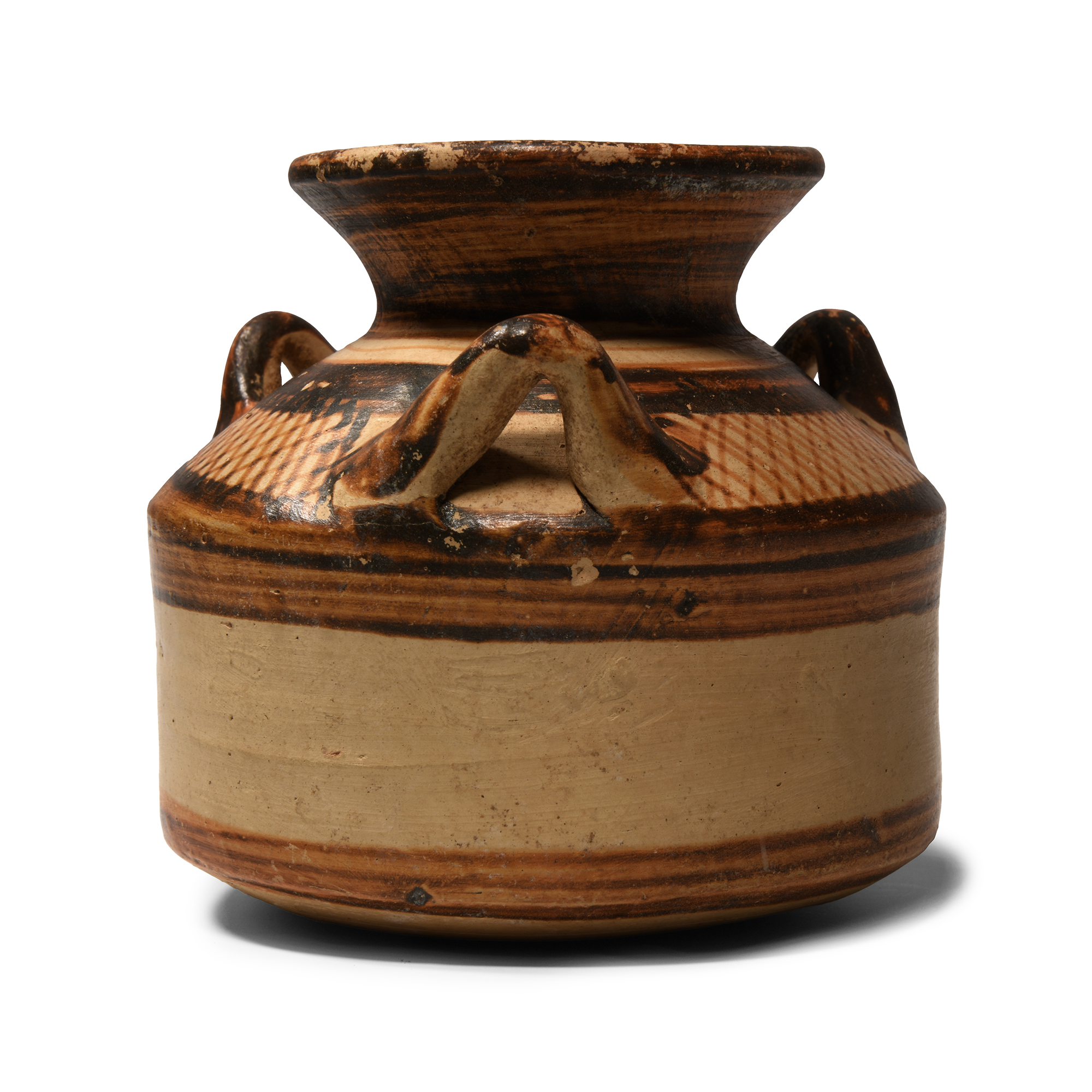
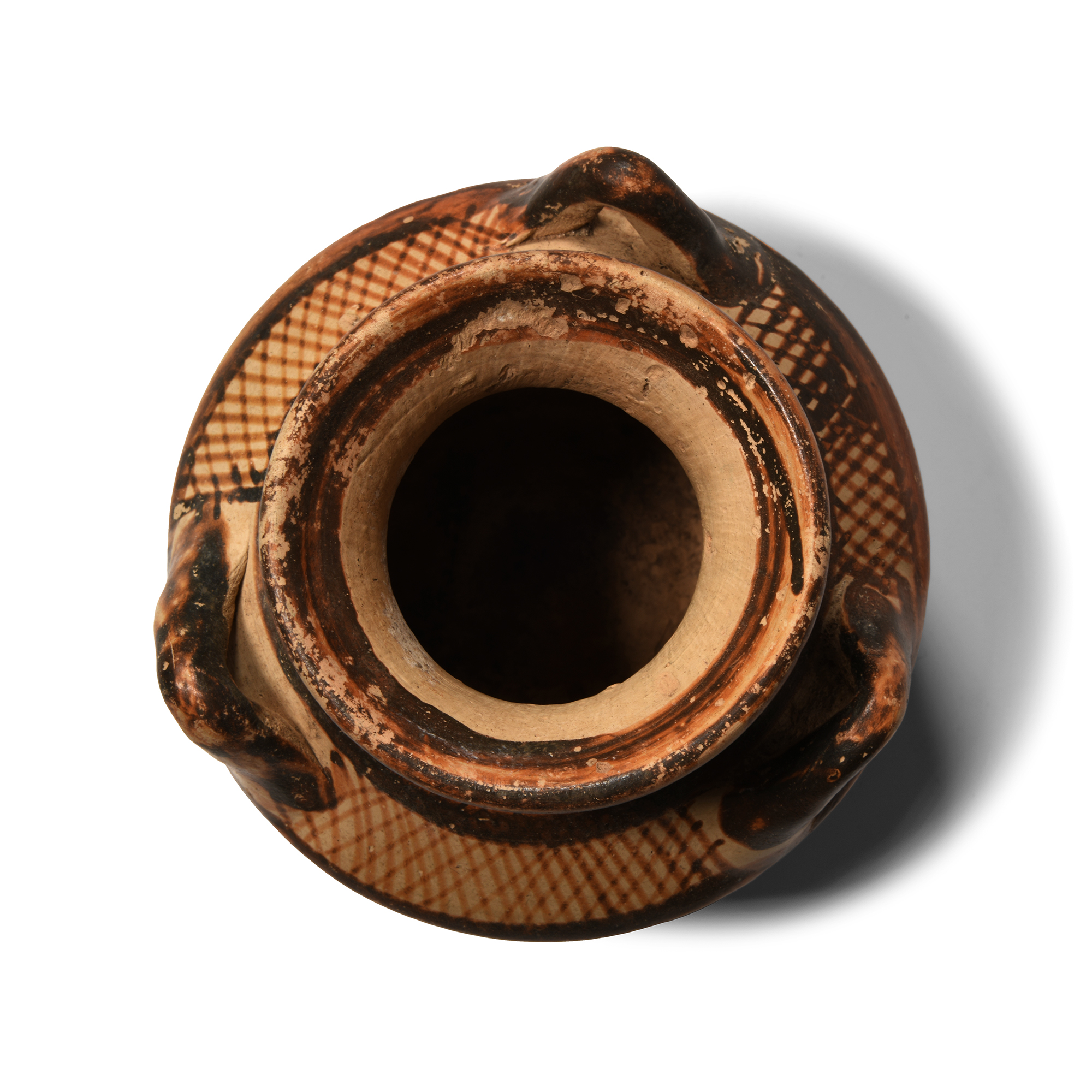
Mycenaean Painted Pottery Alabastron
13TH-11TH CENTURY B.C.
3 5/8 in. (190 grams, 93 mm wide).
Drum-shaped with a sloping shoulder, short neck, trumpet-style neck and mouth and a gently rounded base; three loop handles at regular intervals around the shoulder; reddish-brown painted geometric bands and cross-hatching against a cream slip.
ProvenanceEx private collection, Holland.
Acquired from Royal Athena Gallery, 2003, stock no.LAE07/2500.
Accompanied by an original Royal Athena label.
This lot has been checked against the Interpol Database of stolen works of art and is accompanied by search certificate number no.11852-206835.
Cf. The British Museum, museum number 1886,0415.14, for similar type; cf. The Metropolitan Museum, New York, accession number 74.51.772, for a similar dated to the Late Bronze Age, 1600-1050 B.C.
CONDITIONTimeLine Auctions follows a vetting process to ensure the authenticity and legality of all items, reinforcing our commitment to integrity and responsible trading. Each antiquity, antique, and coin lot undergoes thorough examination by a vetting committee of at least ten external specialists, professional trade association members, scientists, and archaeologists: Our Vetting Process
AUCTIONS:
TimeLine is a leading auction house specialising in antiquities, ancient art, collectables, natural history, coins, medals, and books. Our auctions offer museums, collectors, historians, and enthusiasts the opportunity to acquire unique and historically significant pieces.
LOT 0638
Mycenaean Painted Pottery Alabastron
Estimate £1,200 - 1,700€1,390 - 1,970 (for guidance only)$1,620 - 2,300 (for guidance only)
-
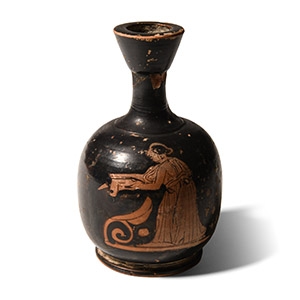
Greek Red-Figure Lekythos
5th century B.C.Estimate: £1,000 - 1,400 (‡+bp*)
Opening Bid: £540
Of ovoid form with trumpet-shaped spout and strap handle, reserved image of a lady wearing a large himation, on a baseline with scrolled foliage. 106 grams, 11 cm
Ex German collection, 1970. with Galerie Chenel, Paris, 22 July 2008.
The word lekythos had a wide meaning in ancient Greece, probably generally meaning all oil jugs, including the athletes' oil bottle (now called aryballos) as well as the types now given this name by archaeologists. Certain lekythoi resemble certain oenochoe superficially, at a first glance. Oenochoes, however, were wine-pitchers and in most cases were larger than the lekythoi, which were small jugs for oil, perfumes, etc. -
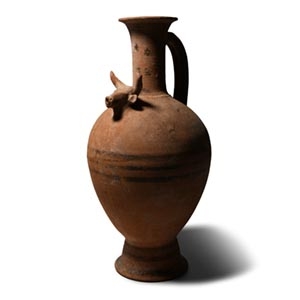
Cypriot Terracotta Jug with Bull's Head
Cypro-Archaic II - Cypro-Classical I, 600-400 B.C.Sold for (Inc. bp): £1,170
Comprising a bulbous body with conical flanged base, tubular neck and everted flange rim with chamfered upper face, loop handle to the shoulder with applied strip to the outer face and disc to each side; small spout to the shoulder formed as a bull's head; painted bands to the equator, base and lower neck. 1.5 kg, 37.5 cm
Asian collection, purchased 1968-1972. with Christie's, New York, 8 June 2001, no.127. From an important Cambridgeshire estate; thence by descent. -
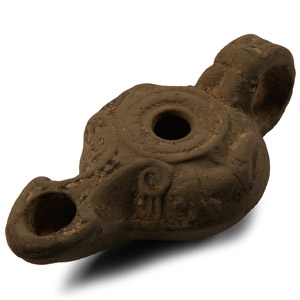
Hellenistic Terracotta Oil Lamp with Cornucopiae
2nd-1st century B.C.Estimate: £180 - 240 (+bp*)
Opening Bid: £90
With circular body and raised rim, round central filling-hole flanked by cornucopiae; long broad nozzle with rounded spout-like termination; handle with three ribs. 62 grams, 10.5 cm
Collected from 1970-1999. From the collection of the late Mr S.M., London, UK.
The principal parts of a Graeco-Roman lamp were: a) the body or reservoir which contained the oil (infundibulum); the flat circular top (discus) on which the design was placed, sometimes with an ornamental rim; the edge (margo); the nozzle (rostrum, nasus, myxus) with a hole for the insertion of the wick (ellychnium); and the handle (ansa, manubrium,).
