
Loading, please wait...
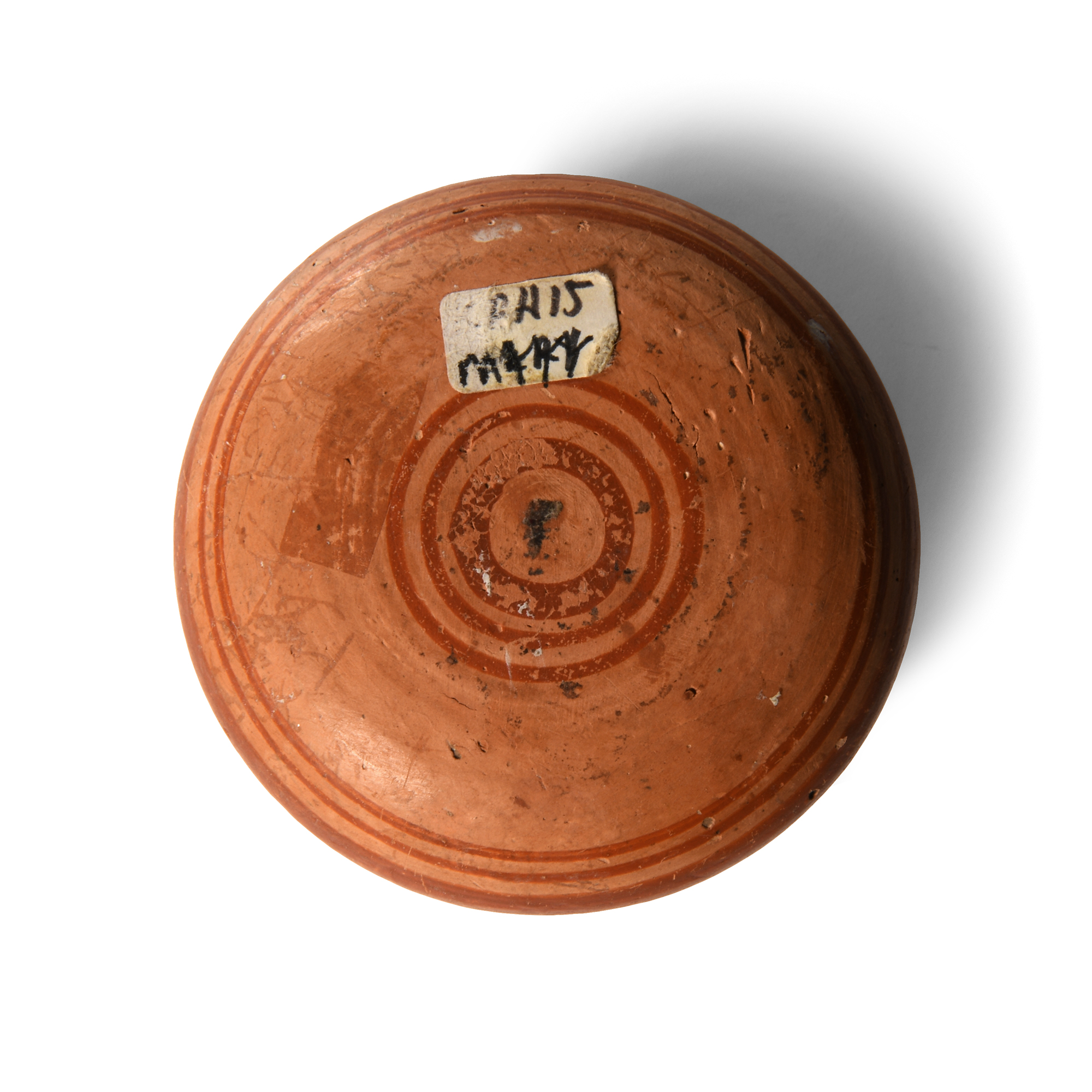
LOT 0031
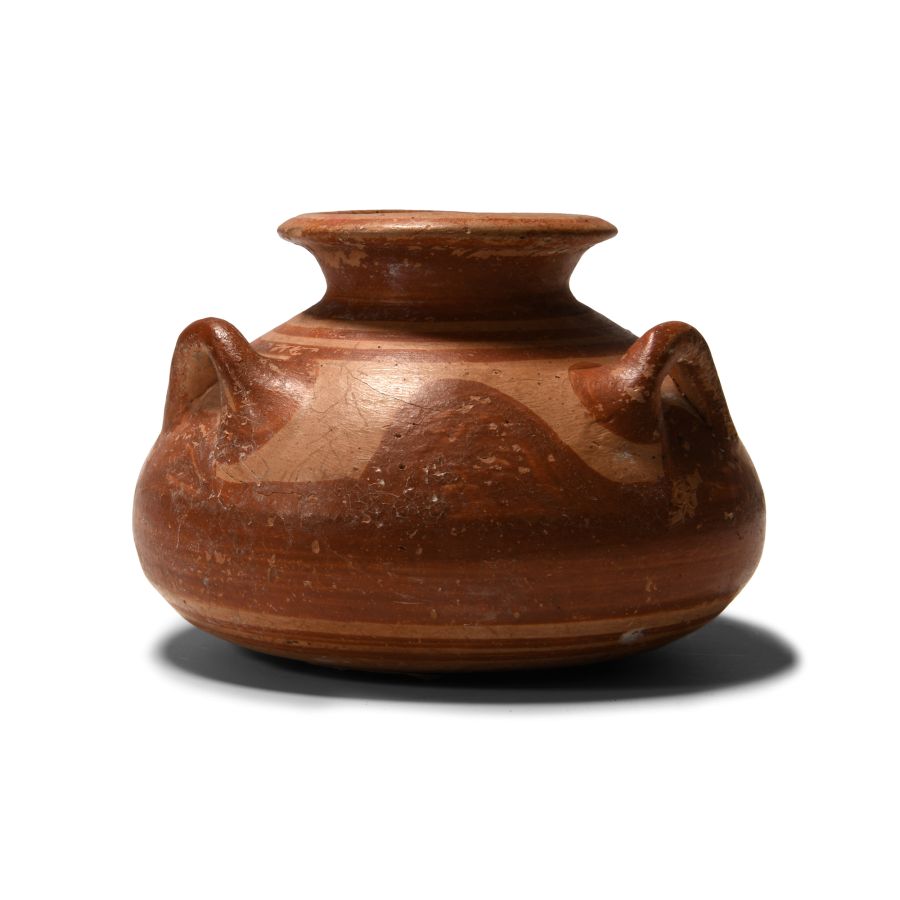
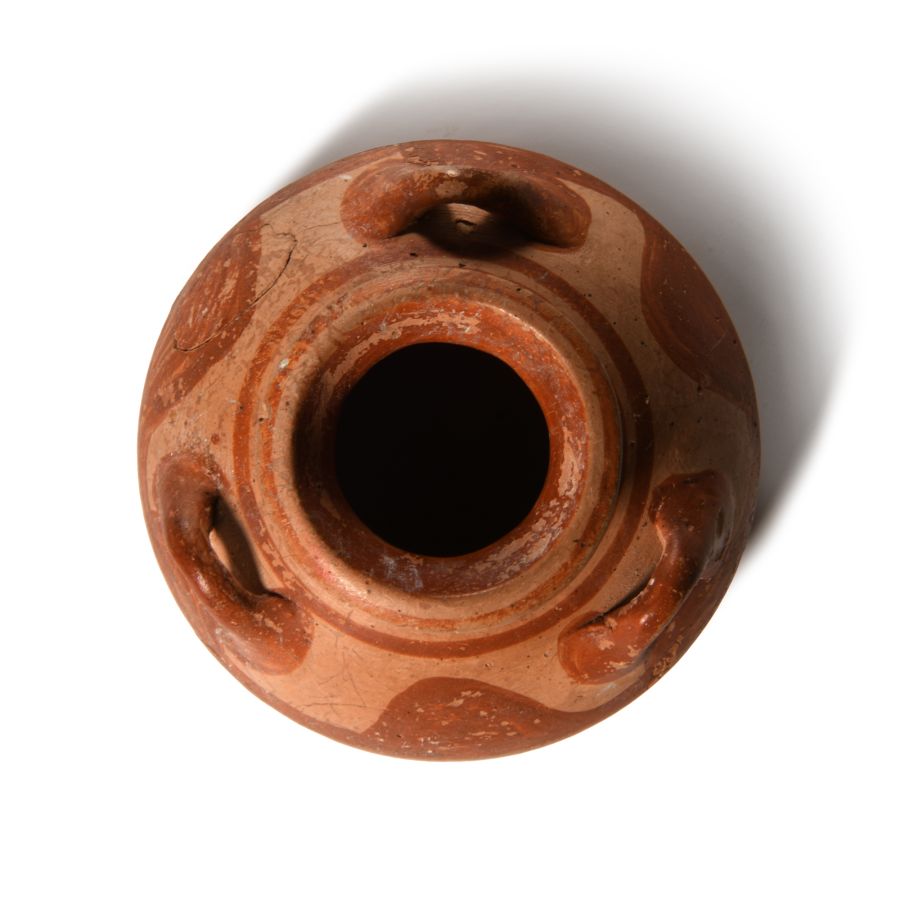
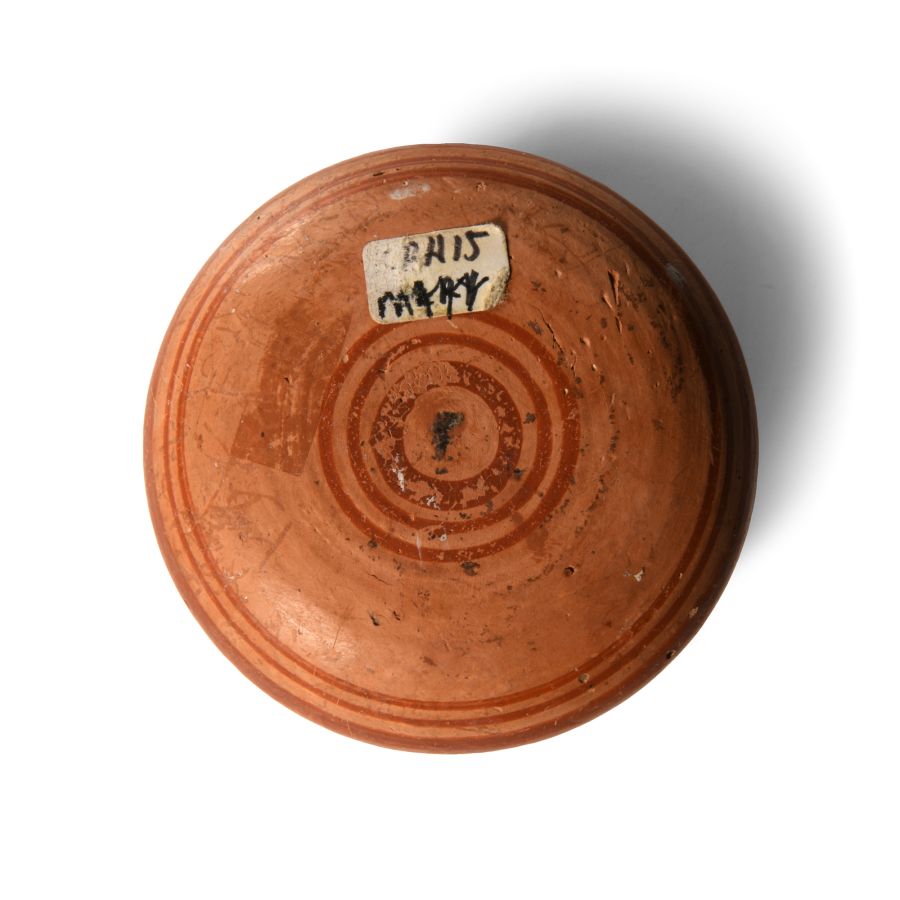
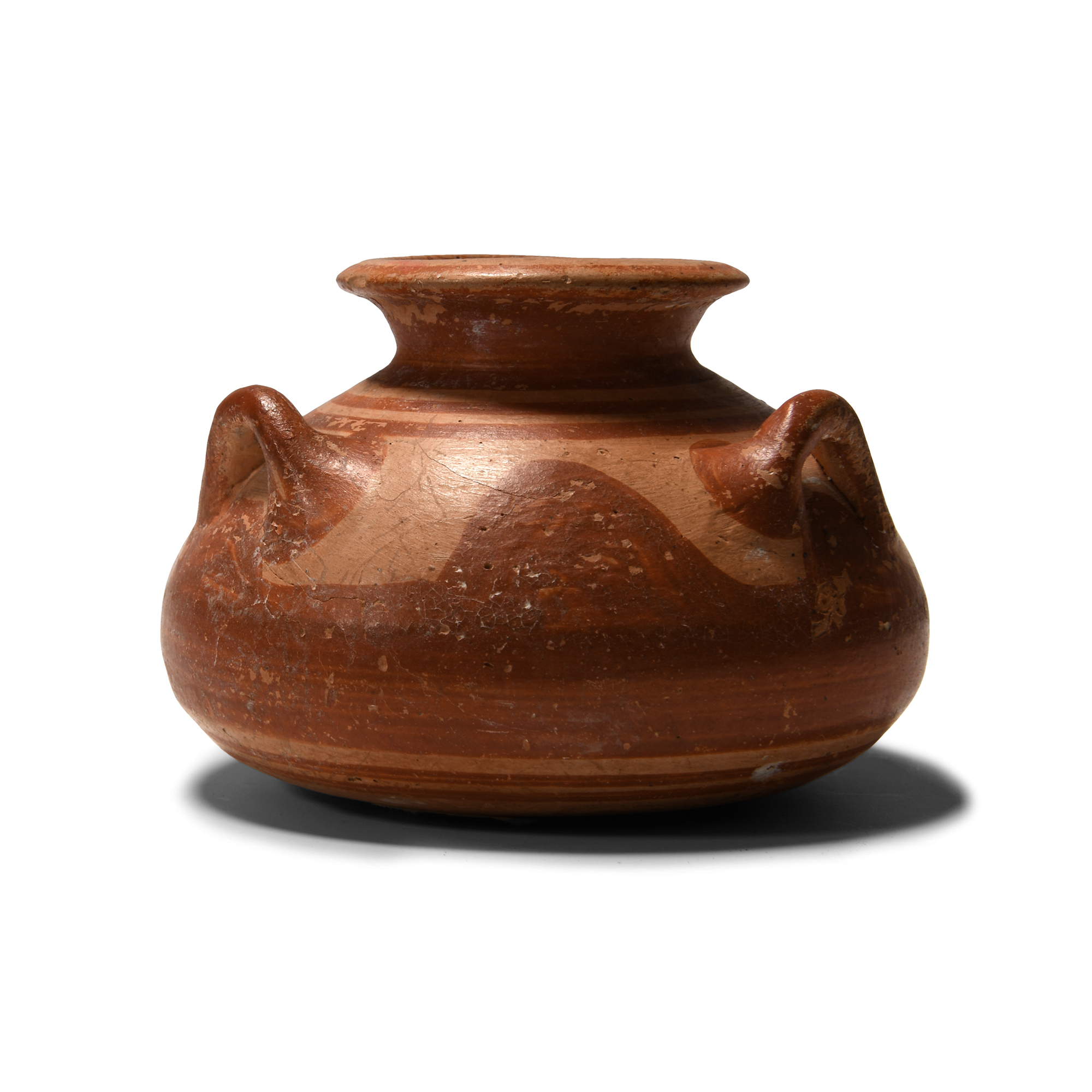
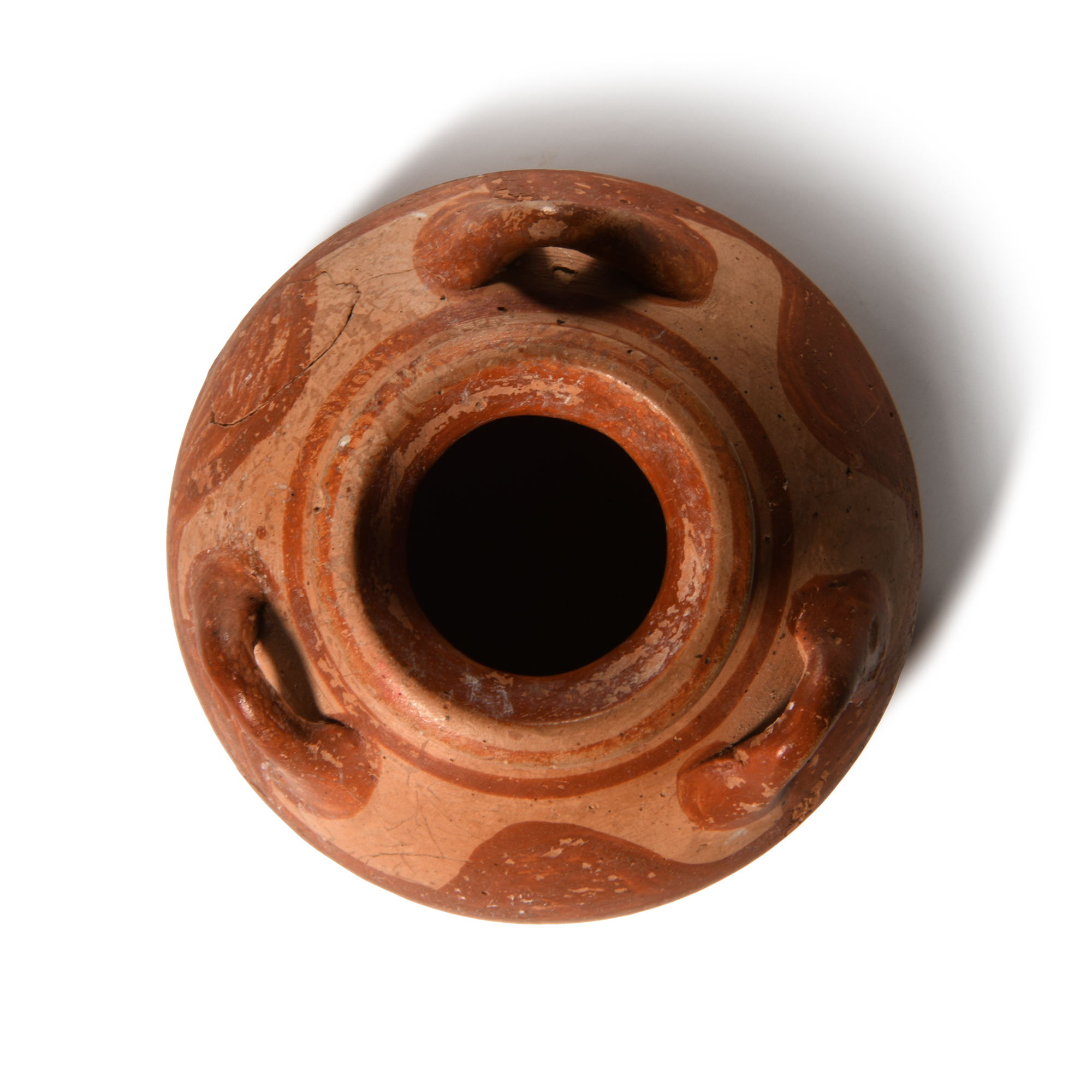
Mycenaean Painted Pottery Alabastron
14TH-13TH CENTURY B.C.
2 3/4 in. (70 grams, 69 mm).
Formed with a squat globular body, everted rim and three lug handles to the shoulder; painted reddish-brown over a cream slip with concentric bands and rings to the mouth, neck, shoulder and base, larger solid undulating forms covering the lower body.
ProvenanceAcquired from Royal Athena Gallery, 2003.
This lot has been checked against the Interpol Database of stolen works of art and is accompanied by search certificate number no.11851-206833.
Cf. Sadberk Hanım Museum, Istanbul, for a very similar example.
FootnotesLate Helladic IIIA period of Mycenaean culture.
CONDITIONTimeLine Auctions follows a vetting process to ensure the authenticity and legality of all items, reinforcing our commitment to integrity and responsible trading. Each antiquity, antique, and coin lot undergoes thorough examination by a vetting committee of at least ten external specialists, professional trade association members, scientists, and archaeologists: Our Vetting Process
AUCTIONS:
TimeLine is a leading auction house specialising in antiquities, ancient art, collectables, natural history, coins, medals, and books. Our auctions offer museums, collectors, historians, and enthusiasts the opportunity to acquire unique and historically significant pieces.
LOT 0031
Mycenaean Painted Pottery Alabastron
Estimate £1,500 - 2,000€1,740 - 2,320 (for guidance only)$2,030 - 2,700 (for guidance only)
-
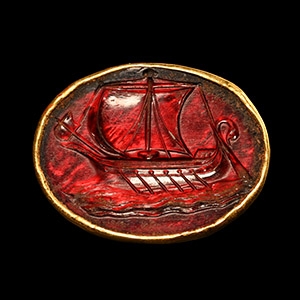
Hellenistic Gold Ring with Galley Gemstone
1st century B.C.-2nd century A.D.Sold for (Inc. bp): £29,900
With D-section hollow-formed hoop and flared ellipsoid bezel, set with a Roman intaglio depicting a war galley under sail. 7.51 grams, 24 56 mm overall, 18.18 mm internal diameter (approximate size British P 1/2, USA 7 3/4, Europe 16.86, Japan 16)
Old private collection, 1970-1980. Private collection of Mr S.A., Switzerland, 1990s, thence by descent. Accompanied by an academic report by Dr Raffaele D'Amato. This lot has been checked against the Interpol Database of stolen works of art and is accompanied by search certificate no.12122-211870. -
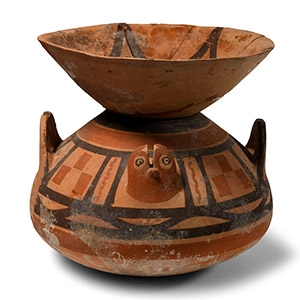
Large Daunian Painted Terracotta Olla
Circa 5th-4th century B.C.Sold for (Inc. bp): £416
Broad squat body with painted bands to the shoulder and two vertical loop handles, broad conical mouth, two lateral tabs with bird-head detailing; repaired. 2.5 kg, 27.5 cm high
From a collection acquired on the UK art market from various auction houses and collections mostly before 2000. From an important Cambridgeshire estate; thence by descent. -
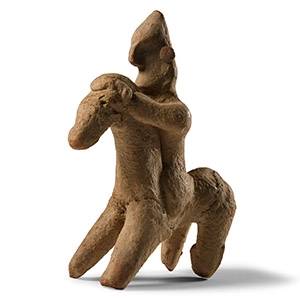
Cypriot Ceramic Horse and Rider Statuette
8th-7th century B.C.Sold for (Inc. bp): £260
Representing a warrior with conical helmet riding his mount, round earrings. 209 grams, 14 cm high
From a collection acquired on the UK art market from various auction houses and collections mostly before 2000. From an important Cambridgeshire estate; thence by descent.
The most popular animals in Cypriot coroplasts of the 8th and 7th centuries B.C. were horses, with or without riders, with long necks and decorated along the whole body like contemporary ceramics. It is worth remembering that the horse, in this period represented a status symbol for the military aristocracy and that bodies of sacrificed horses have been found in royal tombs.
