
Loading, please wait...
LOT 1875
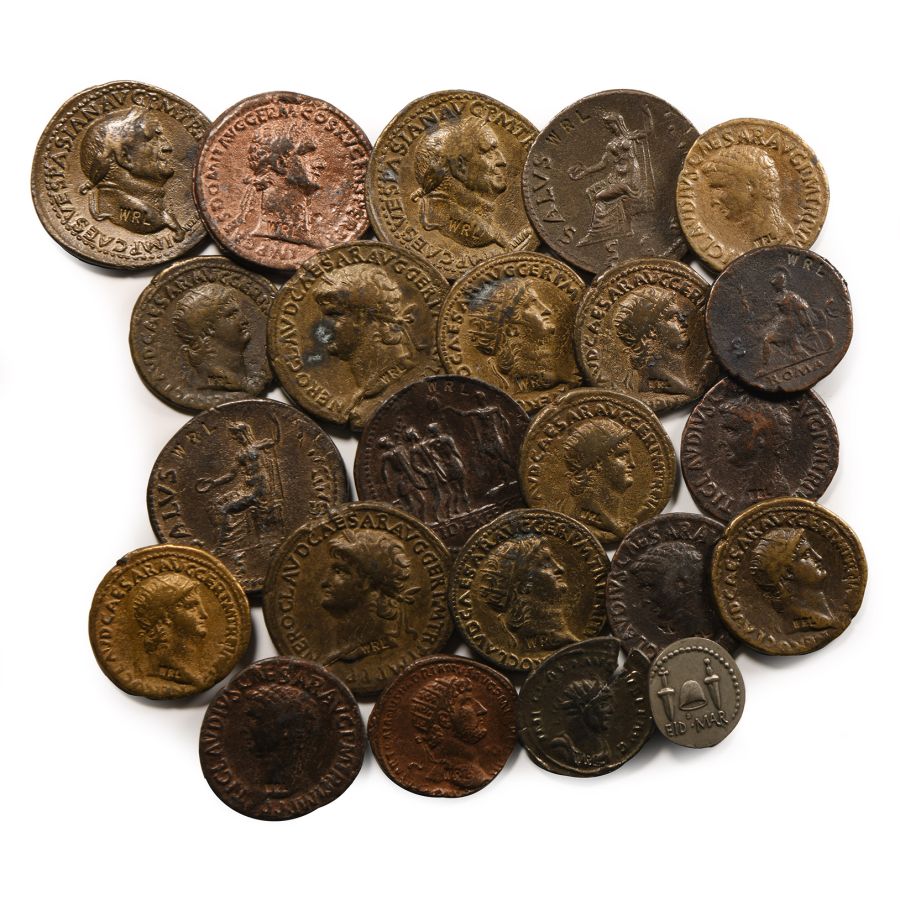
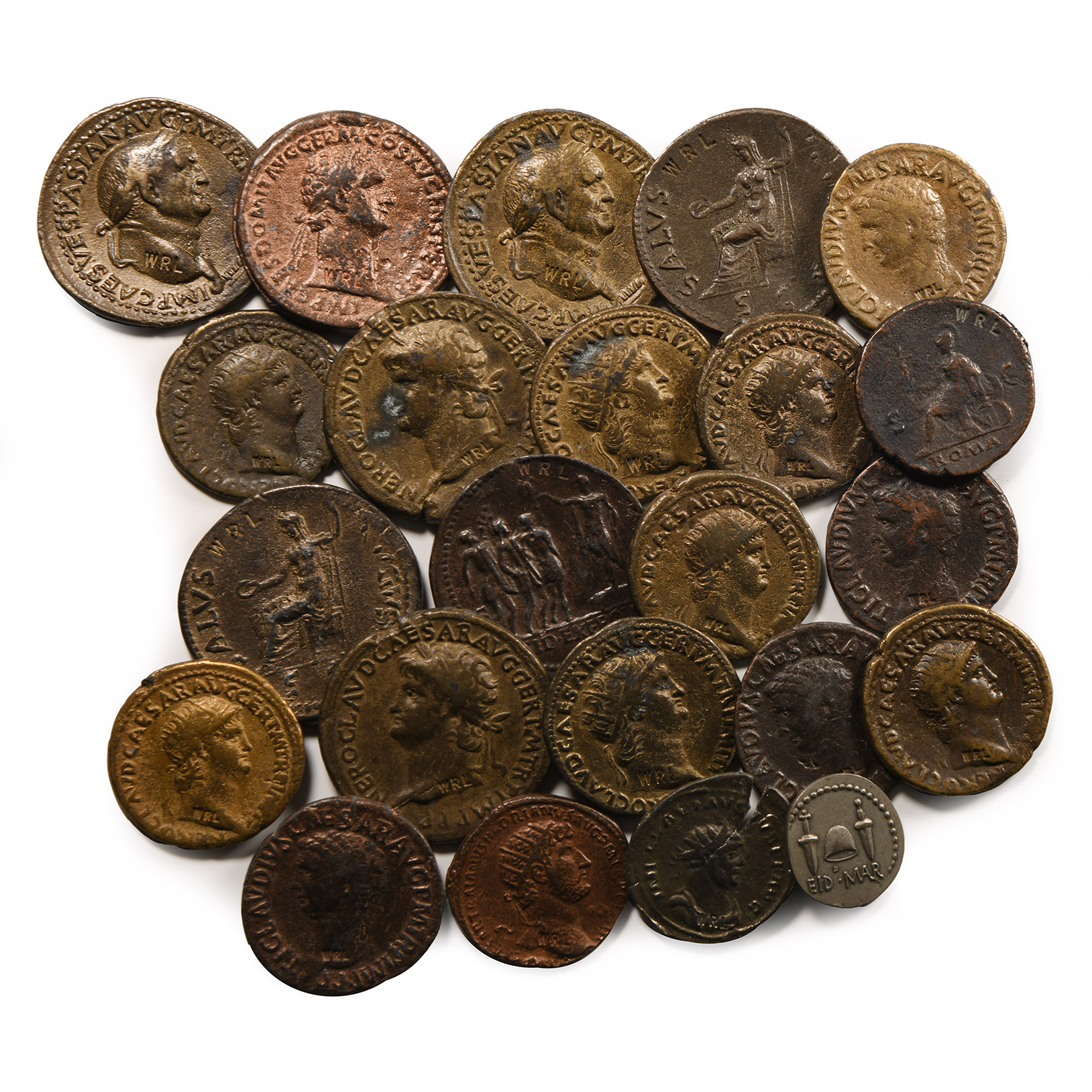
Museum Reproduction Coin Group
20TH CENTURY A.D.
(274 grams total, 20-36 mm.).
Mixed group comprising: various emperors, issues and reverse types. [23, No Reserve]
ProvenanceFrom an old UK collection.
From the collection of an London antiquarian.
TimeLine Auctions follows a vetting process to ensure the authenticity and legality of all items, reinforcing our commitment to integrity and responsible trading. Each antiquity, antique, and coin lot undergoes thorough examination by a vetting committee of at least ten external specialists, professional trade association members, scientists, and archaeologists: Our Vetting Process
AUCTIONS:
TimeLine is a leading auction house specialising in antiquities, ancient art, collectables, natural history, coins, medals, and books. Our auctions offer museums, collectors, historians, and enthusiasts the opportunity to acquire unique and historically significant pieces.
-
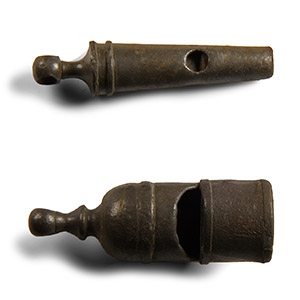
Georgian Pewter Whistle Group
18th century A.D.Sold for (Inc. bp): £59
Comprising one slender, tapering with vent to both faces; one squat with domed upper, knop finial 41 grams total, 58-60 mm
Found Billingsgate spoil from the Thames foreshore, London, UK, circa 1984. Property of an Essex collector. -
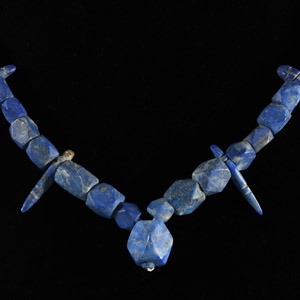
Bactrian Style Lapis Lazuli Bead Necklace
20th century A.D.Sold for (Inc. bp): £26
A restrung designer necklace comprising various beads including cornerless cubes. 41.8 grams, 41 cm
Acquired on the London, UK, art market in the 1990s. Ex London, UK, gallery. -
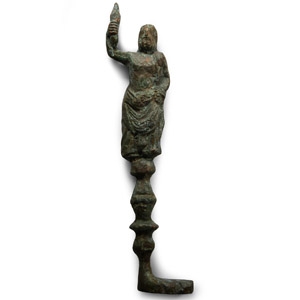
Post Medieval Roman Style Key
20th century A.D.Sold for (Inc. bp): £26
The handle modelled as Jupiter holding a thunderbolt in his extended hand, balustered stem and the flat bit with two notches to each side. 189 grams, 16 cm
Property of the vendor's grandfather, thence by family descent, circa 1985. From the private collection of a New York, USA gentleman.
