
Loading, please wait...
LOT 1806
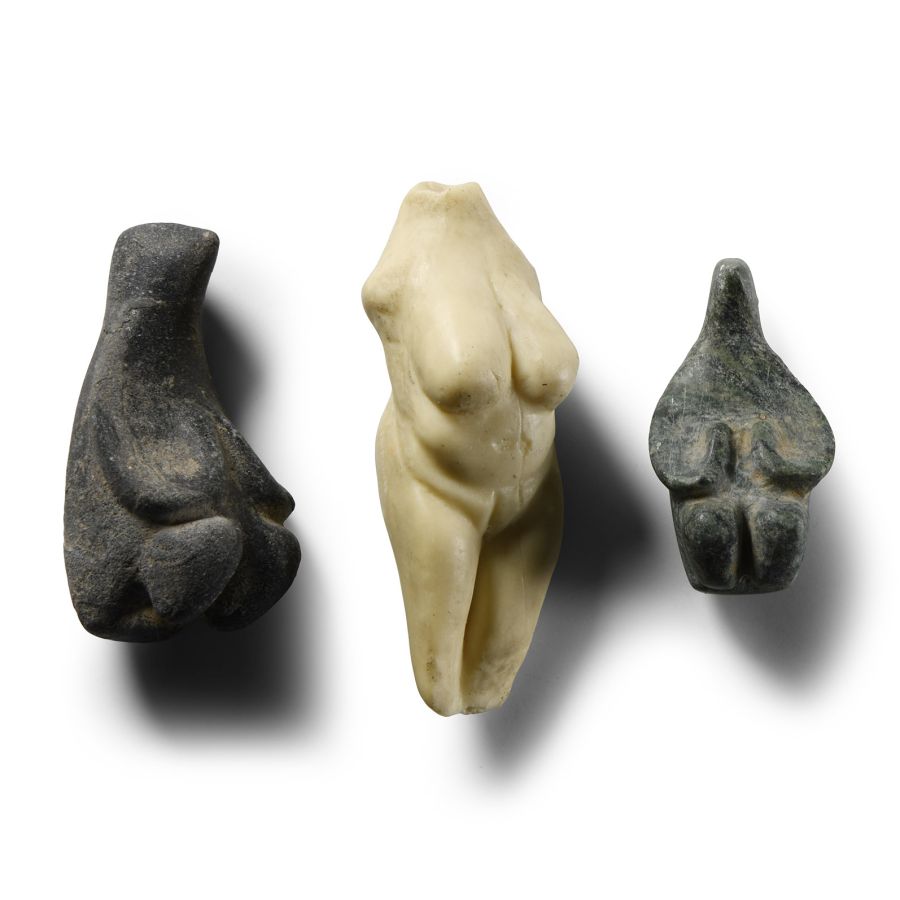
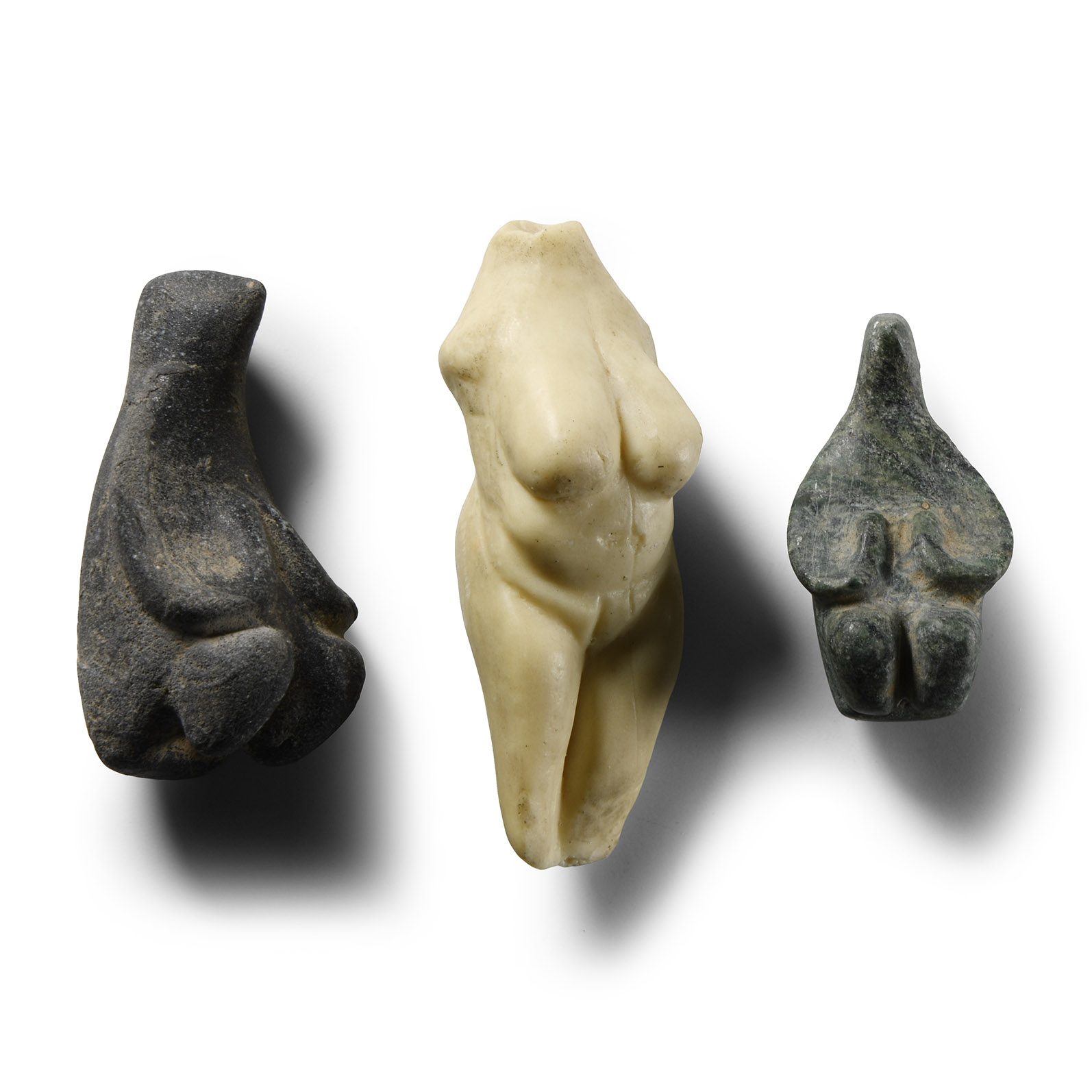
Mother Goddess Idol Group
20TH CENTURY A.D.
1 3/4 - 2 3/4 in. (97 grams total, 45-71 mm).
Comprising reproductions of a 'Venus of Dolní Věstonice' type and two crouching figures with looped arms. [3, No Reserve]
ProvenanceFrom a collection acquired on the UK art market from various auction houses and collections mostly before 2000.
From an important Cambridgeshire estate; thence by descent.
TimeLine Auctions follows a vetting process to ensure the authenticity and legality of all items, reinforcing our commitment to integrity and responsible trading. Each antiquity, antique, and coin lot undergoes thorough examination by a vetting committee of at least ten external specialists, professional trade association members, scientists, and archaeologists: Our Vetting Process
AUCTIONS:
TimeLine is a leading auction house specialising in antiquities, ancient art, collectables, natural history, coins, medals, and books. Our auctions offer museums, collectors, historians, and enthusiasts the opportunity to acquire unique and historically significant pieces.
-
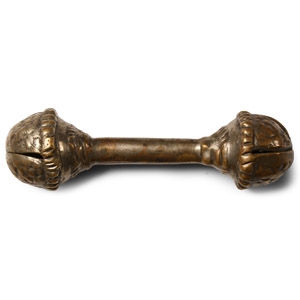
Victorian Bronze Child's Rattle
Circa 1860-1880 A.D.Sold for (Inc. bp): £39
Double-ended rattle with high-relief ropework collar to each end and crotal-bell finials. 156 grams, 11.7 cm
Ex West Sussex, UK, collection. Property of a High Wycombe, Buckinghamshire, UK, gentleman. -
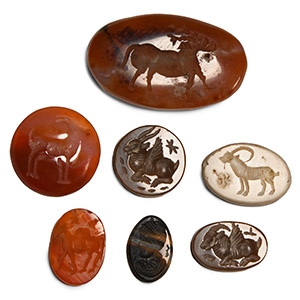
Western Asiatic Style Gemstone Group
20th century A.D.Sold for (Inc. bp): £52
Including discoid and tabular types with mainly zoomorphic motifs; after the antique. 29.6 grams total, 17-43 mm
Acquired on the London, UK, art market in the 1990s. From a gentleman's private collection. -
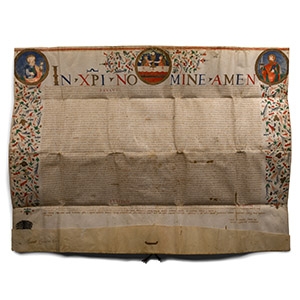
Post Medieval Vellum Document of Pope Paul III
Italy, 1534-1538 A.D.Sold for (Inc. bp): £715
Large rectangle with linear upper border and three pendant medallions: St. Peter with book and key, angels supporting the communion cup, St. Paul with sword and book; flanking blocks of dense flowers, leaves and tendrils above incipit 'IN XPI NOMINE AMEN' (in the name of Christ let it be so); similar lateral floral ornament flanking the central block of text in a fine italic hand with red-inked titles and name of the issuing authority (PAVLVS); folded lower edge with cord for attachment of an authenticating seal (absent); witnessed at bottom left corner by Franciscus Caesariensis Ep[iscopu]s (Bishop Francis of Caesaria) and credited at bottom right 'gratis in omnibus amore dei / Marius Cappocinus secretarius' (with thanks to the love of God in all things, Marius the Capuchin, Secretary); some usage wear, faded Italian-language notation to reverse. 137 grams, 74 x 62 cm
Collection of Victor Spark, UK, 2007. Ex central London gallery.
Pope Paul III was the commissioner of the painting of the Last Judgement on the ceiling of the Sistine Chapel, Vatican City.
