
Loading, please wait...
LOT 0203
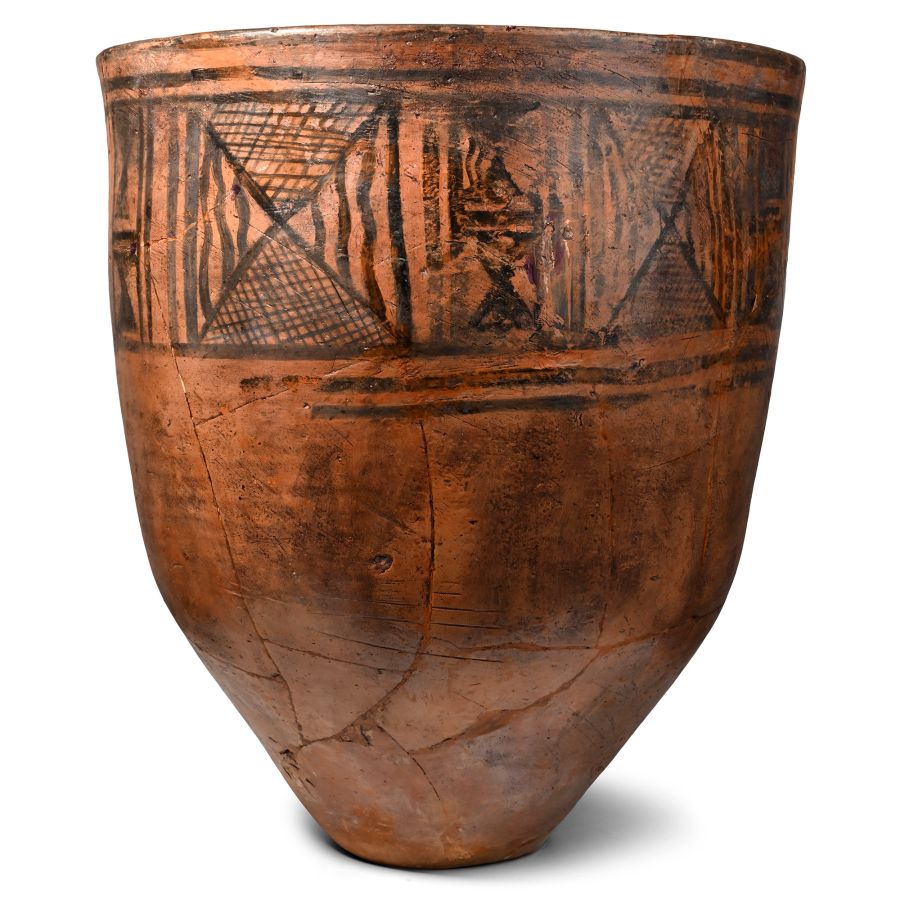
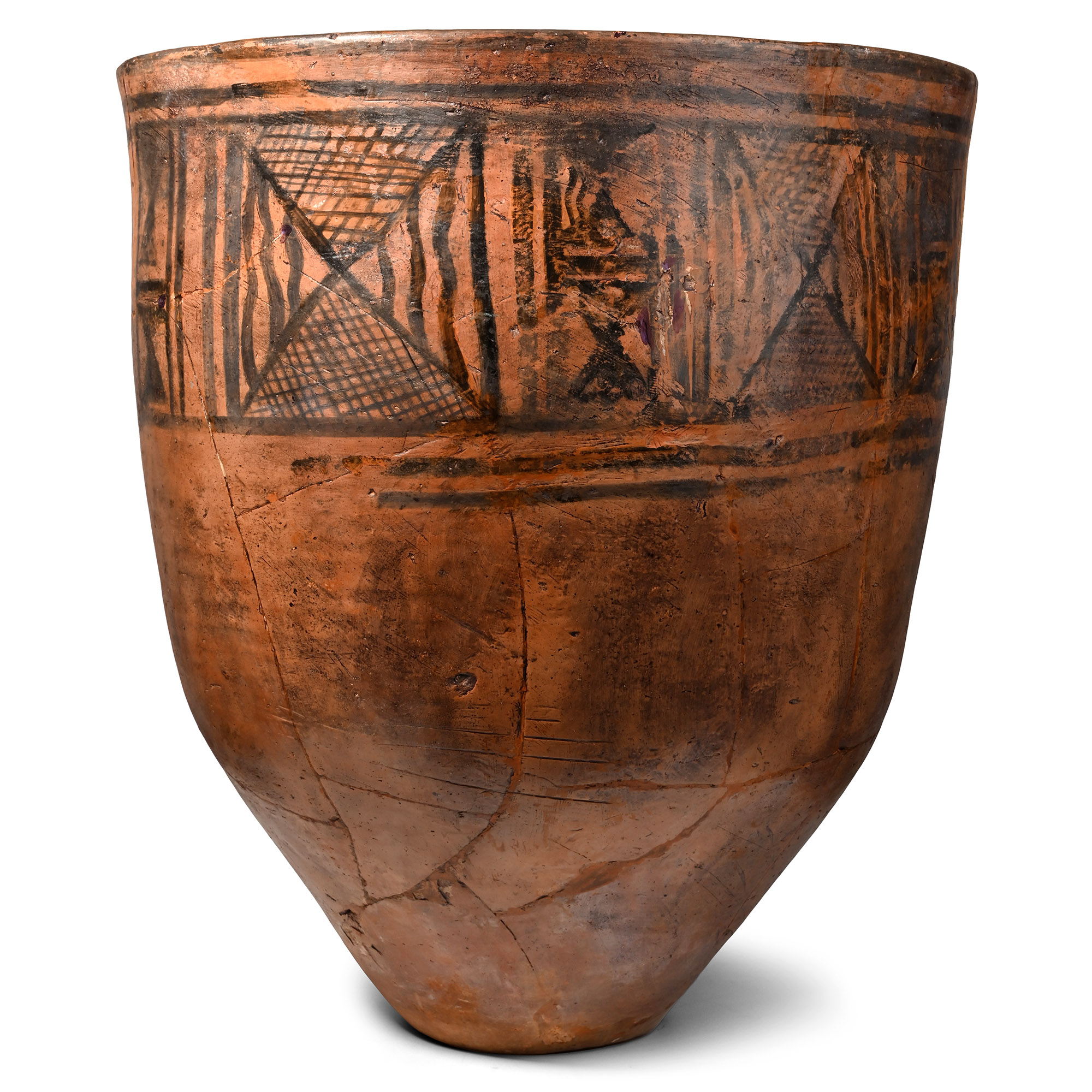
Monumental Western Asiatic Pottery Jar
CIRCA 3000 B.C.
25 1/4 in. (17 kg, 64 cm high).
Comprising a sharply tapering lower body, parallel-sided upper body and rounded rim; decorated in dark brown with thirteen square panels with central saltire on a hatched field; repaired.
Provenancewith Mahboubian Gallery, London, UK, 1974.
Private collection, London, UK.
This lot has been checked against the Interpol Database of stolen works of art and is accompanied by search certificate number no.12972-245238.
Cf. Notable Works of Art Now on the Market, supplement to The Burlington Magazine, December 1974, pl.1, for type.
CONDITIONTimeLine Auctions follows a vetting process to ensure the authenticity and legality of all items, reinforcing our commitment to integrity and responsible trading. Each antiquity, antique, and coin lot undergoes thorough examination by a vetting committee of at least ten external specialists, professional trade association members, scientists, and archaeologists: Our Vetting Process
AUCTIONS:
TimeLine is a leading auction house specialising in antiquities, ancient art, collectables, natural history, coins, medals, and books. Our auctions offer museums, collectors, historians, and enthusiasts the opportunity to acquire unique and historically significant pieces.
LOT 0203
Monumental Western Asiatic Pottery Jar
Estimate £2,000 - 3,000€2,320 - 3,480 (for guidance only)$2,700 - 4,050 (for guidance only)
-
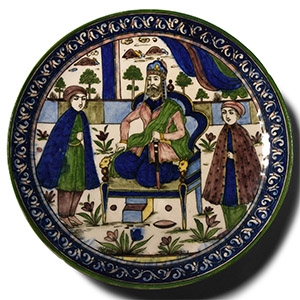
Large Iranian Ceramic Plate with Enthroned Shah
Early 20th century A.D.Estimate: £1,500 - 2,000 (‡+bp*)
Opening Bid: £750
With running foliage border enclosing a scene with a bearded Shāh sitting on a four-legged throne with lion-head finials and flanked by two attendants; flowers and other details in the field. 1.24 kg, 34.1 cm wide
Ex private collection, Belgium. with d'Arts d'Orient et Orientalisme, Paris, France, 1 June 2015, no.73. Ex Weber Kunsthandel, Cologne, Germany, 2015. This lot has been checked against the Interpol Database of stolen works of art and is accompanied by a search certificate number no.12131-218137. -
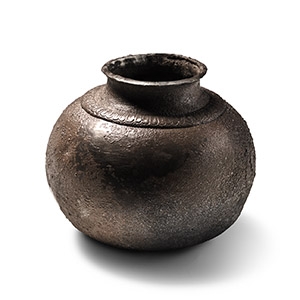
Achaemenid Silver Jar with Lotus Flower
Circa 500 B.C.Sold for (Inc. bp): £910
Squat in profile with basal disc, raised panel to the shoulder with lotus flower detailing, low neck and everted rim. 117 grams, 78 mm
London art market, 1980s-2000s. Private collection, London, UK. -
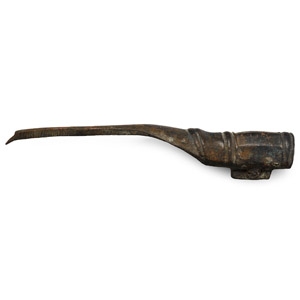
Western Asiatic Bronze Stylus
Late 1st millennium A.D.Estimate: £100 - 140 (+bp*)
Opening Bid: £50
Comprising a barrel-shaped facetted socket with a rivetted lug to the rear, the body extending to a tapering nib with a sharp point. 17.8 grams, 84 mm
From the collection of a gentleman, acquired on the London art market in the 1990s.
