
Loading, please wait...
LOT 0214
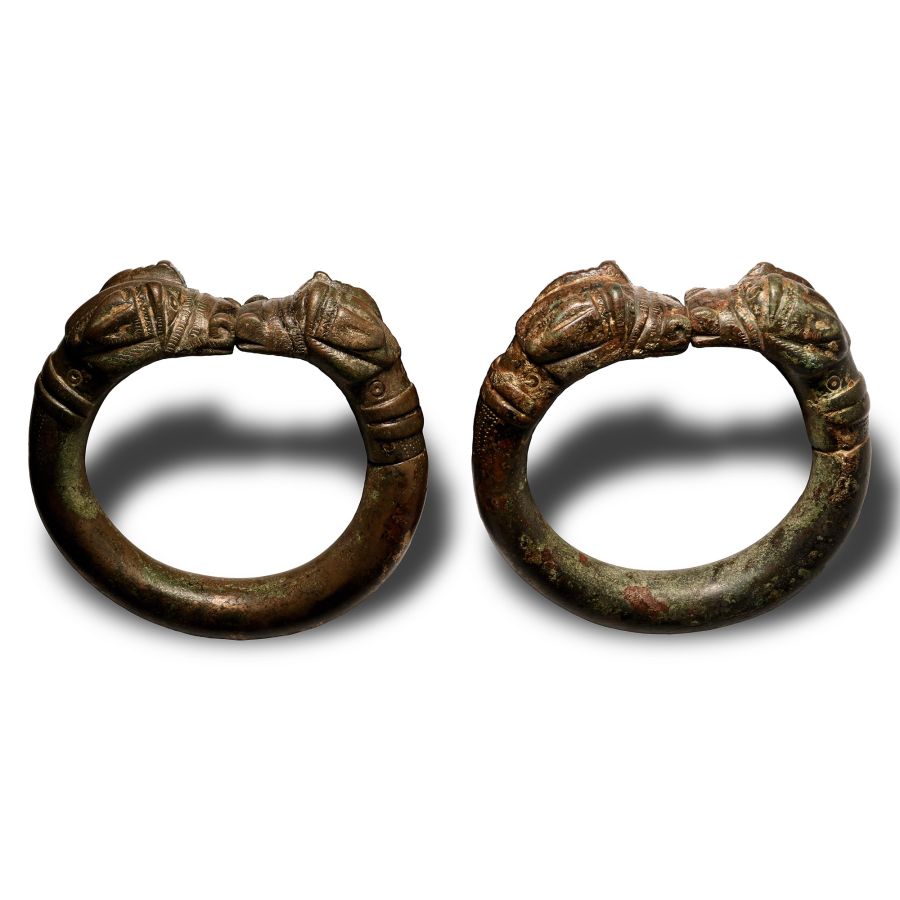
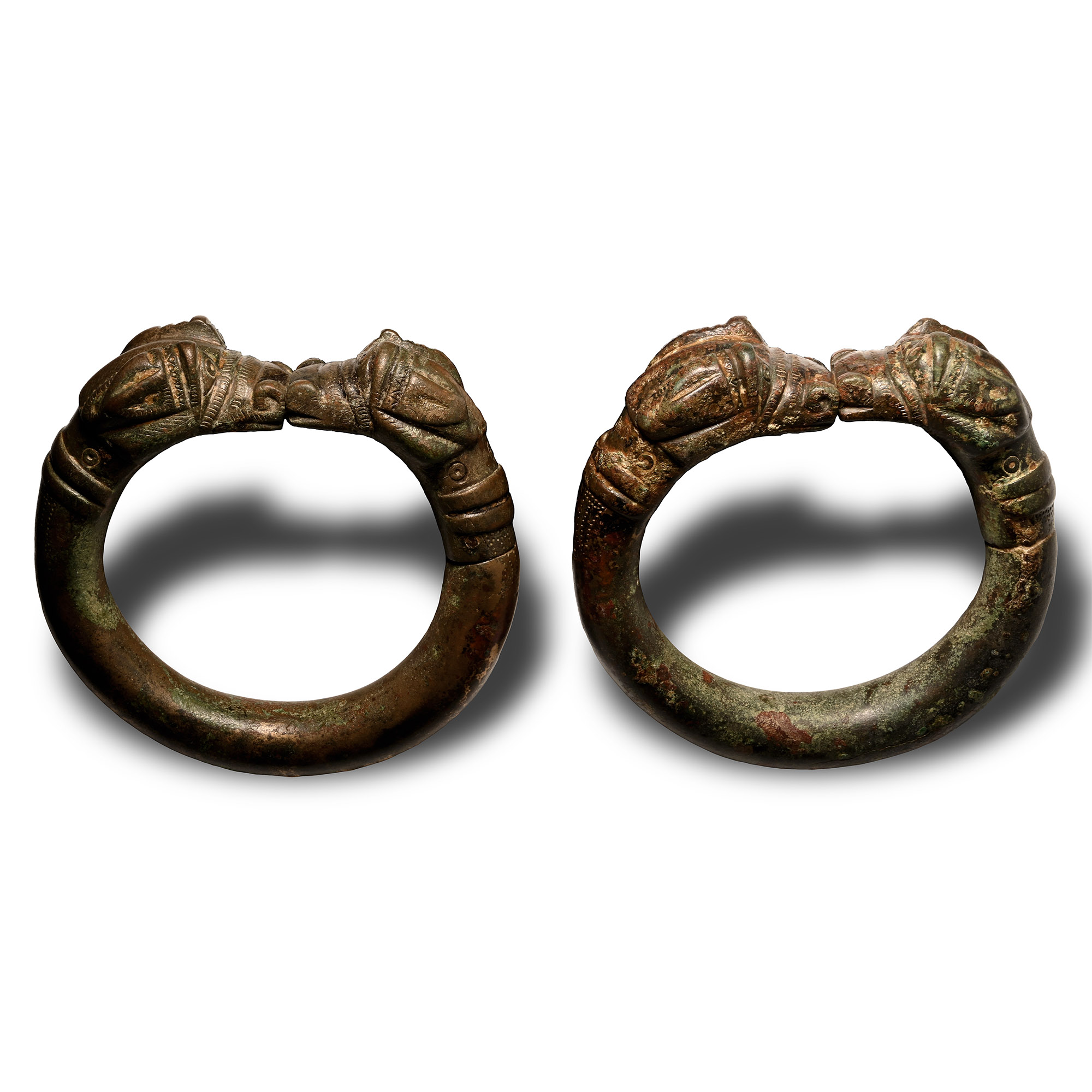
Monumental Luristan Bronze Armband Pair with Dragon Heads
LATE 1ST MILLENNIUM B.C.
5 1/8 in. (1.19 kg total, 13-13.1 cm).
A matching pair of penannular armbands, each with a round-section body and dragon-head terminals, one terminal on each band separately made; the dragons with ring-and-dot eyes and linear decoration, slit mouths and flaring nostrils. [2]
ProvenanceEx London, UK gallery, 1971-early 2000s.
Private collection, London.
Bronze armbands of this scale and quality are characteristic of Luristan, an important centre of metal production in western Iran during the early 1st millennium B.C. The region is renowned for its distinctive cast bronzes, including weapons, horse trappings, and items of personal adornment, often decorated with powerful animal imagery. The dragon, with its elongated body and open jaws, was a common motif in Luristan art, symbolising strength, protection, and the supernatural. Armbands with dragon-head terminals likely carried an apotropaic function, serving both as impressive ornaments and as protective charms for the wearer. Monumental examples such as this pair are rare survivals, attesting to the high status of their original owner and the extraordinary skill of Luristan bronze workers.
CONDITIONTimeLine Auctions follows a vetting process to ensure the authenticity and legality of all items, reinforcing our commitment to integrity and responsible trading. Each antiquity, antique, and coin lot undergoes thorough examination by a vetting committee of at least ten external specialists, professional trade association members, scientists, and archaeologists: Our Vetting Process
AUCTIONS:
TimeLine is a leading auction house specialising in antiquities, ancient art, collectables, natural history, coins, medals, and books. Our auctions offer museums, collectors, historians, and enthusiasts the opportunity to acquire unique and historically significant pieces.
LOT 0214
Monumental Luristan Bronze Armband Pair with Dragon Heads
Sold for (Inc. bp): £845
-

Achaemenid Silver Alabastron with Duck Handles
Circa 500 B.C.Estimate: £800 - 1,000 (+bp*)
Opening Bid: £400
With a bag-shaped tubular body and a rounded base; applied loop handles to the shoulders, each formed as a duck's head. 95 grams, 13.2 cm
London art market, 1980s-2000s. Private collection, London, UK. -
.jpg)
Sasanian Bronze Ring with Insect Gemstone
3rd-5th century A.D.Sold for (Inc. bp): £91
Inset scaraboid with intaglio insect (hornet?) to the gemstone. 4.07 grams, 26.53 mm overall, 18.06 mm internal diameter (approximate size British O, USA 7, Europe 14.98, Japan 14)
Acquired on the UK art market before 2000. Property of an Essex, UK, gentleman. -
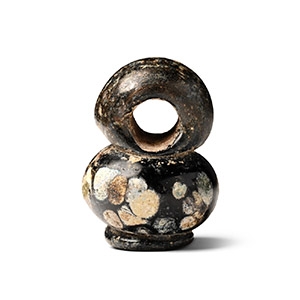
Western Asiatic Glass Jug Pendant
10th-14th century A.D.Estimate: £100 - 140 (+bp*)
Opening Bid: £50
With bulbous body and discoid base, thick loop, applied coloured inserts. 5.14 grams, 22 mm
From the private collection of the late Mr S.M., 1969-1999.
