
Loading, please wait...
LOT 0036
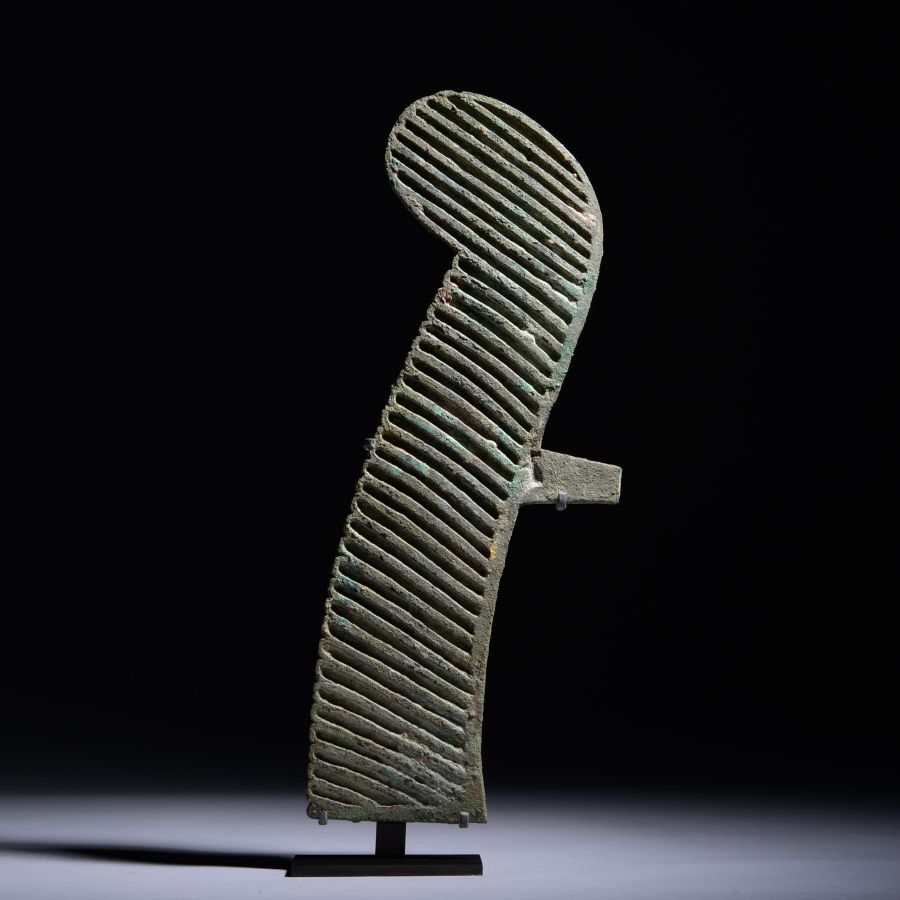
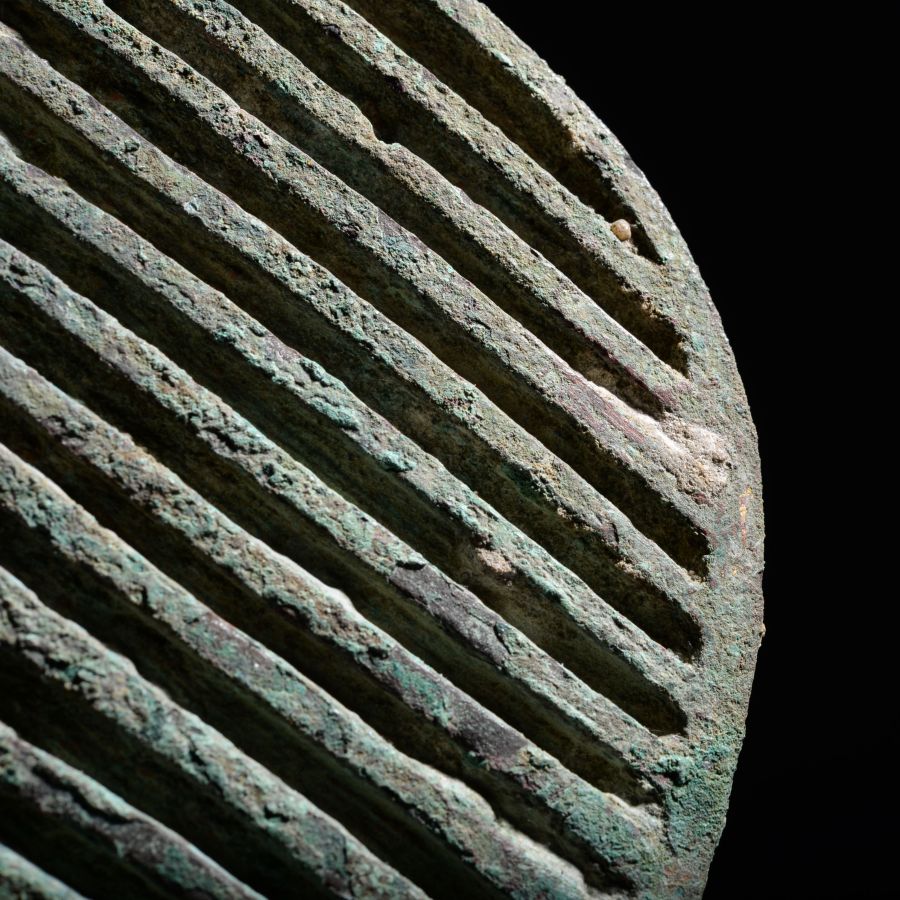
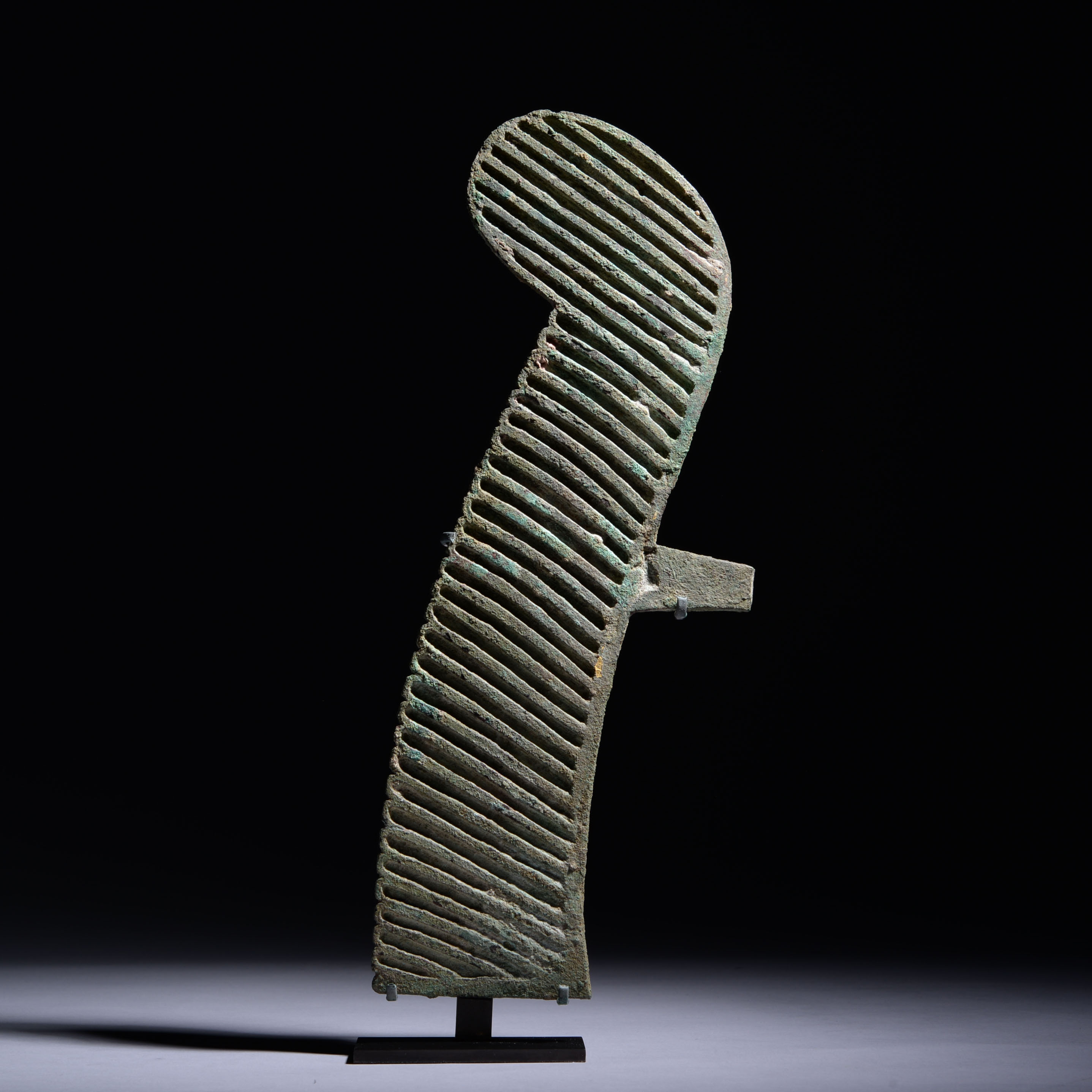
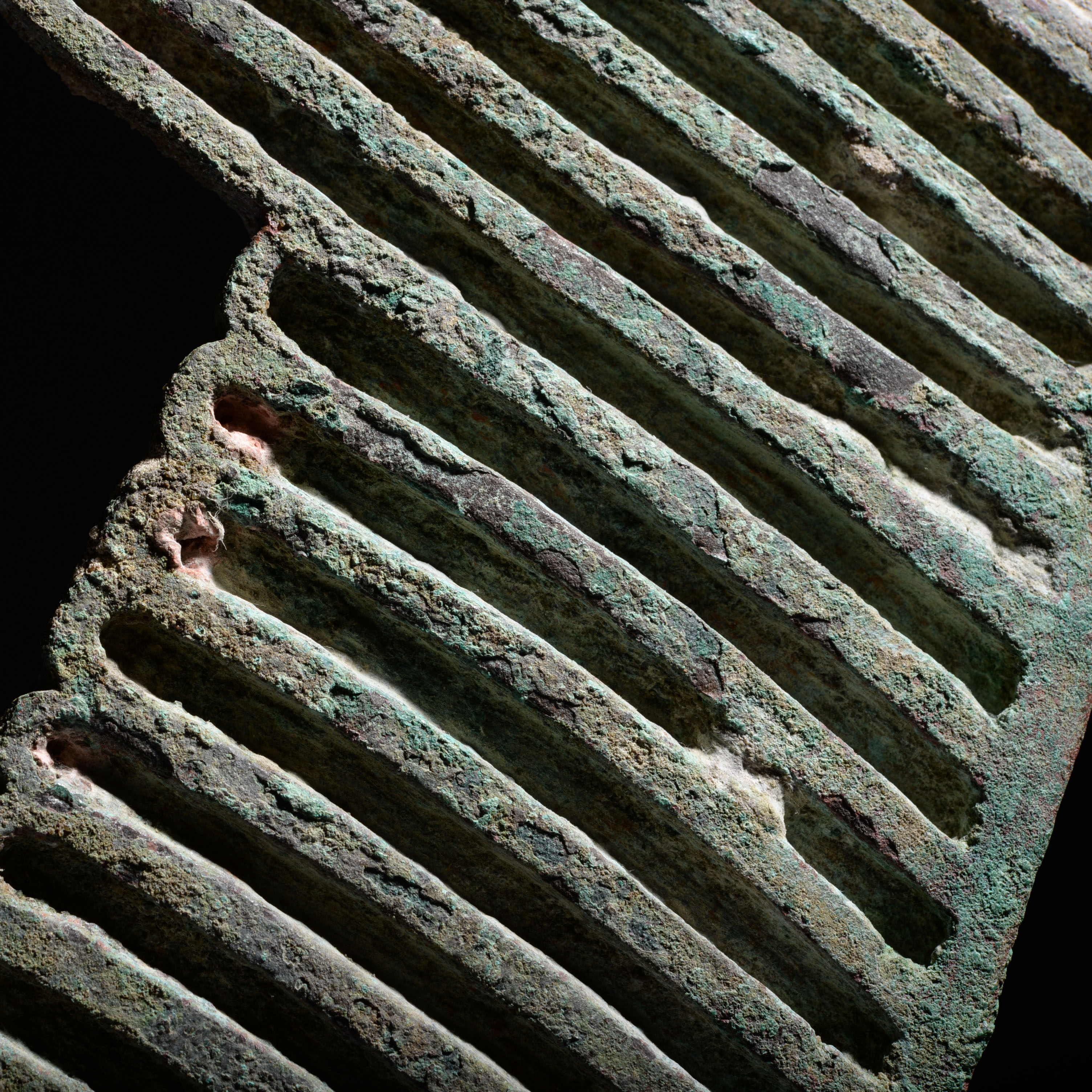
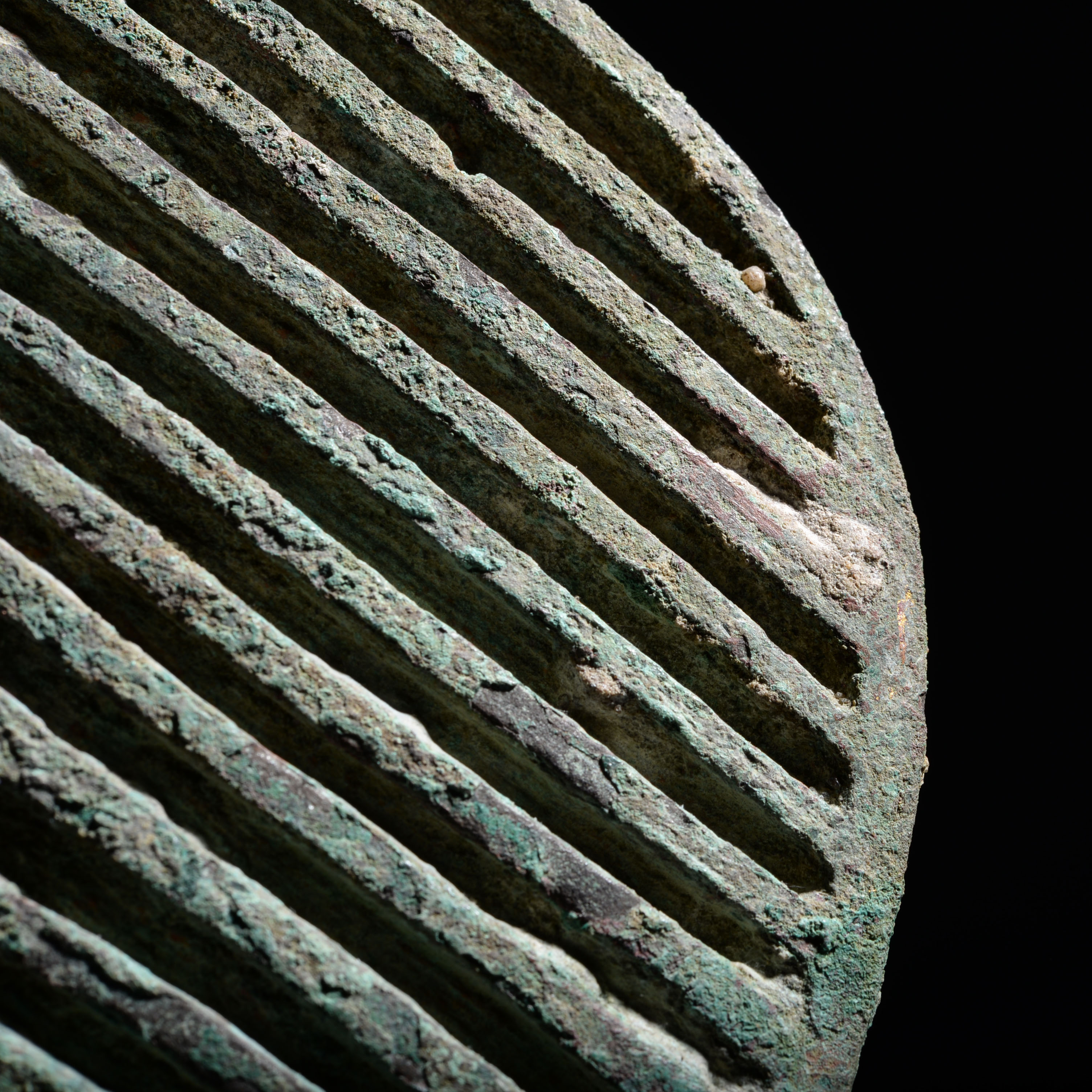
Monumental Egyptian Bronze Atef Crown Feather From a Life-Sized Statue
LATE PERIOD, CIRCA 664-332 B.C.
13 1/4 in. (1.21 kg, 33.5 cm high including stand).
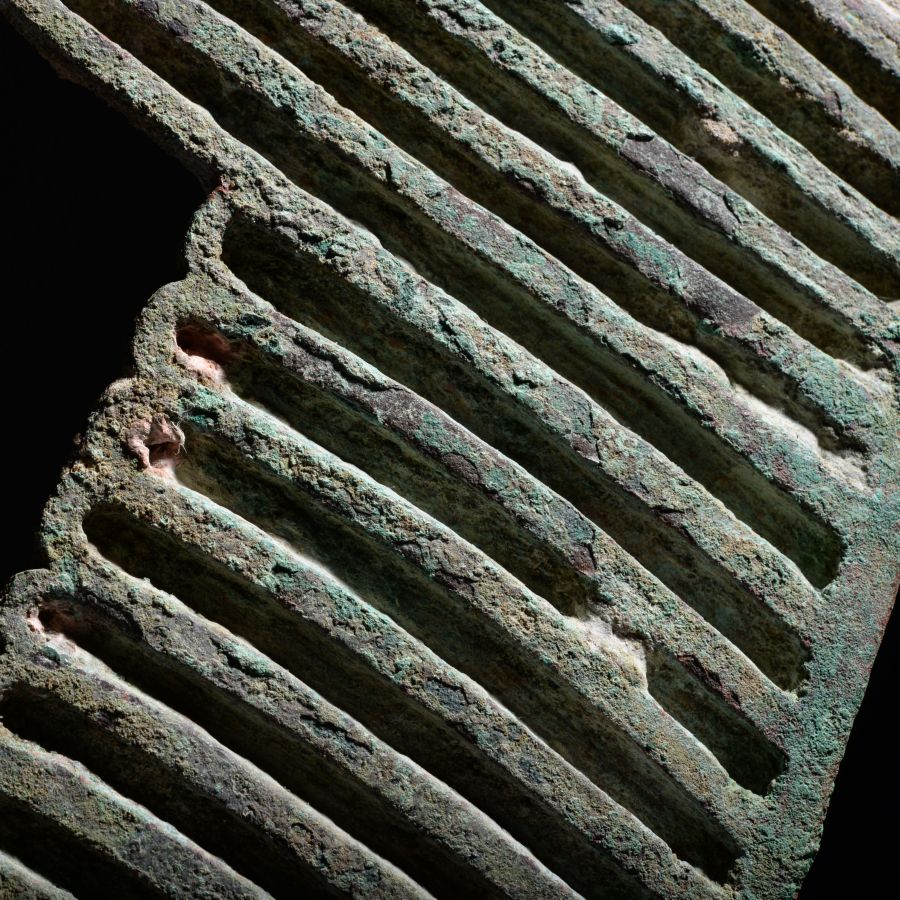
Ostrich feather with deep recessed cells to accept inlay, with tapering mounting lug to one side; remnants of gilding; mounted on a custom-made display stand. [No Reserve]
ProvenanceSeward Kennedy collection, acquired 1960s.
This lot has been checked against the Interpol Database of stolen works of art and is accompanied by search certificate number no.11840-207822.
Cf. The Brooklyn Museum, accession number 53.76.2, for a broadly similar object; Tiribilli, E., The Bronze Figurines of the Petrie Museum from 2000 BC to AD 400, London, 2018, pp.288-290, for similar examples.
FootnotesThis large feather is part of an Atef crown that would have been attached to a wooden statue of Osiris, the powerful underworld deity. The crown combines the Hedjet, the White Crown of Upper Egypt, flanked by ostrich feathers on each side to form the Atef crown.
CONDITIONTimeLine Auctions follows a vetting process to ensure the authenticity and legality of all items, reinforcing our commitment to integrity and responsible trading. Each antiquity, antique, and coin lot undergoes thorough examination by a vetting committee of at least ten external specialists, professional trade association members, scientists, and archaeologists: Our Vetting Process
AUCTIONS:
TimeLine is a leading auction house specialising in antiquities, ancient art, collectables, natural history, coins, medals, and books. Our auctions offer museums, collectors, historians, and enthusiasts the opportunity to acquire unique and historically significant pieces.
LOT 0036
Monumental Egyptian Bronze Atef Crown Feather From a Life-Sized Statue
Sold for (Inc. bp): £1,820
-
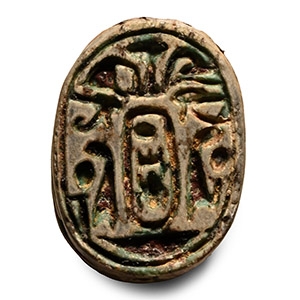
Egyptian Steatite Scarab for Thutmose III
New Kingdom or later, circa 1334-332 B.C.Estimate: £400 - 600 (+bp*)
Opening Bid: £175
Underside with cartouche of Pharaoh Thutmose III (Men-kheper-Re). 3.85 grams, 20 mm
Ex North London gentleman's collection, 1990s. Property of a Cambridgeshire, UK, gentleman.
The popularity of this great Egyptian pharaoh was such that his name appeared on scarabs during his reign and into the Late Period. -
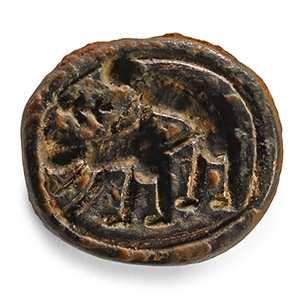
Phoenician Bronze Scaraboid Stamp Seal with Erotic Scene
1st millennium B.C.Sold for (Inc. bp): £780
Plano-convex stamp with scarab detailing, incuse scene to the underside. 5.9 grams, 13 mm
From the collection of a gentleman, acquired on the London art market in the 1990s. -
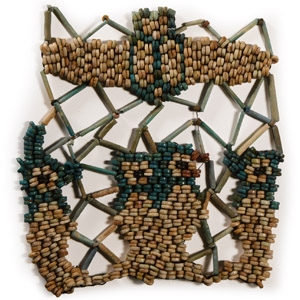
Egyptian Beaded Mummy Mask Panel with Four Sons of Horus
Ptolemaic Period, 332-30 B.C.Sold for (Inc. bp): £117
Openwork restrung panel depicting Imsety, Hapy, Duamutef, and Qebehsenuef, the Four Sons of Horus with a winged scarab above; restrung with some later beads. 57 grams, 16 cm
Ex Mariaud de Serres, Paris, France, 1980-1990s. From a London, UK, collection. Accompanied by an old collection ticket.
The Four Sons of Horus were deities responsible for protecting the internal organs of the deceased. The human-headed Imsety protected the liver, the baboon-headed Hapy protected the lungs, the jackal-headed Duamutef protected the stomach, and the falcon-headed Qebehsenuef protected the intestines.
