
Loading, please wait...
LOT 0288
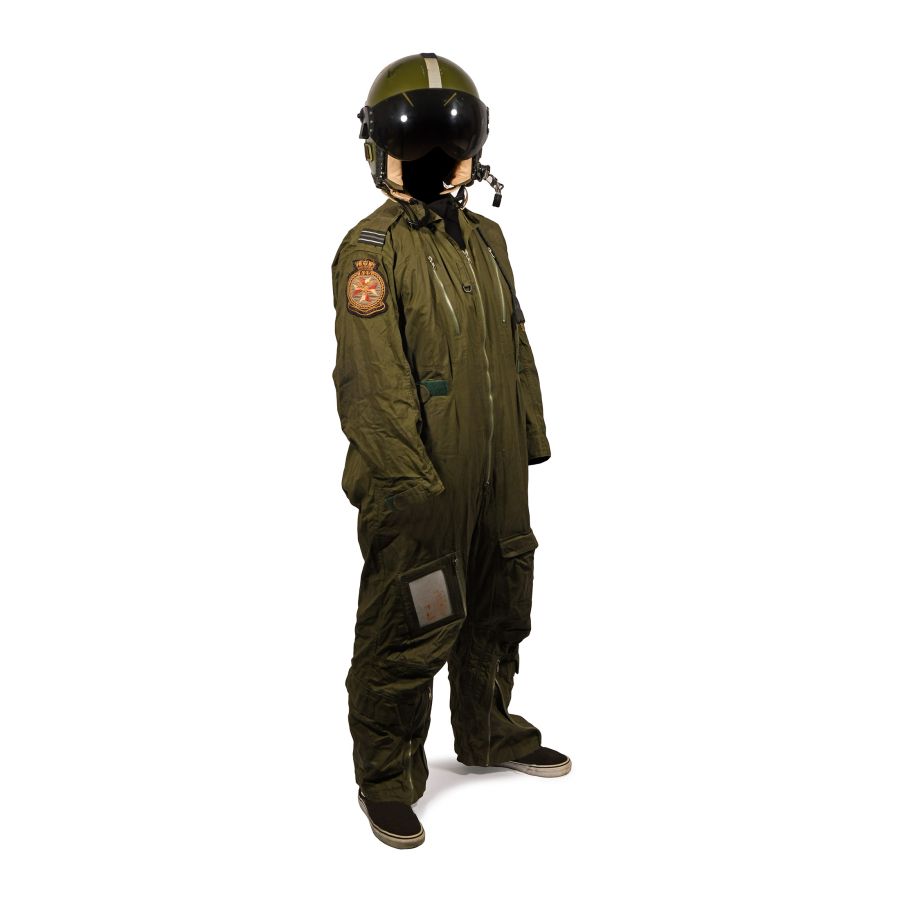
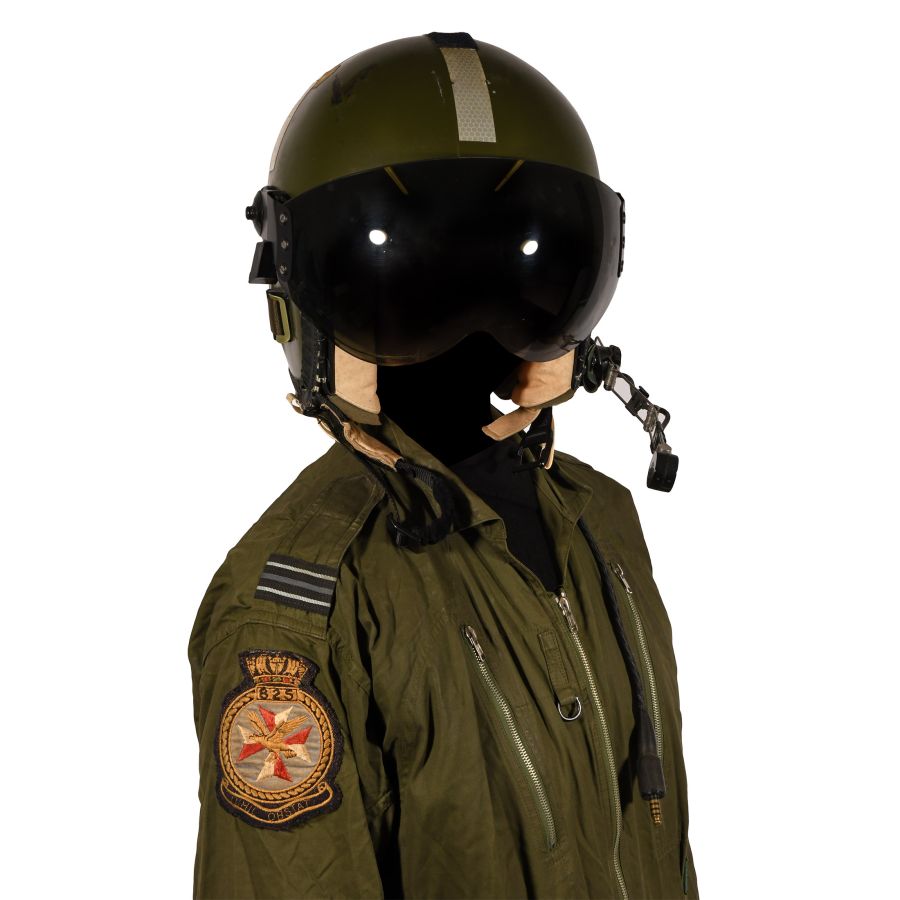
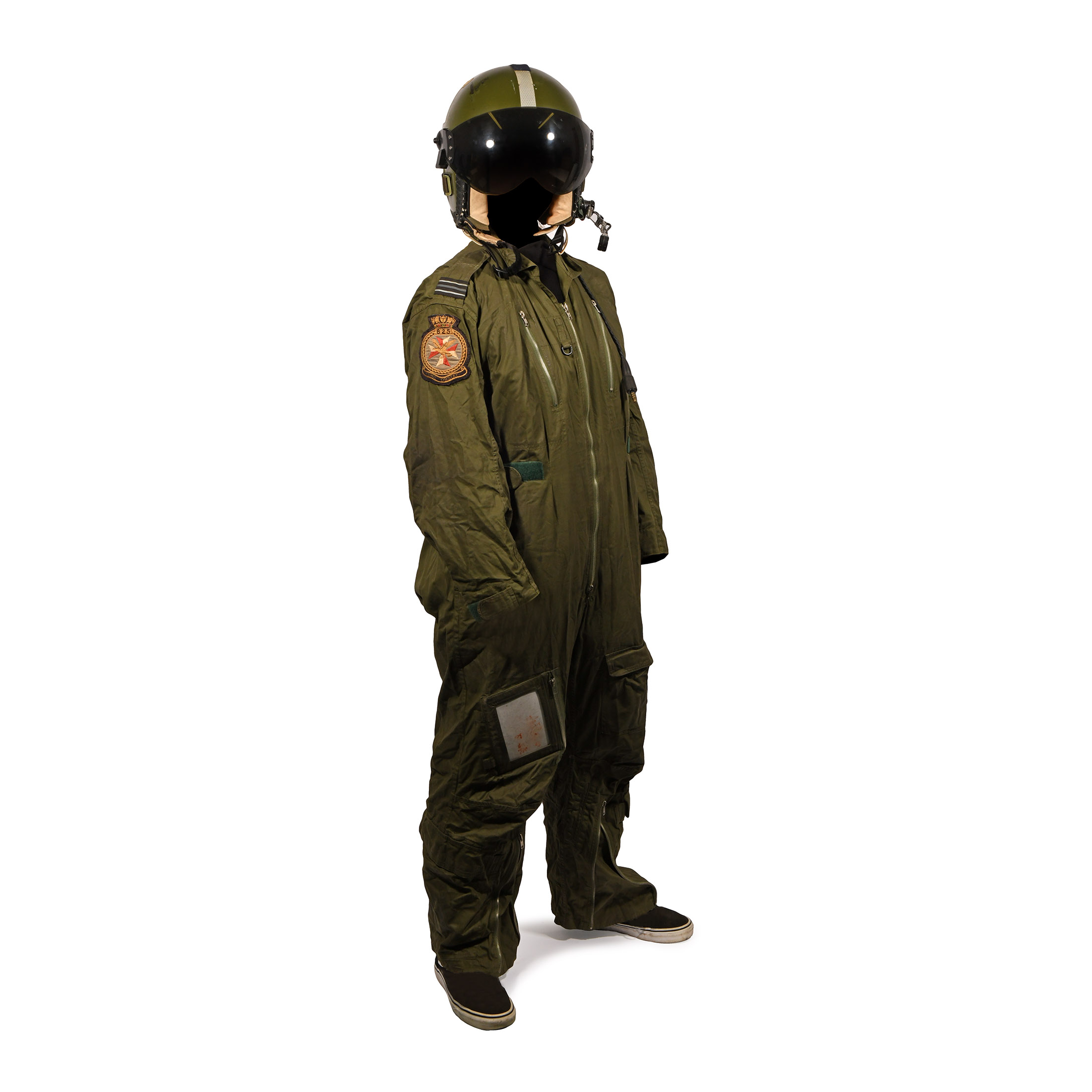
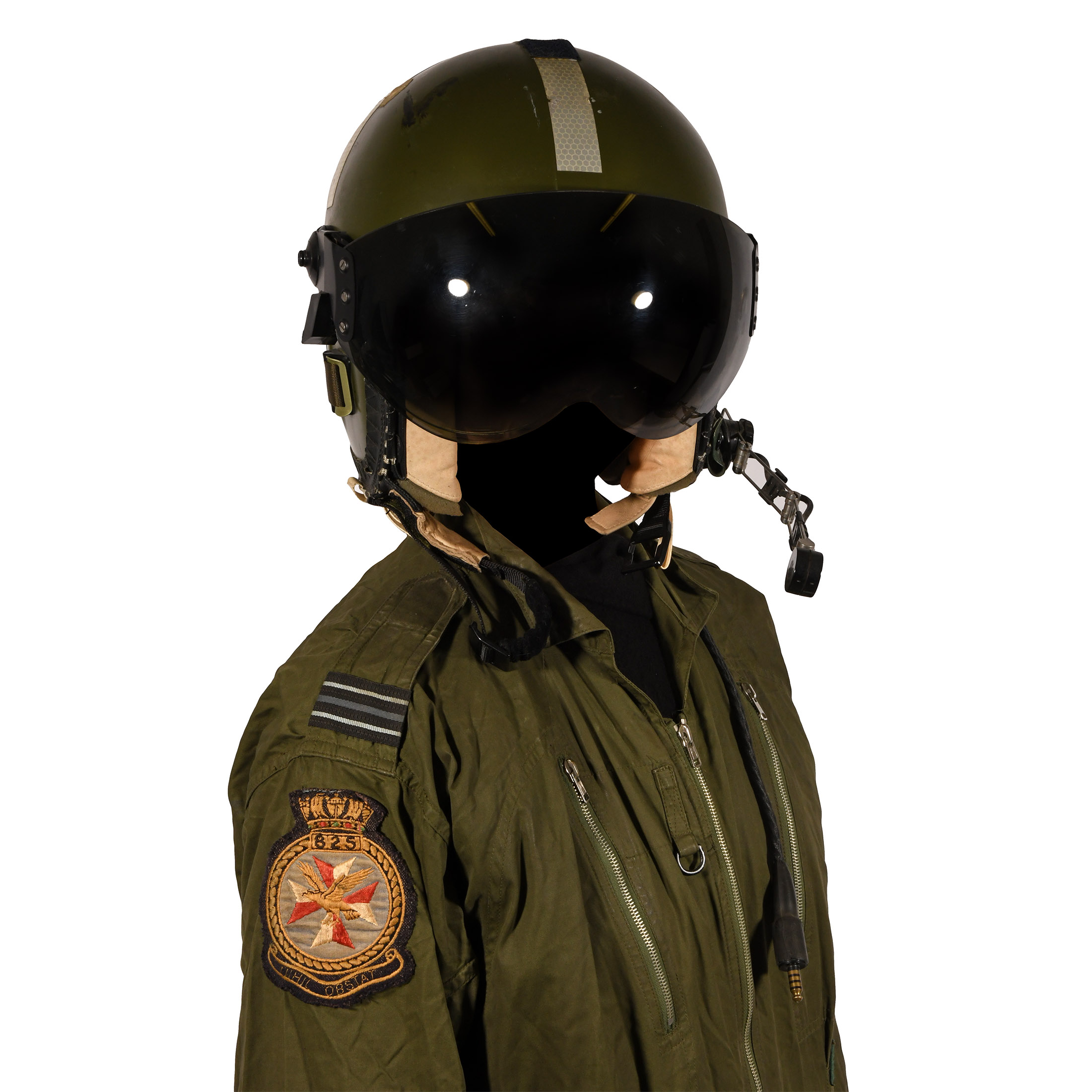
Mk3C Fighter Flying Helmet and Suit
1980S A.D.
11 13/8 in. (2.9 kg, 29 cm).
Including MK 9 flying suit coveralls (for height 162-172cm, weight greater than 72.64 kg, size 4) with insignia to 825 Squadron (Fleet Air Arm) on shoulder and sewn cleaning and user instruction labels to the interior, shoulders with Flt Lieutenant Officer rank slides; MK3C flying helmet with clear and smoked visors, pig skin and blue velvet lining with electrical headset and adjustable microphone with radio lead and plug; Air Ministry label to interior reading 'Serial number 26396 Large Mk 3C' and AM 'crow's foot'.
ProvenanceAcquired from J C Militaria, UK.
The Kusmirek Collection, UK.
Accompanied by a copy of JCM listing details and brief squadron research.
825 Squadron was originally formed in 1934 and served during WWII; it was reformed on the outbreak of the Falklands War in 1982 and equipped with ten Sea King helicopters; the squadron was disbanded in September 1982.
CONDITIONTimeLine Auctions follows a vetting process to ensure the authenticity and legality of all items, reinforcing our commitment to integrity and responsible trading. Each antiquity, antique, and coin lot undergoes thorough examination by a vetting committee of at least ten external specialists, professional trade association members, scientists, and archaeologists: Our Vetting Process
AUCTIONS:
TimeLine is a leading auction house specialising in antiquities, ancient art, collectables, natural history, coins, medals, and books. Our auctions offer museums, collectors, historians, and enthusiasts the opportunity to acquire unique and historically significant pieces.
-
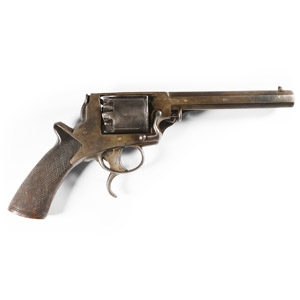
Tranter 3rd Model Double Trigger Percussion Revolver
From 1860 A.D.Sold for (Inc. bp): £819
Solid frame, double trigger 54 bore revolver with 15cm (6") barrel, five-shot cylinder bearing London proof marks, hinged left side loading arm screwed to frame with unclear serial number to right frame and marked 'TRANTER' to cocking trigger; foliate engraved frame and chequered wood grip; action working. 975 grams, 29 cm
Acquired from Michael J Noble Ltd, 2015. The Kusmirek Collection, UK. Accompanied by a copy of the Noble invoice.
Sold as an exempt item under Section 58 (2) of the Firearms Act, 1968, to be held as a curiosity or ornament. No license required but buyer must be over 18 years of age. Overseas bidders should note that, due to UK regulations governing export of all firearms, overseas buyers will need to make arrangements for shipping this lot out of the UK directly, by air freight, with a specialist company or agent. -
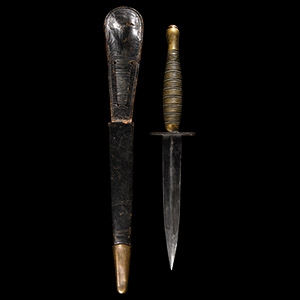
British Fairbairn-Sykes 'Beaded and Ringed' Commando Dagger in Scabbard
Circa 1942 A.D.Sold for (Inc. bp): £715
By Rodgers, with finely shaped 15cm stiletto blade with traces of original black finish tapering to a steel oval guard and fitted with a brass 'beaded and ringed' shaped hilt secured by a copper pommel nut; the hilt bearing the War Department 'broad arrow' and '2' marks near to the guard; with the original leather scabbard fitted with brass rivets and chape, pierced for belt wear and with the side flaps for sewing cut away as commonly seen when belt worn; the dagger showing wear with minor chipping to the blade. 254 grams, 33 cm overall
Property of a Luton, UK gentleman, by inheritance.
In the autumn of 1942, the Rodgers firm produced what many consider to be the best of all the wartime Fairbairn-Sykes knives: the 'Beads and Ridges' model (or 'Beaded and Ringed'); so-called for its distinctive grip pattern to the brass hilt of single rings of tiny beads, interspersed between sections of four to seven plain rings. The blade is delicate and uniform, and the weapon, though light, is well balanced. The blade finish was black (as this example) or nickel. All of this type are considered to be at least scarce. According to both Fredrick Stephens and Leroy Thompson the type was a commercial variant for private purchase; however, there are some rare cases of this type which were officially issued with the War Department broad arrow and number marks, as with this example. -
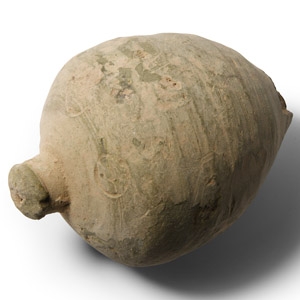
Byzantine 'Greek Fire' Ceramic Fire Bomb or Hand Grenade
9th-11th century A.D.Sold for (Inc. bp): £98
Pear-shaped ceramic vessel with domed filler-hole; intended to be filled with explosive liquid and wick, used as a hand grenade. 640 grams, 13.5 cm
Ex London, UK, collection, 1990s. Accompanied by an academic paper by military specialist Dr Raffaele D'Amato, dated 15 July 2019 and titled 'Eastern Roman Empire - Greek Fire Bomb or Hand Grenade (μεσαίον kακάβιον) 9th-11th century AD'.
Apart from the use of siphons or manual flame-throwers called cheirosiphona, special corps of Roman soldiers employed terracotta grenades, in the form of small jars, abundantly evidenced in archaeological excavations. Such were the γανωτα, vessels (sometimes also of bronze) used for Greek fire. They were called μεσαία kακαβιά or κυτροκακάβια where the former had a bulbous shape and the latter a more cylindrical form.
