
Loading, please wait...
LOT 1776
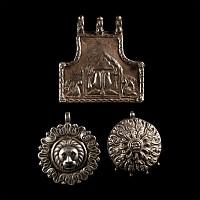
Mixed Pendant Group
20TH CENTURY A.D.
2 - 2 3/4 in. (82 grams total, 51-69 mm).
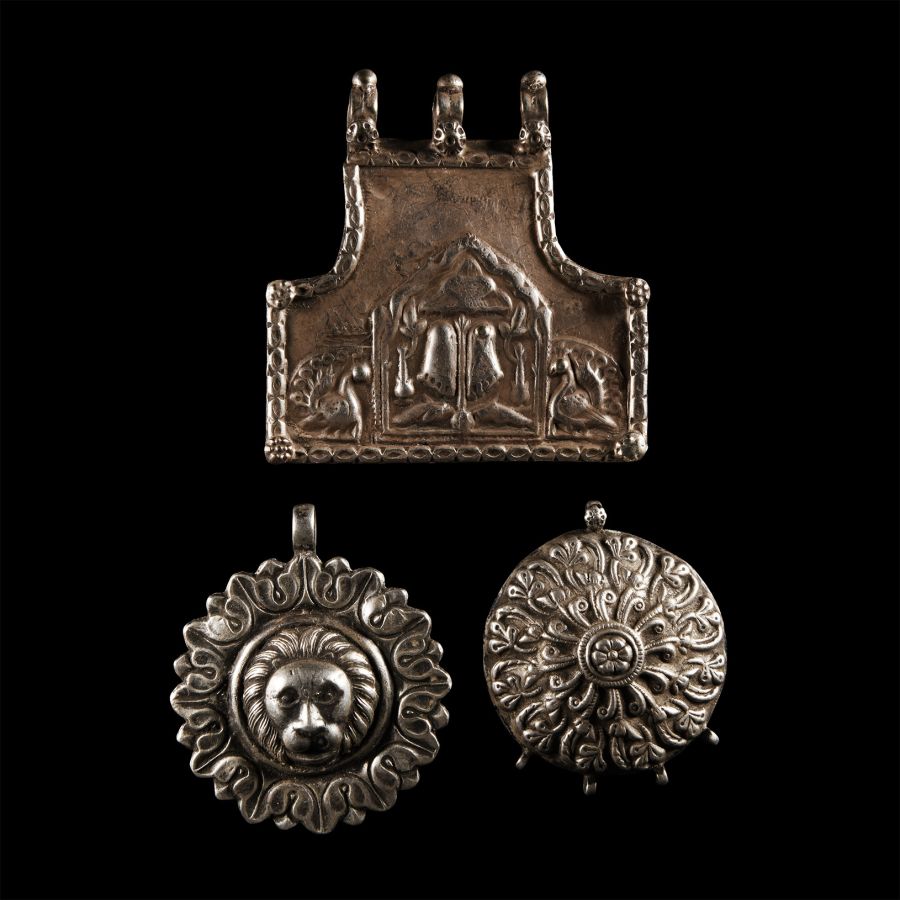
Mixed group of silver-coloured metal pendants comprising: lion-mask with radiating leaves, domed plaque with repoussé foliage, T-shaped panel with birds in a landscape. [3, No Reserve]
ProvenanceProperty of a South West London gentleman.
CONDITIONTimeLine Auctions follows a vetting process to ensure the authenticity and legality of all items, reinforcing our commitment to integrity and responsible trading. Each antiquity, antique, and coin lot undergoes thorough examination by a vetting committee of at least ten external specialists, professional trade association members, scientists, and archaeologists: Our Vetting Process
AUCTIONS:
TimeLine is a leading auction house specialising in antiquities, ancient art, collectables, natural history, coins, medals, and books. Our auctions offer museums, collectors, historians, and enthusiasts the opportunity to acquire unique and historically significant pieces.
-
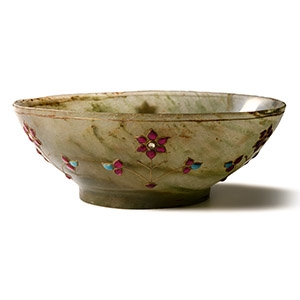
Green Stone Flower Bowl with Rubies
20th century A.D.Sold for (Inc. bp): £416
Broad bowl with basal ring, rounded rim with inlaid wire band below, floral motifs in inlaid wire with ruby and other inlaid petals. 1.1 kg, 20.4 cm wide
Property of a South West London gentleman. -
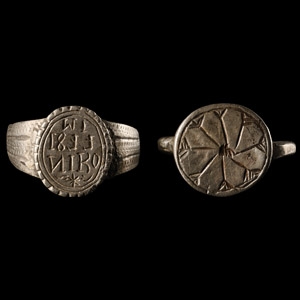
Post Medieval Silver Ring Group
16th-18th century A.D.Sold for (Inc. bp): £59
One with reversed legend 'NIKO / 1877 / MI'; one with reserved octofoil. 7.11 grams total, 21 mm each
From the collection of an EU gentleman formed in the early 2000s. Acquired on the UK market. -
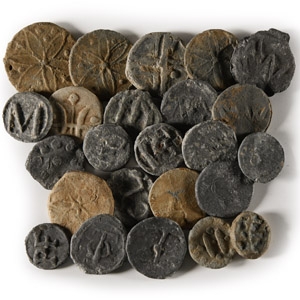
Post Medieval Lead Token Collection
Circa 16th-19th century A.D.Sold for (Inc. bp): £26
Mixed group of discoid tokens with various designs. 152 grams total, 16-29 mm
Acquired since the 1970s. From the private collection of a Surrey, UK, gentleman.
