
Loading, please wait...
LOT 2006
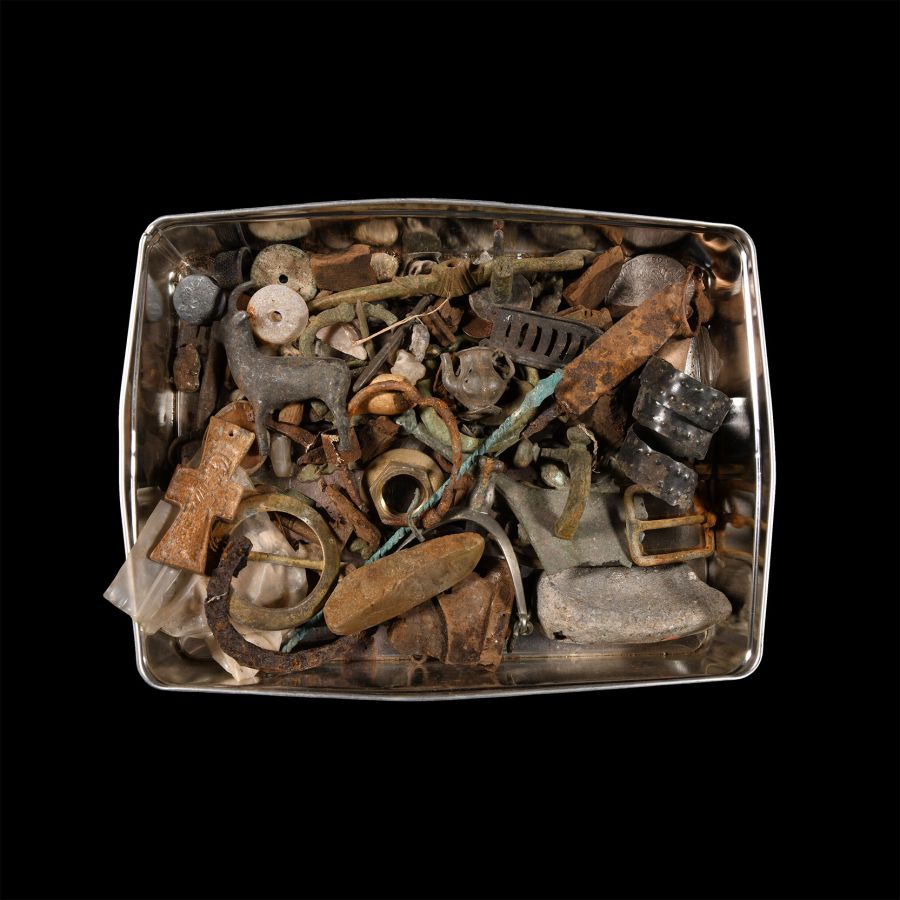
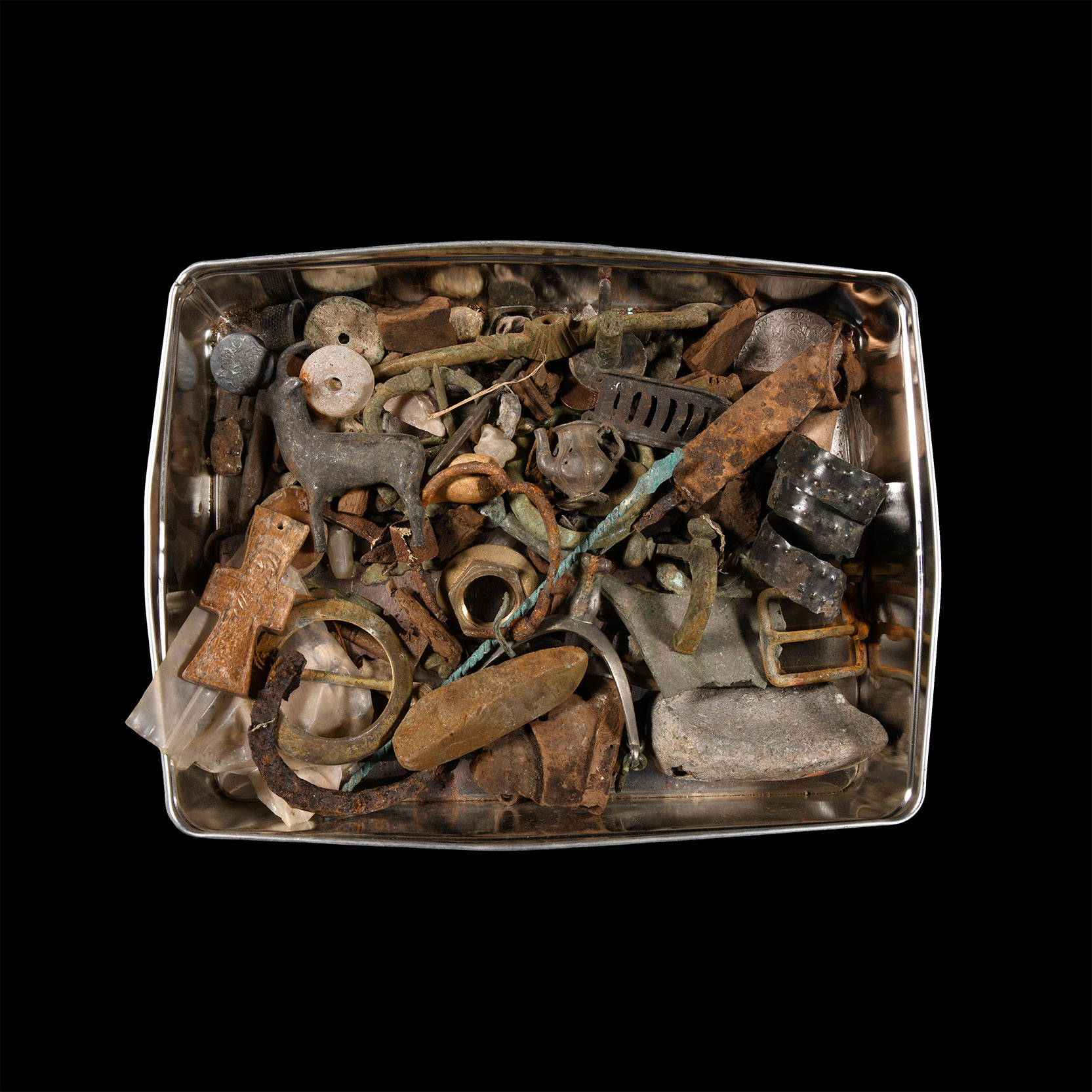
Mixed Finds Group
20TH CENTURY A.D. AND EARLIER
1/2 - 4 3/4 in. (1.4 kg total, 1-12 cm).
Comprising metallic and organic artefacts including: a figural cross pendant; purse bar; toy tea pot; decorative furniture and other fittings; coins and other miscellaneous items. [No Reserve]
ProvenanceAcquired 1990s-early 2000s.
East Anglian private collection.
TimeLine Auctions follows a vetting process to ensure the authenticity and legality of all items, reinforcing our commitment to integrity and responsible trading. Each antiquity, antique, and coin lot undergoes thorough examination by a vetting committee of at least ten external specialists, professional trade association members, scientists, and archaeologists: Our Vetting Process
AUCTIONS:
TimeLine is a leading auction house specialising in antiquities, ancient art, collectables, natural history, coins, medals, and books. Our auctions offer museums, collectors, historians, and enthusiasts the opportunity to acquire unique and historically significant pieces.
-
Mixed Finds Group
20th century A.D. and earlierSold for (Inc. bp): £52
Comprising metallic and organic artefacts including: a figural cross pendant; purse bar; toy tea pot; decorative furniture and other fittings; coins and other miscellaneous items. 1.4 kg total, 1-12 cm
Acquired 1990s-early 2000s. East Anglian private collection. -
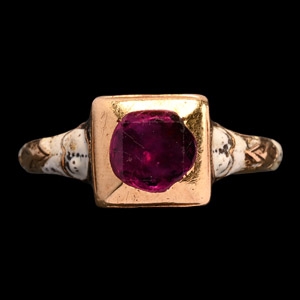
Baroque Gold, Ruby and Enamel Ring
Circa 1620-1640 A.D.Estimate: £12,000 - 17,000 (+bp*)
Opening Bid: £6,667
Composed of a slender hoop, expanding shoulders decorated with white enamelled foliage and black enamelled pea-pod ornament, repeated around the bezel, bezel with box setting holding a table-cut ruby, white and black enamelled floral design to the underside; minor loss of enamel; likely from France; accompanied by a 'Les Enluminures' hinged presentation box. 4.57 grams, 23.32 mm overall, 18.77 mm internal diameter (approximate size British O, USA 7, Europe 14.98, Japan 14)
Acquired from Les Enluminures Ltd, Illinois, USA, 2016. Property of an East Sussex collector. Accompanied by a Les Enluminures certificate of authenticity. Accompanied by a copy of the Les Enluminures invoice. This lot has been checked against the Interpol Database of stolen works of art and is accompanied by search certificate no.11671-197579.
Over the centuries, the ruby became a symbol of the amorous heart and a popular gemstone for betrothal or wedding rings in Western Europe. This gemstone was believed to symbolise the virtues of marriage and convey the desire for eternal matrimonial love. The ruby-red colour was often enhanced by setting the stone on top of a foil. The stones themselves were imported from as far afield as Thailand, Burma and Sri Lanka. Old inventories record them as 'balas rubies', which were sourced to decorate royal crowns. In the 17th century, the red colour was set-off by the pastel shades of satin which were fashionable in dress at the court of King Louis VIII, where the art of enamelling was also practiced. -
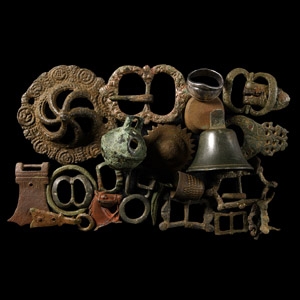
Georgian and Other Copper-Alloy Artefact Group
Circa 15th-20th century A.D.Sold for (Inc. bp): £13
Comprising: bells; buckles; decorative fittings and mounts; thimble; heart-shaped mount; ring stamped '925'; together with other miscellaneous items. 269 grams total, 11-64 mm
Found Wiltshire, UK.
