Loading, please wait...

Mixed Ancient Bead Collection Mixed Ancient Bead Collection Mixed Ancient Bead Collection
Use mousewheel to zoom in and out, click to enlarge
Details

LOT 1187

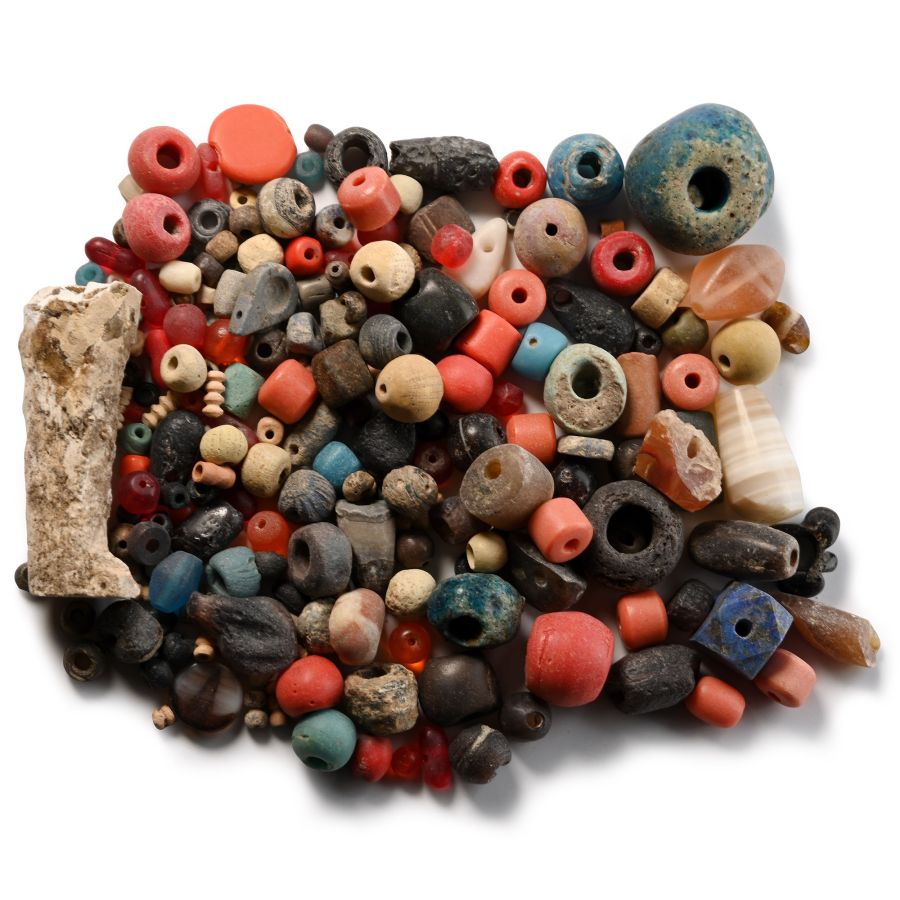
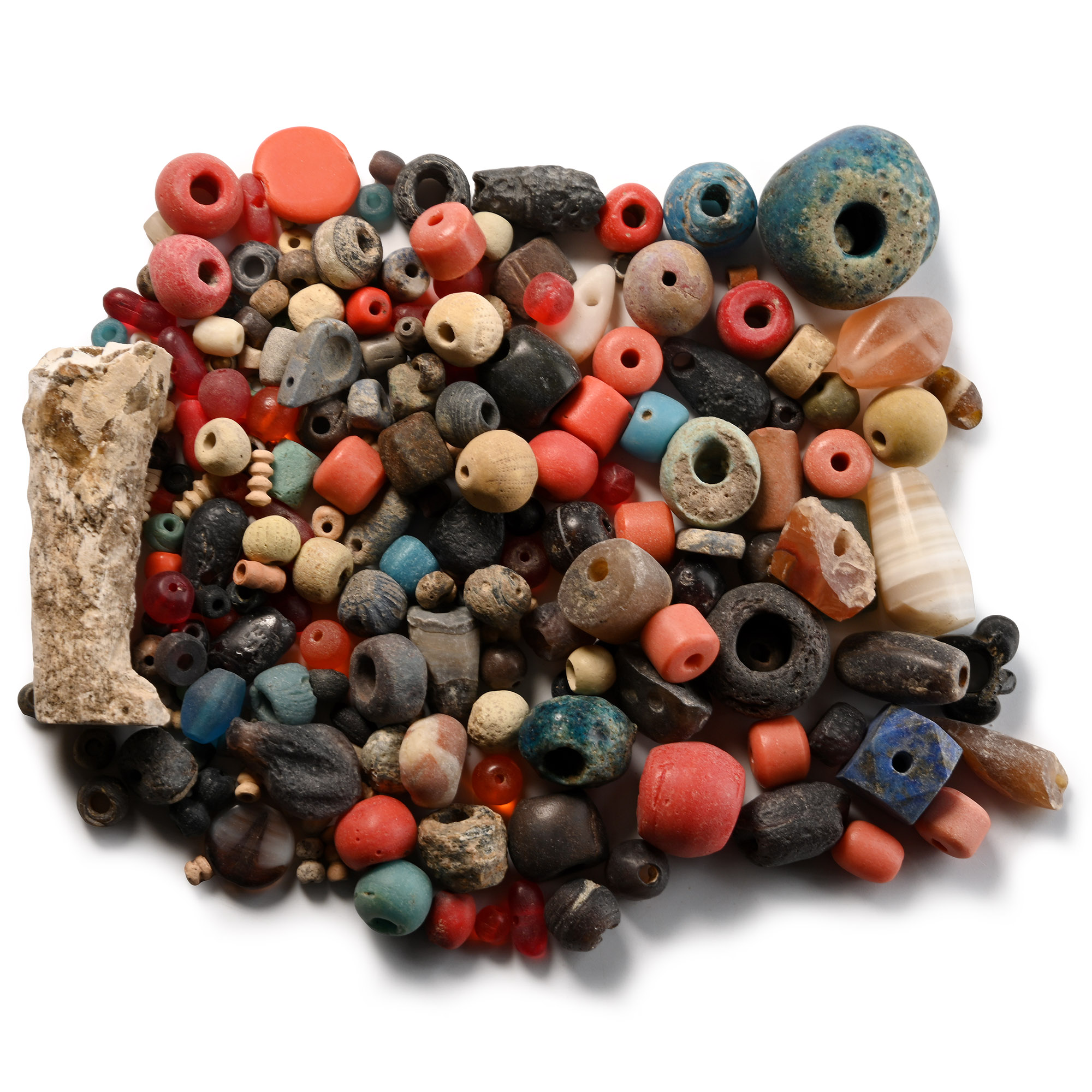
Mixed Ancient Bead Collection

1ST MILLENNIUM B.C. AND LATER

1/8 - 1 3/4 in. (107 grams total, 1-43 mm).

Including fusiform, oblate biconical, polyhedral and other types in glass, and other materials. [No Reserve]

Provenance

London, UK, collection, 2000s.

CONDITION
VETTING:

TimeLine Auctions follows a vetting process to ensure the authenticity and legality of all items, reinforcing our commitment to integrity and responsible trading. Each antiquity, antique, and coin lot undergoes thorough examination by a vetting committee of at least ten external specialists, professional trade association members, scientists, and archaeologists: Our Vetting Process


AUCTIONS:

TimeLine is a leading auction house specialising in antiquities, ancient art, collectables, natural history, coins, medals, and books. Our auctions offer museums, collectors, historians, and enthusiasts the opportunity to acquire unique and historically significant pieces.

Live Bidding

LOT 1187

Mixed Ancient Bead Collection

Sold for (Inc. bp): £59

Print page

RELATED LOTS
  • Achaemenid Bronze Handled Cup
    Achaemenid Bronze Handled Cup
    6th-4th century B.C.

    Sold for (Inc. bp): £91

    Comprising a wide shallow body with repoussé foot and separately applied strap handle. 50 grams, 12.6 cm


    Acquired 1980-2015. Ex Abelita family collection. This lot has been cleared against the Art Loss Register database, and is accompanied by an illustrated lot declaration signed by the Head of the Antiquities Department, Dr Raffaele D'Amato.

    Lot Details

  • Large Sogdian Silver-Gilt Wild Boar Rhyton
    Large Sogdian Silver-Gilt Wild Boar Rhyton
    5th-6th century A.D.

    Sold for (Inc. bp): £65,000

    A Sogdian or Sasanian head of a wild boar with detailed facial features including large snout, curled tusks, alert eyes with heavy eyelids, erect ears, the animal's mane framing the head and back; a series of small circles decorating the cheeks; an oval vessel mouth emerging from the mane and the spout formed as a pierced stud at the centre of the boar's chest. 1.3 kg, 21.5 cm long


    with a New York gallery, 1970s. Private collection, London. Accompanied by three black-and-white photographs taken prior to cleaning, believed to date from the 1970s. Accompanied by an academic report by Dr Raffaele D’Amato. This lot has been checked against the Interpol Database of stolen works of art and is accompanied by search certificate number no.12979-246395.

    The production of silver vessels and dinner objects for the court was highly centralised within the Sasanian Empire. In the 5th and 6th century AD, the production of silver vessels expanded, creating new shapes, such as pitchers, elliptical bowls and high-footed bowls. If the iconography included both Dionysian and Christian imagery, the subjects linked with royal power were the favourites, and among them, the boar. The boar was, in fact, the animal associated with the Zoroastrian Izad Vahram, the epitome of victory. It was not a coincidence that one of the usurpers of the Persian throne, the general Farrukhān, took the title of Shahrbaraz (reigning in 630 AD), whose name means ‘The Boar of the Empire’, attesting to his dexterity in military command and warlike personality. Shahrwarāz derived in fact from the middle-Persian word shahr (country) and warāz (boar).

    Lot Details

  • Achaemenid Banded Agate Bead with Gold Caps
    Achaemenid Banded Agate Bead with Gold Caps
    6th-4th century B.C.

    Estimate: £500 - 700 (+bp*)

    Opening Bid: £165

    An elbow bead with an ellipsoid cap to each finial. 1.26 grams, 19 mm


    From the collection of a late Japanese gentleman, 1970s onwards.

    Lot Details

Stay up-to-date with the latest from TimeLine Auctions by joining our mailing list