
Loading, please wait...
LOT 1336
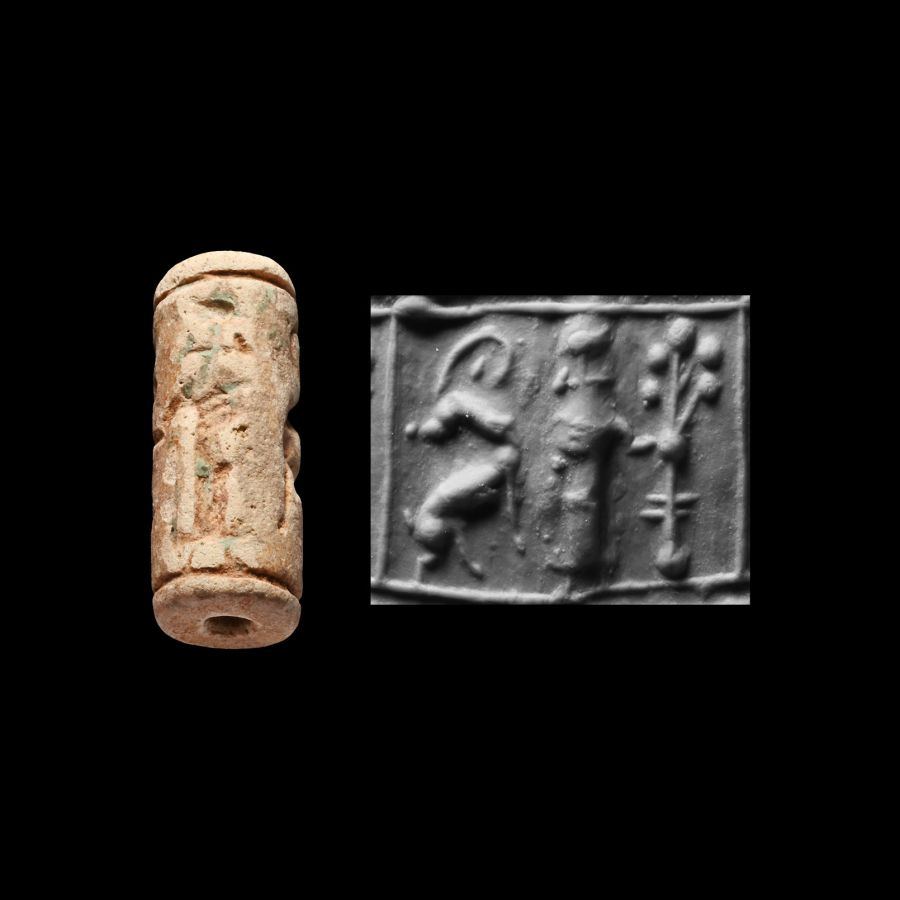
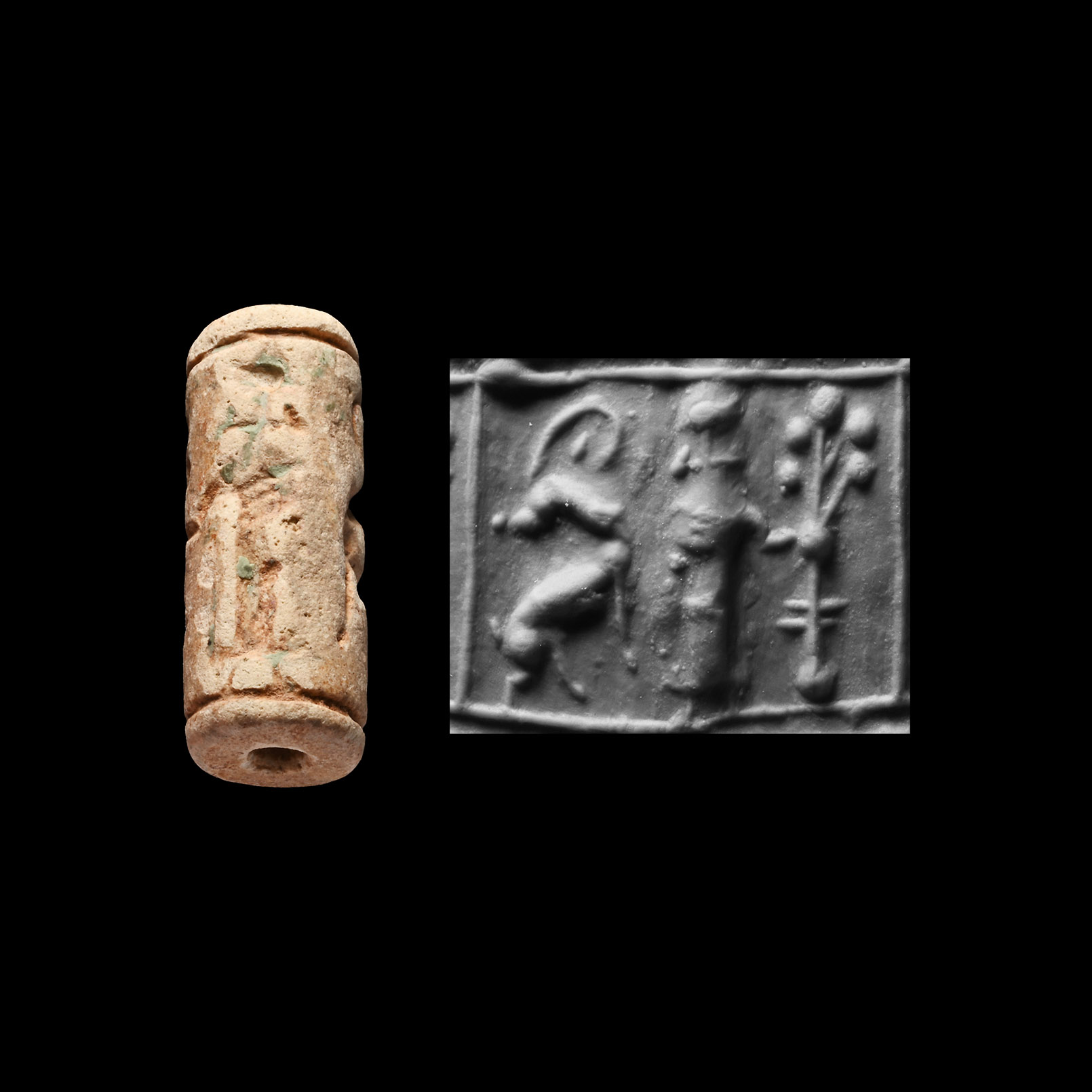
Mitanni Glazed Composition Cylinder Seal with Quadrupeds
CIRCA 1420-1300 B.C.
7/8 in. (1.78 grams, 22 mm).
With frieze of antelopes and a tree. [No Reserve]
ProvenanceAcquired 1970s-1996.
Property of a North American collector; collection no.021.
London collection, 2016.
Cf. Teissier, B., Ancient Near Eastern Cylinder Seals in the Marcopoli Collection, Berkeley, 1984, item 617, for type.
CONDITIONTimeLine Auctions follows a vetting process to ensure the authenticity and legality of all items, reinforcing our commitment to integrity and responsible trading. Each antiquity, antique, and coin lot undergoes thorough examination by a vetting committee of at least ten external specialists, professional trade association members, scientists, and archaeologists: Our Vetting Process
AUCTIONS:
TimeLine is a leading auction house specialising in antiquities, ancient art, collectables, natural history, coins, medals, and books. Our auctions offer museums, collectors, historians, and enthusiasts the opportunity to acquire unique and historically significant pieces.
LOT 1336
Mitanni Glazed Composition Cylinder Seal with Quadrupeds
Sold for (Inc. bp): £143
-
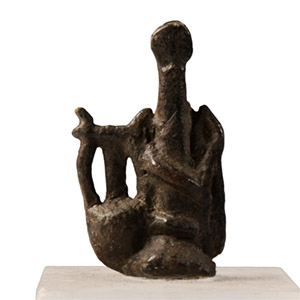
Western Asiatic Bronze Anthropomorphic Idol
1st millennium B.C.Sold for (Inc. bp): £416
Modelled in the round figure with flared foot, stylised anthropomorphic or theriomorphic figure with amphora and mounting peg to reverse; mounted on a custom-made stand. 163 grams total, 92 mm high including stand
From a collection acquired on the UK art market from various auction houses and collections mostly before 2000. From an important Cambridgeshire estate; thence by descent. -
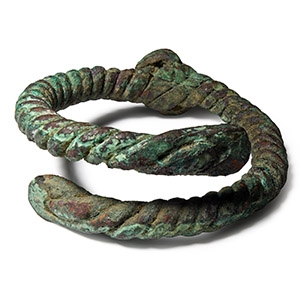
Luristan Bronze Twisted Arm Ring
17th-13th century B.C.Sold for (Inc. bp): £59
Formed as two bronze rods twisted about their own axis and looped at the ends, knotted forming the centrepiece. 334 grams, 10 cm
Private UK collection. Acquired in the 1980s. Property of a Cambridgeshire gentleman. -

Assyrian Bronze Arm and Hand Type Brooch
Circa 7th-5th century B.C.Sold for (Inc. bp): £59
The bow decorated with circumferential grooves, one arm ending with the partially preserved wire coil; the catchplate in the form of a hand engraved with an X; accompanied by a display frame with information ticket. 186 grams total, 10 x 10.3 cm including frame
Ex Robin Symes Gallery, London, UK, 1990s. From a Leicestershire, UK, collection.
Fibulae with triangular bows (type 3 of Curtis classification) were the most common in Assyria. At least 66 bronze examples have been found at Nimrud, 32 in the graves and tombs at Ashur, 14 at Kouyunjik (some of them represented only by fragments), three at Nebbi Yunus, six at Khorsabad, three at Sharif Khan, all fragmentary, and single examples at Tell Billa and Tell al Rimah.
