
Loading, please wait...
LOT 0035
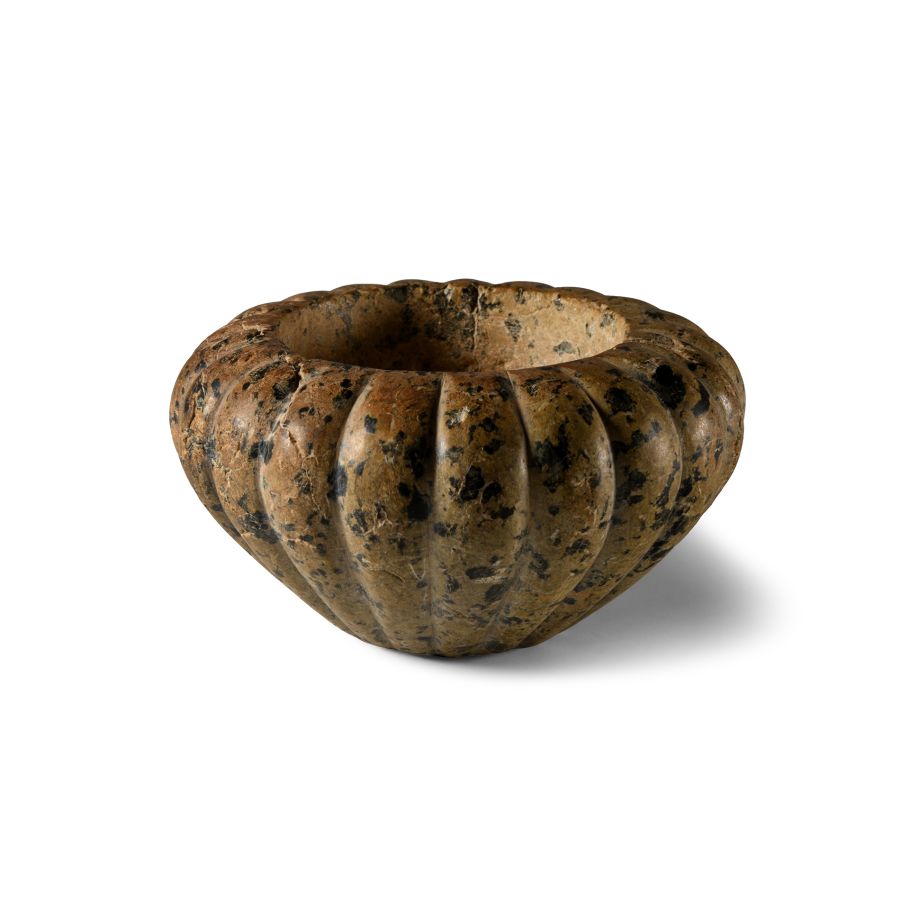
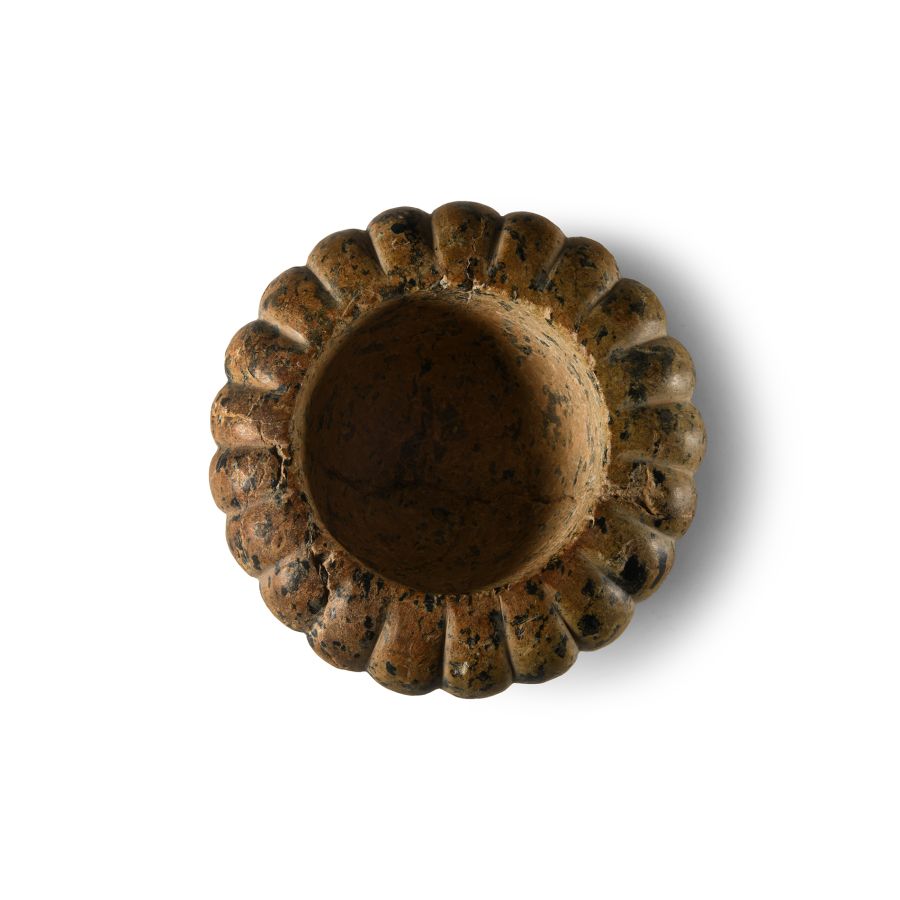
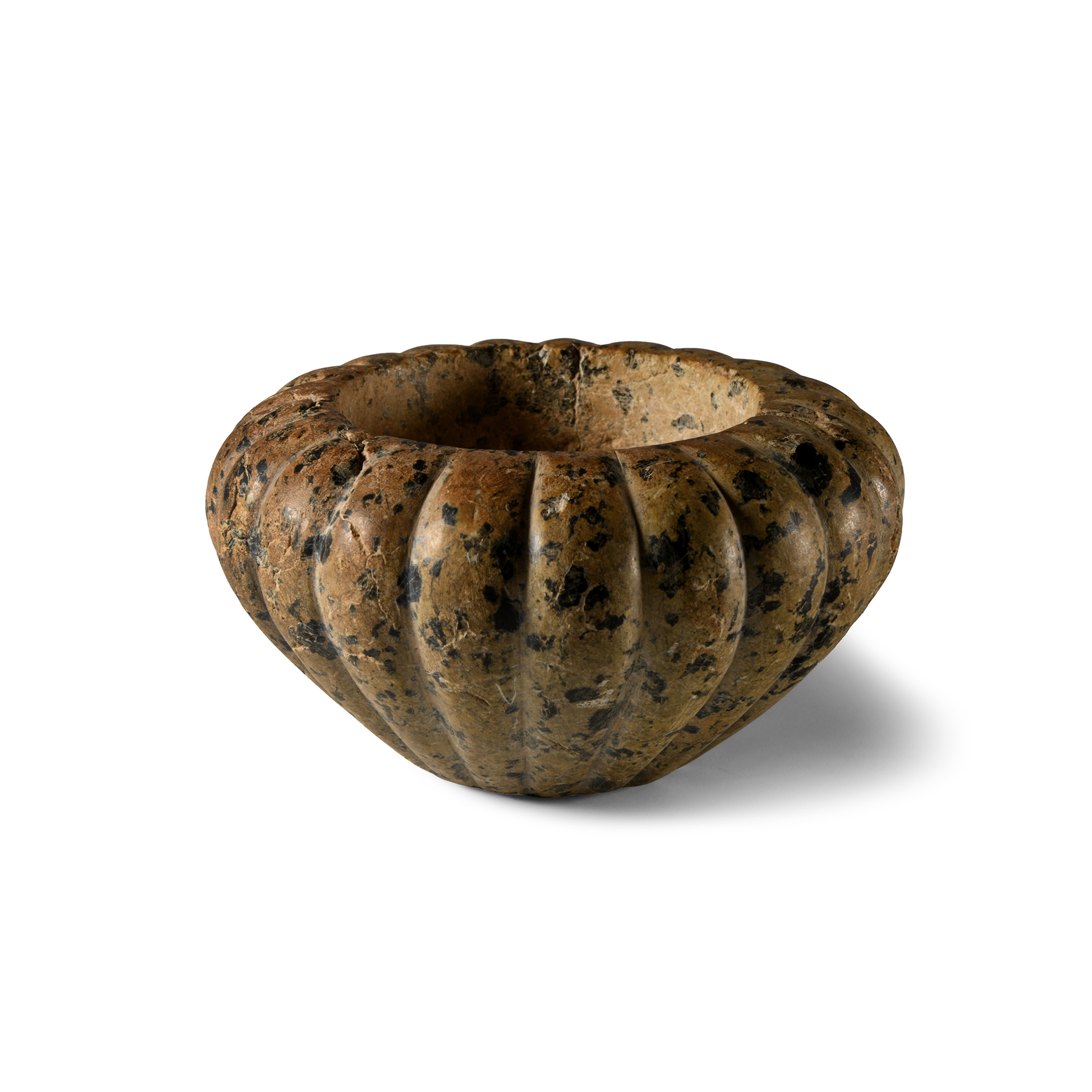
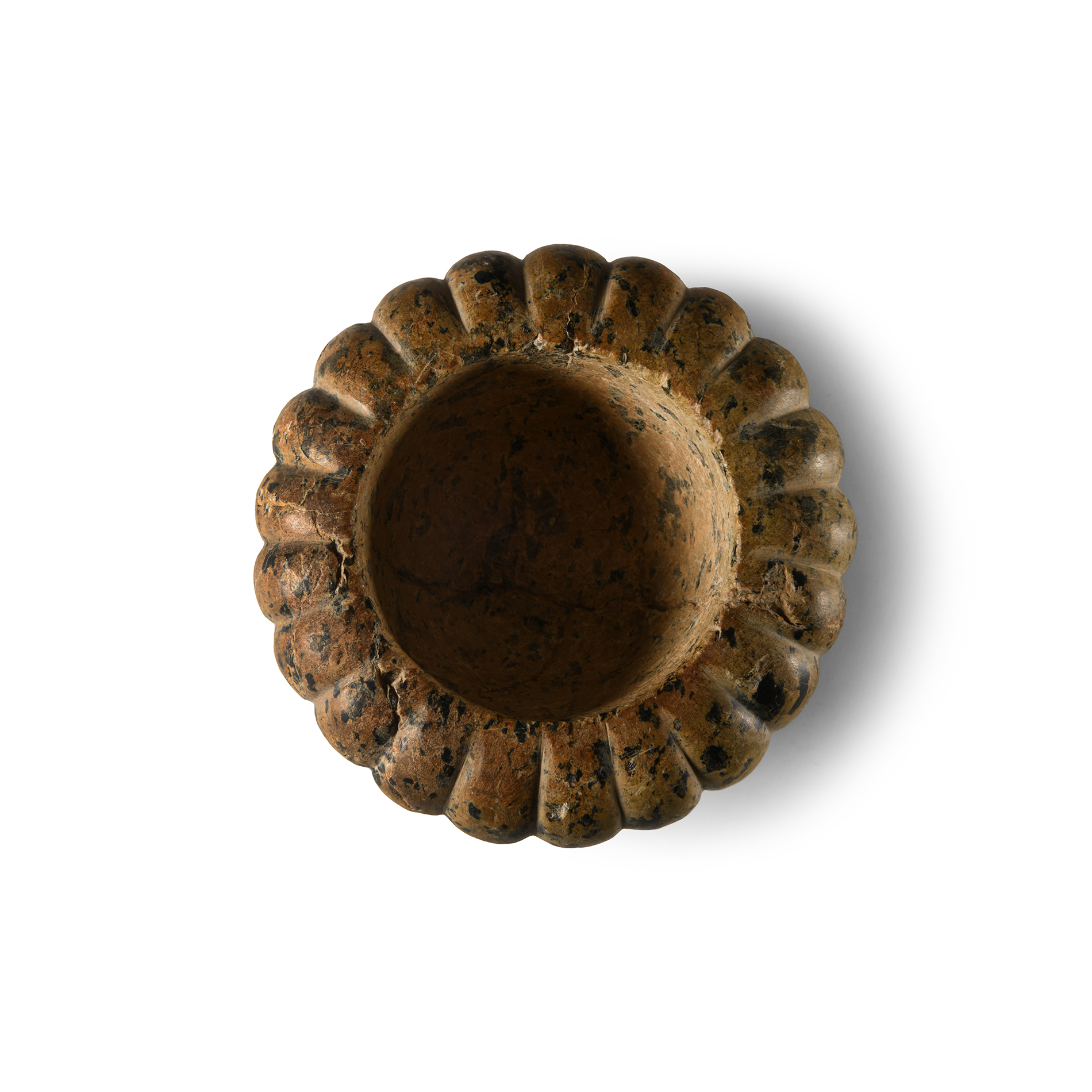
Minoan Serpentine Blossom Bowl
1700-1450 B.C.
3 7/8 in. (408 grams, 91 mm wide).
Finely worked in the form of a blossoming lotus flower with tightly arranged delicate petals separated by deep grooves, narrow flat base and high shoulder.
ProvenanceOwned by rock and roll legend Sir Mick Jagger, prior to 1976.
Gifted by Sir Mick Jagger to his friend Hon. Colin Tennant, who became the 3rd Baron Glenconner in 1983, at his infamous Golden Ball 50th birthday party on the prestigious island of Mustique, The Grenadines, on 22 November 1976. During the celebrations Mick Jagger's wife Bianca Pérez-Mora Macías was carried into the party on a litter carried by nude fishermen, with strategically positioned gold coconut shells, in respect of the presence of Princess Margaret.
From the private collection of Baron Glenconner, thence by descent 2010.
Accompanied by an original handwritten note by Baron Glenconner.
This lot has been checked against the Interpol Database of stolen works of art and is accompanied by search certificate no.12079-214453.
For an addendum to the provenance see https://timelineauctions.com/stories/Satisfaction-for-the-winning-bidder/19/
Cf. Metropolitan Museum of Art, New York, accession no.26.31.433, for type; a similar bowl in Karetsou, A. et al., Crete-Egypt, Cultural Ties of Three Millennia, Catalogue, Cairo, Hellenic Ministry of Culture, 2000, p.216, no.216.
CONDITIONTimeLine Auctions follows a vetting process to ensure the authenticity and legality of all items, reinforcing our commitment to integrity and responsible trading. Each antiquity, antique, and coin lot undergoes thorough examination by a vetting committee of at least ten external specialists, professional trade association members, scientists, and archaeologists: Our Vetting Process
AUCTIONS:
TimeLine is a leading auction house specialising in antiquities, ancient art, collectables, natural history, coins, medals, and books. Our auctions offer museums, collectors, historians, and enthusiasts the opportunity to acquire unique and historically significant pieces.
LOT 0035
Minoan Serpentine Blossom Bowl
Estimate £12,000 - 17,000€13,920 - 19,720 (for guidance only)$16,200 - 22,950 (for guidance only)
-
Greek Terracotta Votive Collection
5th-3rd century B.C.Sold for (Inc. bp): £351
Comprising twenty-two ritually broken votive fragments, including heads, torsos, and larger pieces with dress and limb detailing. 2.2 kg total, 5.2-25 cm
Acquired on the European art market in the 1970s. with Herakles Numismatik und Antiquitäten GmbH, München, Germany. Kept in the UK since 2000s. -
Cypriot Terracotta Base Ring Juglet
Circa 2nd millennium B.C.Sold for (Inc. bp): £299
With flared basal ring, bulbous poppy-head body, tubular neck with transverse rib developing to a strap handle, trumpet-shaped mouth. 55 grams, 11 cm
Ex North Yorkshire, UK, collection, 1990s. -
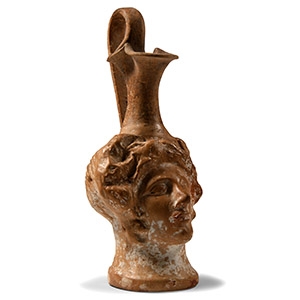
Greek Canosan Terracotta Oinochoe with Face
Circa 4th century B.C.Estimate: £800 - 1,000 (+bp*)
Opening Bid: £425
The body formed as a female bust with elaborately styled hair; discoid foot, tall stem with pinched rim giving a broad pouring lip, strap handle to the rear; some pigment remaining. 446 grams, 22.2 cm high
Old French private collection. Swiss private collection, Basel-Landschaft. Private collection of M. Tritten, Binningen, Switzerland. Property of an East Sussex, UK, gentleman.
The Canosan ceramic workshops produced several series of head vases, starting with a red-figure imitation of the Attic plastic oenochoe attributed by Beazley to Group N.21. The next product combined two ceramic techniques: a) the neck, mouth, and handle were executed in red-figure technique with superimposed white rays on the neck; b) the head was drawn from two moulds, mounted on a base rim, and decorated with white slip and polychrome after firing. It belongs to the initial phase of the polychrome ceramic production of Canosa, for which only this type of mould is known. It also illustrates the close collaboration which existed between potters and coroplasts. The same archetype was used in the next phase, producing entirely polychrome head vases, like this one, in which traces of polychrome are still visible on the mouth and near the left ear.
