
Loading, please wait...
_900x900.jpg "Minoan Bronze Double Axehead")
_200x200.jpg "Minoan Bronze Double Axehead")
_900x900.jpg "Minoan Bronze Double Axehead")
_200x200.jpg "Minoan Bronze Double Axehead")
.jpg "Minoan Bronze Double Axehead")
.jpg "Minoan Bronze Double Axehead")
LOT 0037
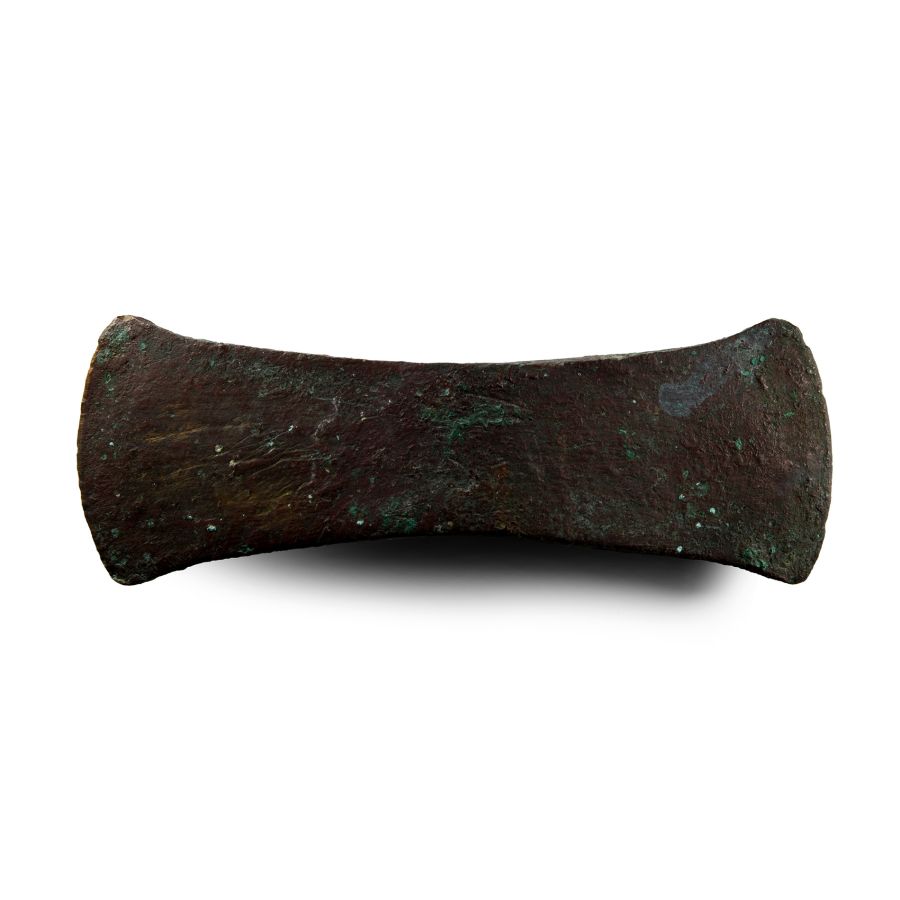
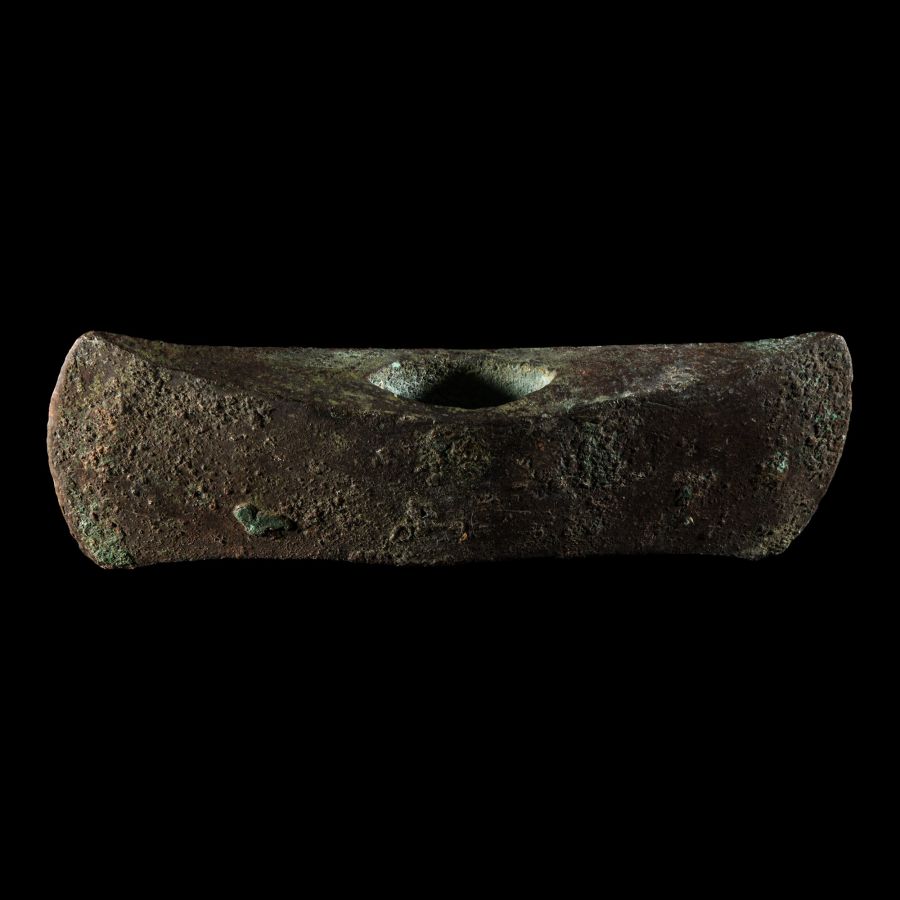
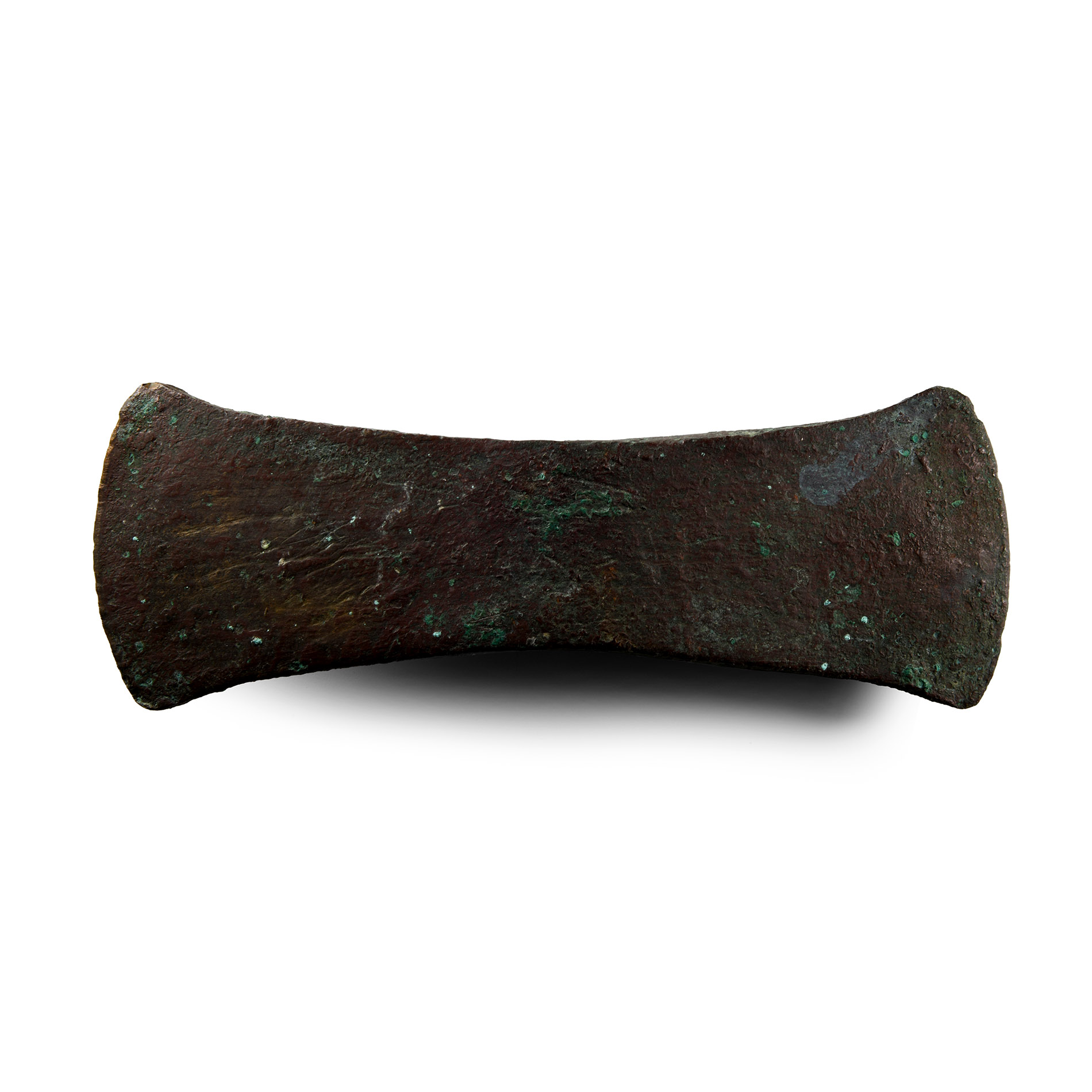
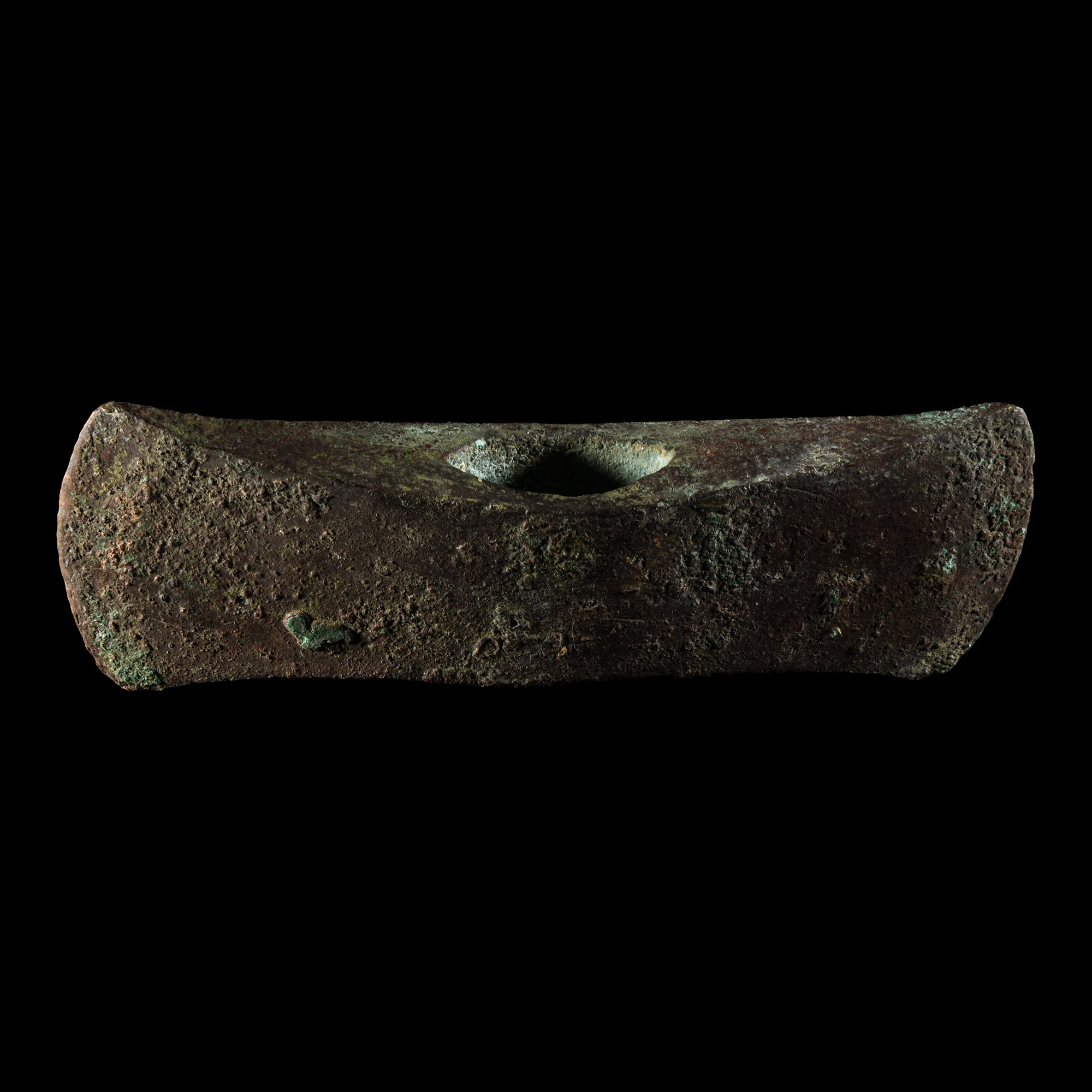
Minoan Bronze Double Axehead
CIRCA 2000 B.C.
6 7/8 in. (973 grams, 17.5 cm).
Substantial labrys with flared and curved edges, elliptoid socket to the centre. [No Reserve]
ProvenanceGifted to the previous owner's husband by his grandfather prior to 1919 while in Crete.
Taken to Paris and brought to the UK before 1985.
Acquired from Bonhams, London, 20 October 2005, no.124.
From an important Cambridgeshire estate; thence by descent.
Accompanied by copies of the relevant Bonhams catalogue pages.
Cf. D'Amato, R., Salimbeti, A., Early Aegean Warrior 5000-1450 BC, Oxford, 2013, fig. p.37, for similar.
FootnotesThe double axe was both a tool, weapon and one of the main religious symbol in Minoan Crete. It was as significant and as important in Minoan religious practice as the ritual horn and the pillar.
CONDITIONTimeLine Auctions follows a vetting process to ensure the authenticity and legality of all items, reinforcing our commitment to integrity and responsible trading. Each antiquity, antique, and coin lot undergoes thorough examination by a vetting committee of at least ten external specialists, professional trade association members, scientists, and archaeologists: Our Vetting Process
AUCTIONS:
TimeLine is a leading auction house specialising in antiquities, ancient art, collectables, natural history, coins, medals, and books. Our auctions offer museums, collectors, historians, and enthusiasts the opportunity to acquire unique and historically significant pieces.
-
.jpg)
Greek Terracotta Shipwreck Amphora
5th-3rd century B.C.Sold for (Inc. bp): £2,470
Slender in profile with narrow shoulder, short neck, collar to the mouth and two lateral strap handles; stepped conical point to base; part of neck absent, marine encrustation. 5.45 kg, 65 cm
From a collection acquired on the UK art market from various auction houses and collections mostly before 2000. From an important Cambridgeshire estate; thence by descent. -
Cypriot White-Slip Ware Tankard
Circa 1600-1450 B.C.Sold for (Inc. bp): £1,820
With globular lower body supporting a broad and slightly waisted tubular neck with everted rim, D-shaped spur to the forward face, strap handle to the rear with flat-section thumb-pad, trumpet-shaped foot; the thumb-pad and rim with painted bands of pointillé decoration, rim with muti-linear radiating bands, vertical bands to the neck formed with hatched lozenges, hatched horizontal and vertical bands to the lower body and wavy linear bands beneath the foot; old collector's reference '15.76' to underside; 535 grams, 19.5 cm
Formerly part of the Cesnola collection. this item has a red-ink inscription to the base suggesting it may have been deaccessioned from The Metropolitan Museum of Art. with Sotheby Parke Bernet, New York, 26 May 1982, no.411. with Christie's, New York, 11 June 2003, no.95 (part). From an important Cambridgeshire estate; thence by descent. Accompanied by a copy of the relevant Christie's catalogue pages. -
Graeco-Roman Terracotta Figure
2nd century B.C.-1st century A.D.Estimate: £600 - 800 (‡+bp*)
Opening Bid: £222
Tanagra-type hollow-formed figurine of a nude female with dressed hair; hole to the reverse and underside; repaired. 46 grams, 11.3 cm
Private collection of Mr S.A., Switzerland, 1990s, thence by descent.
