
Loading, please wait...
LOT 0551
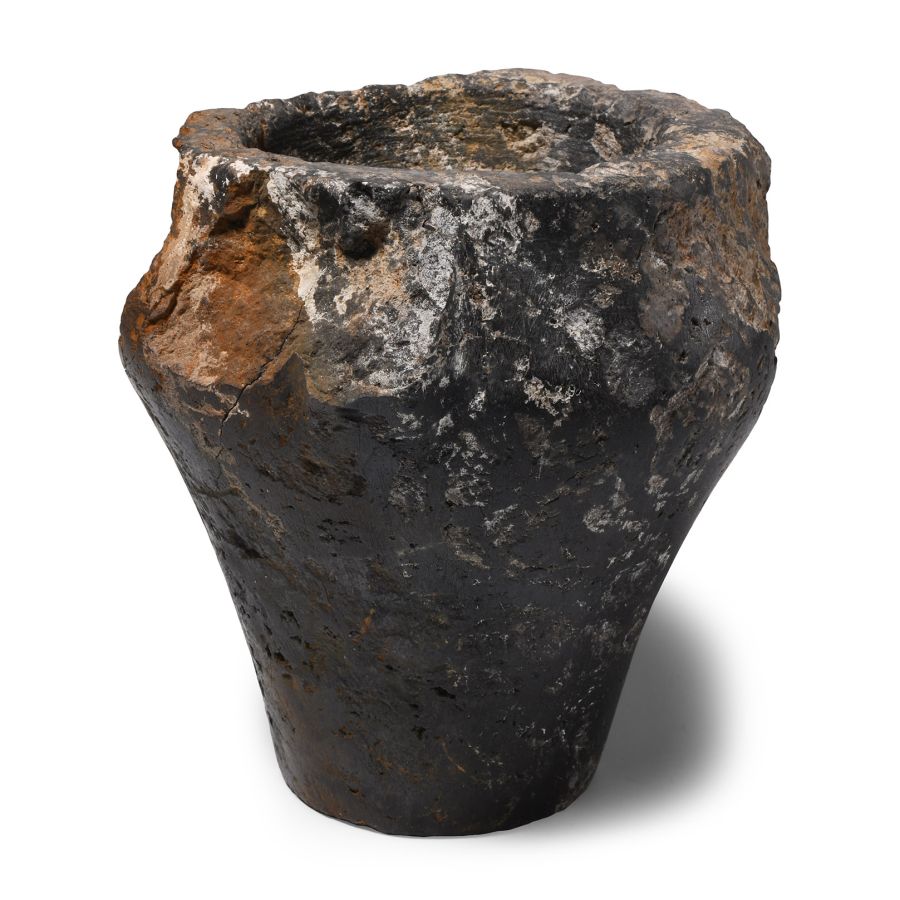
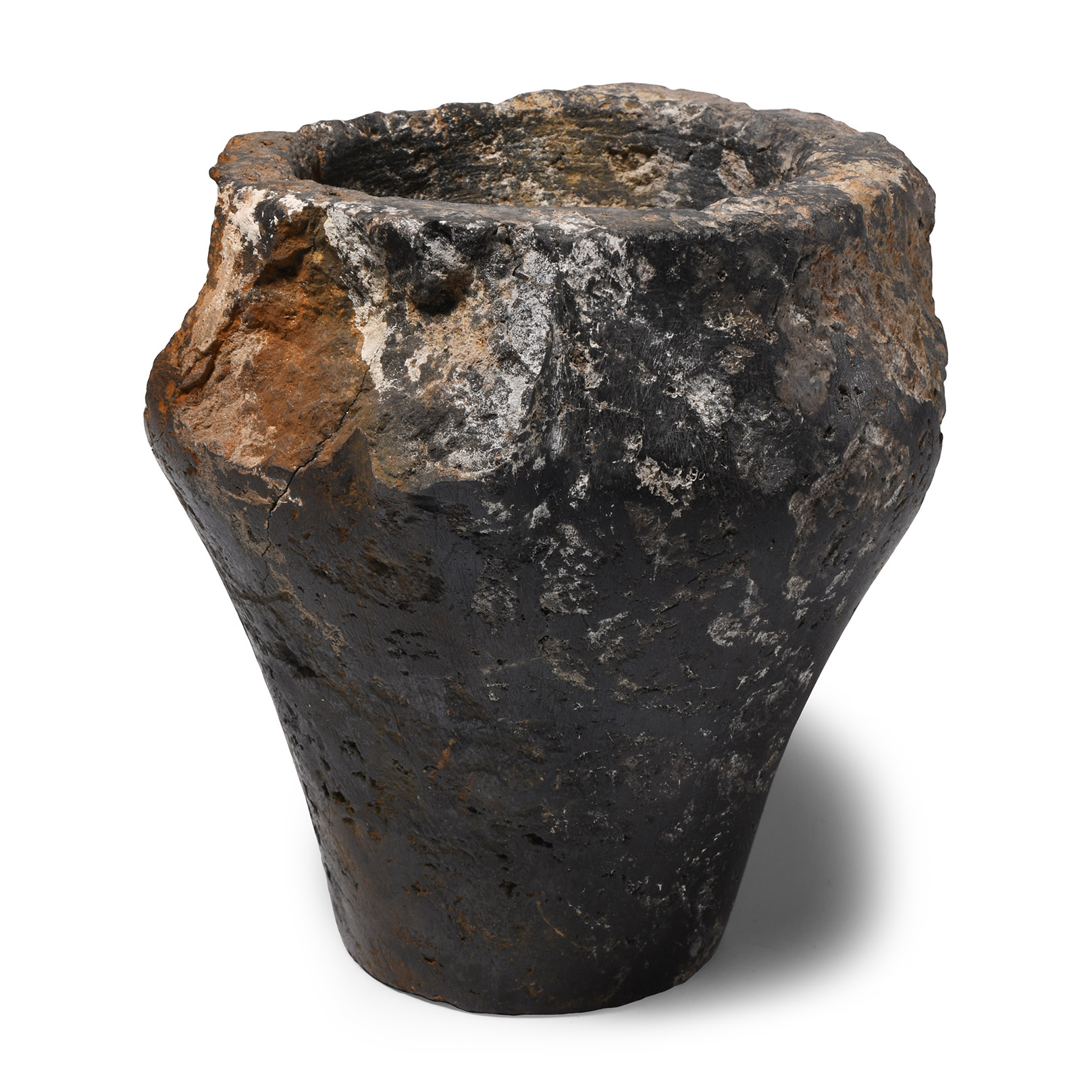
Minoan Black Stone Vessel
AM II-MHIB/IIA, CIRCA 30TH-19TH CENTURY B.C.
5 in. (2.1 kg, 13 cm).
Substantial carved mortar with narrow base and biconvex body; heavily chipped. [No Reserve]
ProvenanceFrom a collection acquired on the UK art market from various auction houses and collections mostly before 2000.
From an important Cambridgeshire estate; thence by descent.
Cf. a similar vessel in Karetsou, A. et al., Crete-Egypt, Cultural Ties of Three Millennia, Catalogue, Cairo, Hellenic Ministry of Culture, 2000, p.35, no.15b.
FootnotesThe vessel corresponds to the Warren type 28, with similar Egyptian parallels and correspondent typologies, with small differences on the edges (see Karetsou et al., 2000, nos.15a and 19a).
CONDITIONTimeLine Auctions follows a vetting process to ensure the authenticity and legality of all items, reinforcing our commitment to integrity and responsible trading. Each antiquity, antique, and coin lot undergoes thorough examination by a vetting committee of at least ten external specialists, professional trade association members, scientists, and archaeologists: Our Vetting Process
AUCTIONS:
TimeLine is a leading auction house specialising in antiquities, ancient art, collectables, natural history, coins, medals, and books. Our auctions offer museums, collectors, historians, and enthusiasts the opportunity to acquire unique and historically significant pieces.
-
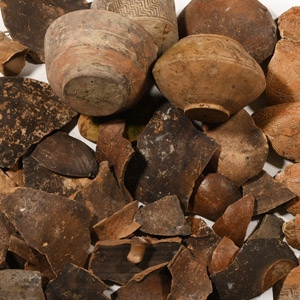
Greek and Other Pottery Fragment Group
Circa 1st millennium B.C.Sold for (Inc. bp): £98
Including squat and biconical bowls, amphora sherds and other types. 3.34 kg total, 4-19 cm
From a collection acquired on the UK art market from various auction houses and collections mostly before 2000. From an important Cambridgeshire estate; thence by descent. -
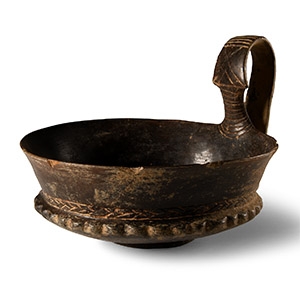
Villanovan Impasto Kyathos with Comb-Etched Decoration
7th century B.C.Sold for (Inc. bp): £338
Modelled with wide and squat body with carination and flared mouth; raised, biforal handle with transverse grooves and cross-hatch below; small projections emerging from the sides and an incised zigzag line around the body. 196 grams, 15.5 cm wide
From a Belgian collection formed in the 1970s and 1980s. Ex Haynault Ventes Publiques, Uccle, Belgium, 21 September 2021, lot 21. Property of a South Australian private collector, with collection reference 21.101. Accompanied by collector's catalogue page including description and photograph. -
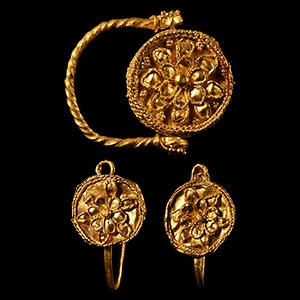
Greek Gold Ring and Earring Set with Rosettes
4th-3rd century B.C.Estimate: £5,000 - 7,000 (+bp*)
Opening Bid: £2,778
Comprising: matched pair of earrings, each a hollow-formed disc with applied rosette motif in filigree; finger ring with twisted rod shank and swivel attachment to a drum-shaped bezel with similar applied rosette, granule clusters to the rim. 14.59 grams total, 22-32 mm
London collection; acquired on the UK art market 1971-1974. This lot has been checked against the Interpol Database of stolen works of art and is accompanied by a search certificate number no.12152-217076.
