
Loading, please wait...
LOT 0868
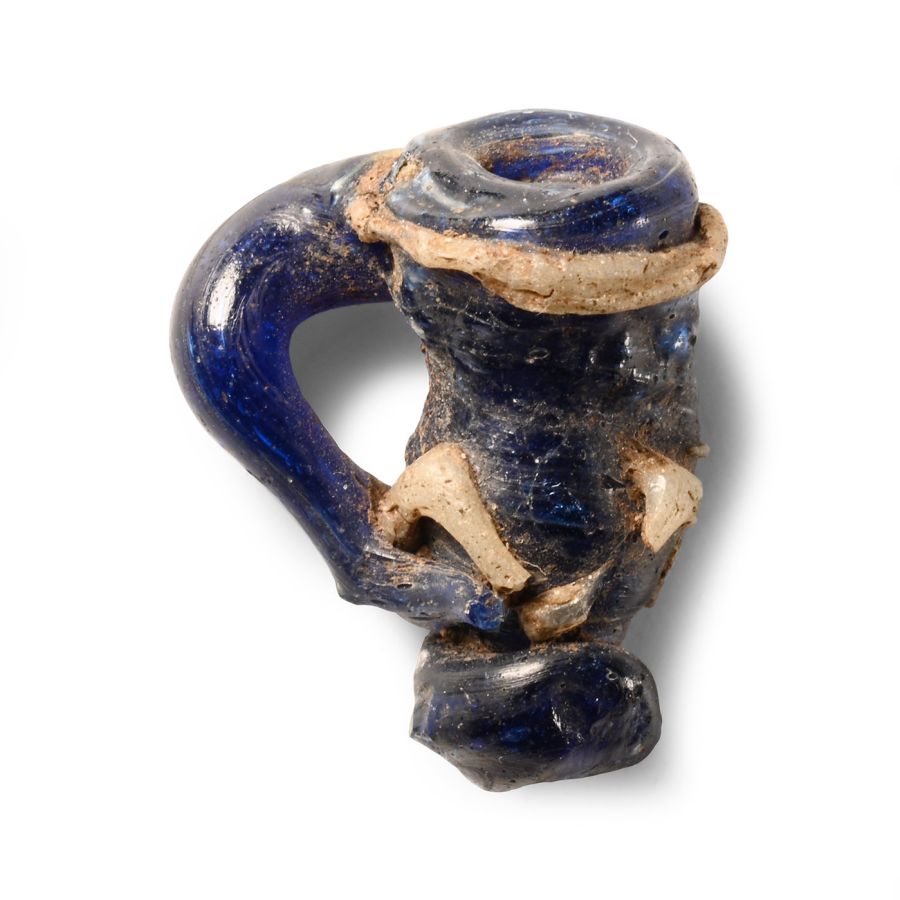
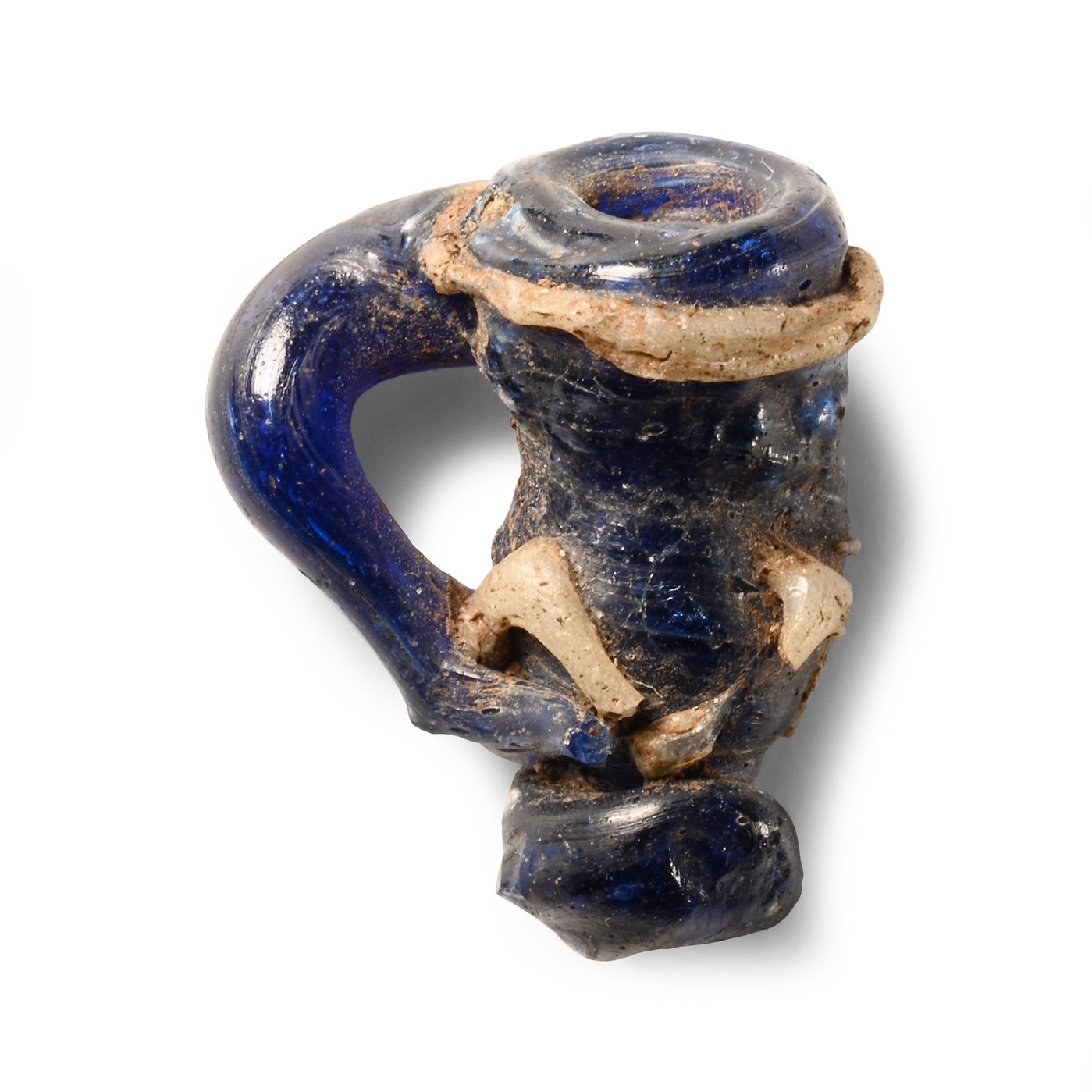
Miniature Roman Blue and White Glass Juglet
1ST-4TH CENTURY A.D.
7/8 in. (3.6 grams, 23 mm).
Amulet formed with a tubular body and loop handle, applied white glass trail.
ProvenanceCollected from 1969-1999.
From the collection of the late Mr S.M., London, UK.
TimeLine Auctions follows a vetting process to ensure the authenticity and legality of all items, reinforcing our commitment to integrity and responsible trading. Each antiquity, antique, and coin lot undergoes thorough examination by a vetting committee of at least ten external specialists, professional trade association members, scientists, and archaeologists: Our Vetting Process
AUCTIONS:
TimeLine is a leading auction house specialising in antiquities, ancient art, collectables, natural history, coins, medals, and books. Our auctions offer museums, collectors, historians, and enthusiasts the opportunity to acquire unique and historically significant pieces.
-
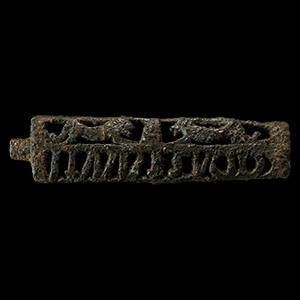
Roman Decorated and Inscribed Animal Hilt
3rd-4th century A.D.Sold for (Inc. bp): £715
Openwork rectangular bifacial dagger- or knife-hilt with lobe pommel and blade-socket; Side A: two rectangular openwork panels, above an inverted openwork inscription 'VTERE FELIX' and below two opposed running hounds; Side B: two opposed running hounds above inverted inscription: 'CONSTANTI' (use [this] with good fortune for Constantine). 87 grams, 11 cm
Private collection 1990s. Ex London, UK, gallery. -
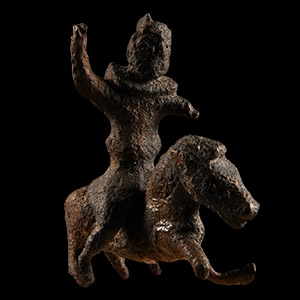
Romano-British Bronze Horse and Celtic Warrior Rider Statuette
Circa 1st-2nd century A.D.Sold for (Inc. bp): £169
Two-part model comprising: galloping horse with fore-legs extended, detailed mane; rider wearing a crested helmet, cloak billowing to the rear, knee-length tunic with gathered waist, legs curved to the rear; mounted on a custom-made stand. 189 grams total, 92 mm including stand
Found UK. From a collection acquired on the UK art market from various auction houses and collections mostly before 2000. From an important Cambridgeshire estate; thence by descent. -
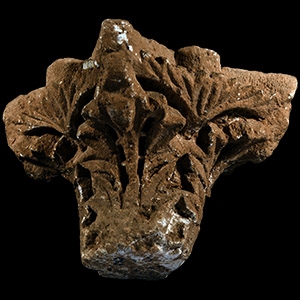
Roman Limestone Capital
Circa 2nd-3rd century A.D.Sold for (Inc. bp): £1,170
Square in plan with four tiered acanthus-leaves with deep undercuts; cylindrical column. 16.8 kg, 28 cm wide
Ex Paris collection. French gallery, Paris, 1990-2000s.
The capital seems near the types used in the Roman East, in particular the Alexandrian capital of type I or II, or maybe belonging to a transitional style driving to the semplificate type of the so called blocked-out capitals (a particular type of architectural decoration characterised by a simplified form).
