
Loading, please wait...


LOT 0205
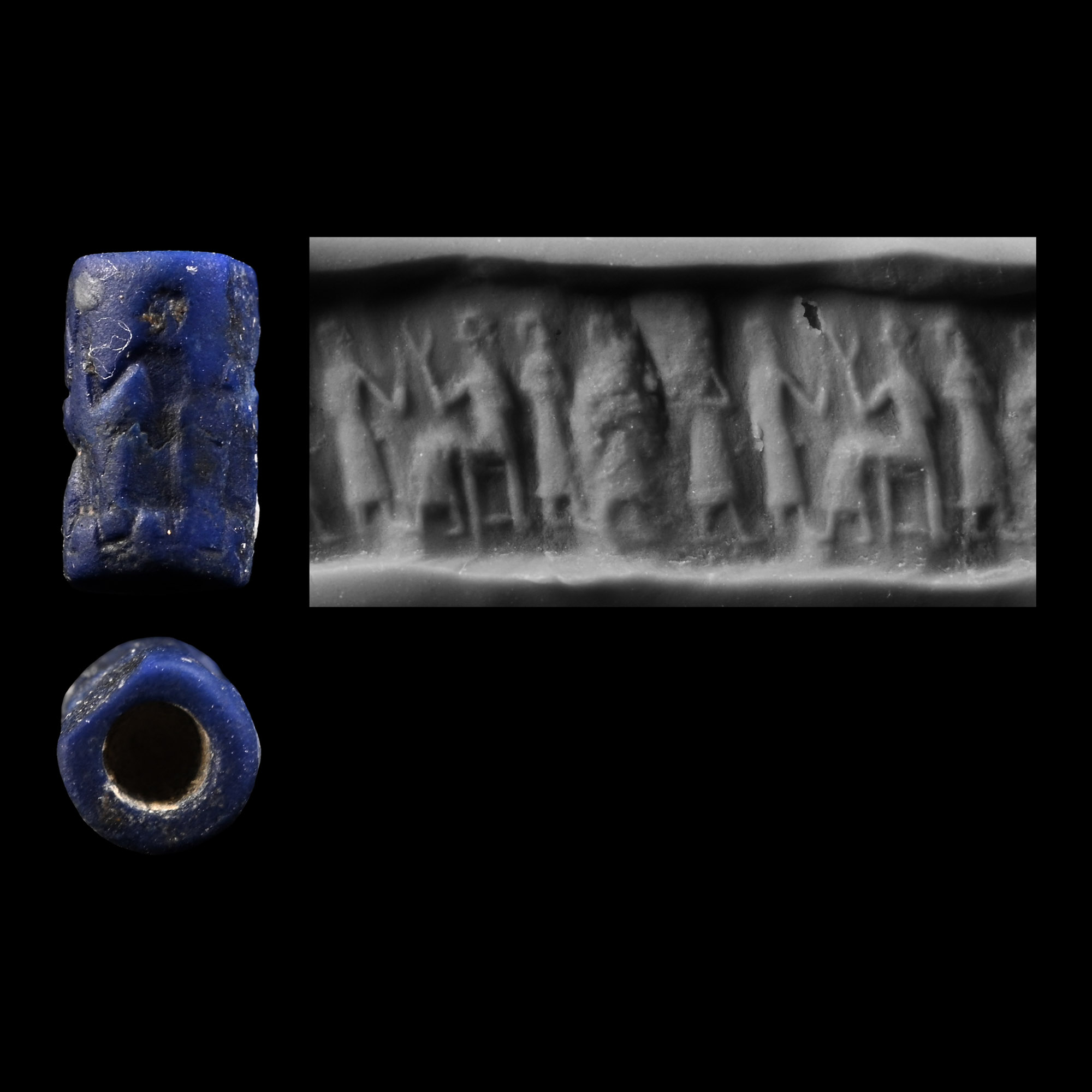
Miniature Old Babylonian Lapis Lazuli Cylinder Seal with Seated Gods
EARLY 2ND MILLENNIUM B.C.
1/4 in. (0.23 grams, 7 mm).
Frieze of incuse seated figures in profile.
ProvenanceFrom an important collection formed before 1988.
Examined by Professor Wilfrid George Lambert FBA (1926-2011), historian, archaeologist, and specialist in Assyriology and Near Eastern archaeology, in the late 1980s and 1990s.
TimeLine Auctions follows a vetting process to ensure the authenticity and legality of all items, reinforcing our commitment to integrity and responsible trading. Each antiquity, antique, and coin lot undergoes thorough examination by a vetting committee of at least ten external specialists, professional trade association members, scientists, and archaeologists: Our Vetting Process
AUCTIONS:
TimeLine is a leading auction house specialising in antiquities, ancient art, collectables, natural history, coins, medals, and books. Our auctions offer museums, collectors, historians, and enthusiasts the opportunity to acquire unique and historically significant pieces.
LOT 0205
Miniature Old Babylonian Lapis Lazuli Cylinder Seal with Seated Gods
Sold for (Inc. bp): £780
-
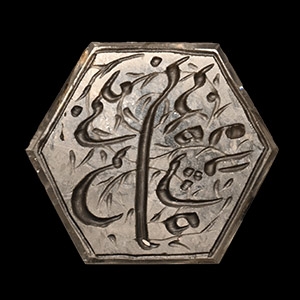
Rock Crystal Stamp Seal of 'Shar Abbas'
19th-20th century A.D.Sold for (Inc. bp): £117
Hexagonal in plan with tapering profile, pierced for suspension; calligraphic nastaliq script with foliage embellishments. 21 grams, 35 mm
with a London, UK gallery, 1971-early 2000s. -
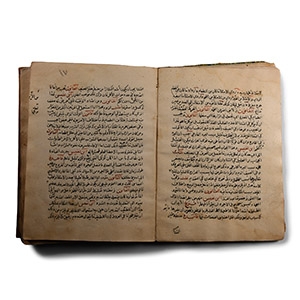
Islamic Manuscript, Al Jameh til Tebb for Sheikh Ezz al Din ibn Jama by Dr Mohamad bin Al Masuli
877 A.H. (1472 A.D.)Estimate: £6,000 - 8,000 (+bp*)
Opening Bid: £3,000
Rebound as a hardback with leather spine, fore-edge flap with envelope flap, marbled boards; title page with red-ink naskh script text in a triangular block and numerous annotations and two (accession) stamps; text pages typically 21 lines of cramped black-ink naskh script with red titles and underscores; marginal notes in a variety of hands; some water damage to lower edge; last page unbound, with extensive notation in a looser, more expansive hand; title page repaired. 272 grams, 14.7 x 19.7 cm
From an important family collection started in the late 1950s. Property of a West London, UK, gentleman. This lot has been checked against the Interpol Database of stolen works of art and is accompanied by a search certificate number no.12270-220408.
The text is 'Al Jameh til Tebb' composed for Sheikh Ezz al Din ibn Jama by Dr Mohamad bin Al Masuli. -
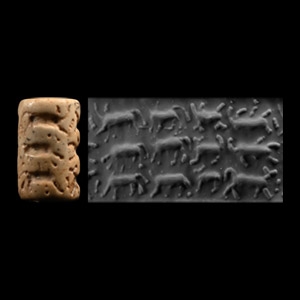
Mesopotamian White Stone Cylinder Seal
Circa 3200 B.C.Sold for (Inc. bp): £910
With frieze of animals; accompanied by a museum-quality impression and typed and signed scholarly note issued by W.G. Lambert, Professor of Assyriology at the University of Birmingham 1970-1993, which states: 'Cylinder seal of white marble, 34x21mm. Four vertical rows of three animals each, largely done with the drill. Mesopotamian, c.3200 B.C. Condition fair.' 28 grams, 34 mm
Ex S. collection, London, UK, 1980s-2000s. Accompanied by an original typed and signed scholarly note by the late W.G. Lambert, Professor of Assyriology at the University of Birmingham, 1970-1993.
