
Loading, please wait...


LOT 2057
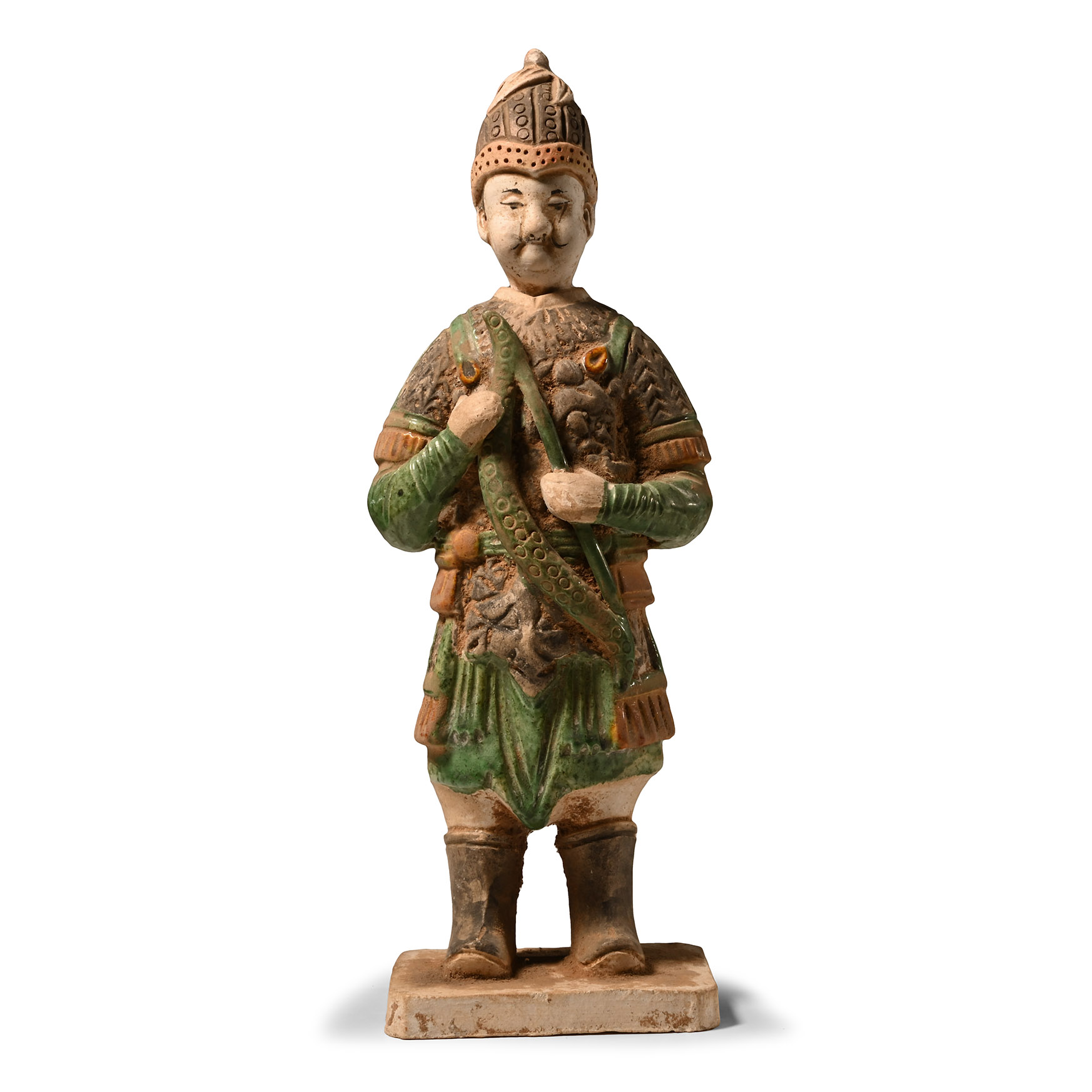
Ming Style Glazed Terracotta Archer
20TH CENTURY A.D.
1 in. (537 grams, 24 cm).
Modelled in the round on a square base, with separate posable head wearing a tall helmet with knop and feathers; black riding boots and cross-over robe beneath a mailcoat and armoured panels; painted facial features with clear eyes and eyebrows; hands supporting a curved bow by the neck and string. [No Reserve]
ProvenanceEx North Yorkshire, UK, collection, 1990s.
CONDITIONTimeLine Auctions follows a vetting process to ensure the authenticity and legality of all items, reinforcing our commitment to integrity and responsible trading. Each antiquity, antique, and coin lot undergoes thorough examination by a vetting committee of at least ten external specialists, professional trade association members, scientists, and archaeologists: Our Vetting Process
AUCTIONS:
TimeLine is a leading auction house specialising in antiquities, ancient art, collectables, natural history, coins, medals, and books. Our auctions offer museums, collectors, historians, and enthusiasts the opportunity to acquire unique and historically significant pieces.
-
.jpg)
Bronze Arabic Seal Matrix Collection
Circa 18th century A.D.Sold for (Inc. bp): £7
Three matrices featuring discoid dies and openwork stems; one with an oval die and columnar stem with tapering finial; each engraved with calligraphic Arabic script or initials to the base. 24.8 grams total, 21-23 mm
Acquired on the UK art market. Property of a Ruislip, UK, gentleman, by inheritance. -
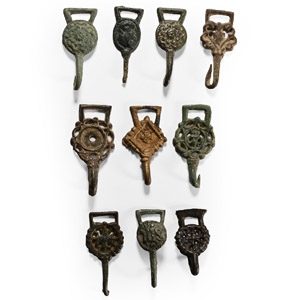
Tudor 'Published' Bronze Clothes Fastener Collection
16th century A.D.Sold for (Inc. bp): £72
Mainly rosette and openwork scroll types; many of these objects are published in the Detector Finds book series and Buttons & Fasteners 500 BC-AD 1840. 27.8 grams total, 29-40 mm
From the collection of the famous author, writer and speaker, Gordon Bailey, Essex, UK; formed since 1968. -
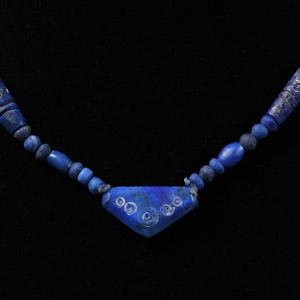
Bactrian Style Lapis Lazuli Bead Necklace String
20th century A.D.Sold for (Inc. bp): £26
Graduated group of beads, mainly tubular, fusiform and annular types with triangular 'elbow' bead centrepiece. 39 grams, 46 cm
London, UK, art market, 1980-2000s
