
Loading, please wait...
LOT 0304
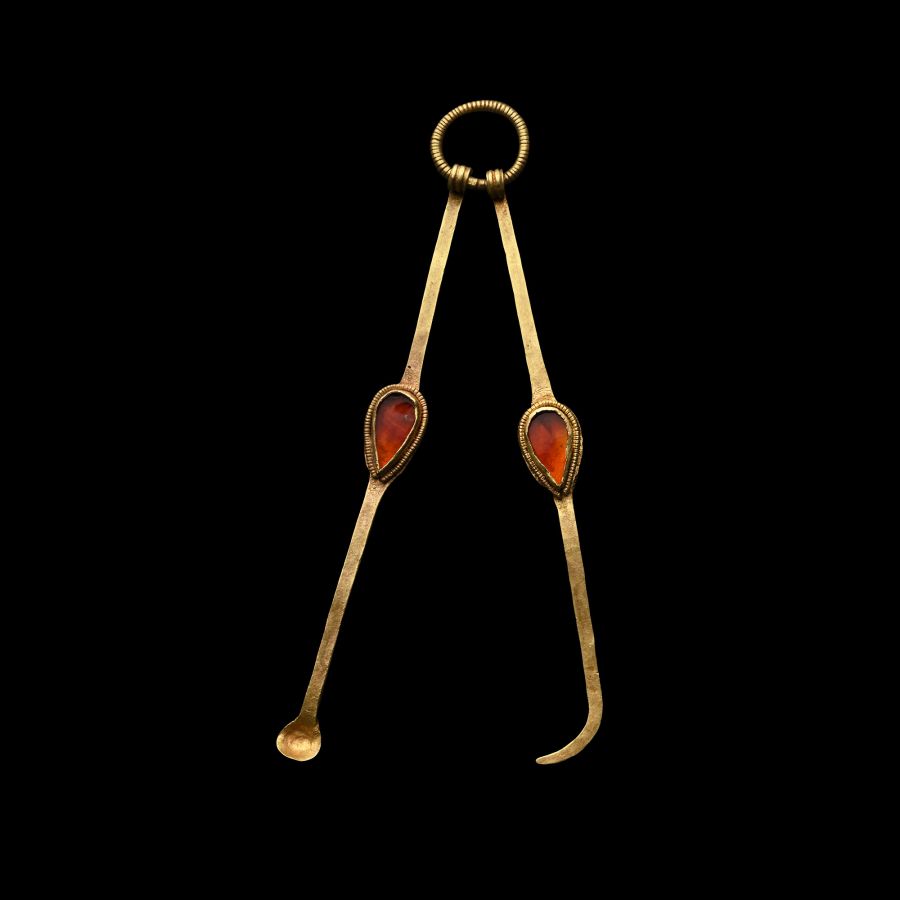
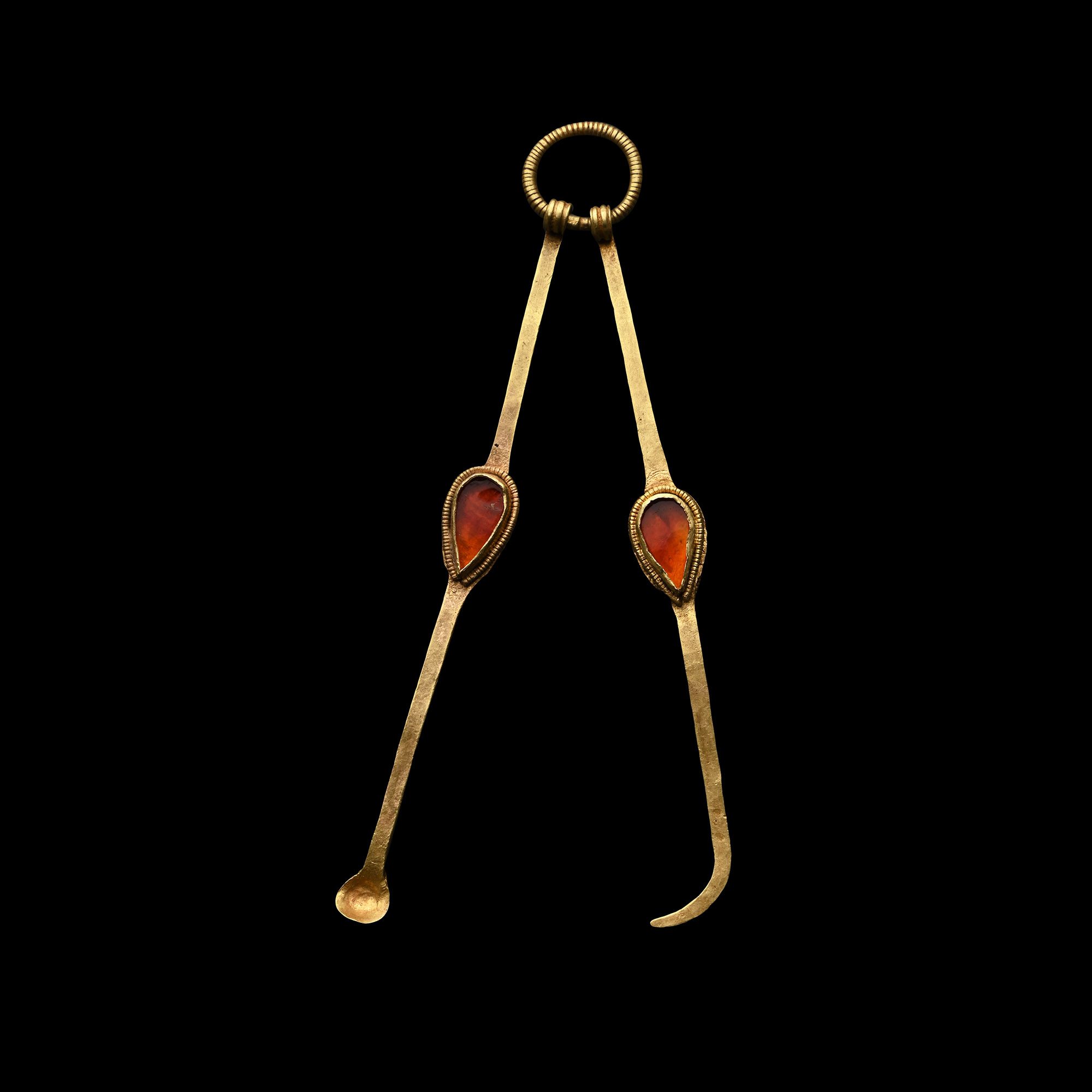
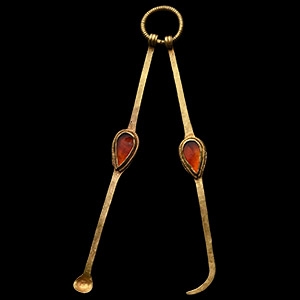
Migration Period Gold Cosmetic Set with Garnets
EARLY 5TH CENTURY A.D.
4 1/2 in. (23.11 grams, 11.4 cm).
Comprising a beaded wire suspension loop with two attachments: long-handled spoon with small bowl; rectangular-section pick with hooked end; each with a teardrop-shaped panel with beaded wire rim to each face, the outer ones each with an inset garnet cloison, the rear ones set with a glass cabochon.
ProvenanceAcquired on the UK art market.
Private collection, London, UK.
This lot has been checked against the Interpol Database of stolen works of art and is accompanied by search certificate number no.12913-244535.
See Wieczorek, A. and Perin, P., Das Gold der Barbarenfursten, Damstadt, 2001, p.112, no.2.5.4.1.
FootnotesA similar implement, silver and gold-plated, was found in the grave of a small child in Untersiebenbrunn, in Lower Austria. These are precious items that belong to the polychrome style of the 5th century Roman jewellery adopted by so-called ‘barbarians’.
CONDITIONTimeLine Auctions follows a vetting process to ensure the authenticity and legality of all items, reinforcing our commitment to integrity and responsible trading. Each antiquity, antique, and coin lot undergoes thorough examination by a vetting committee of at least ten external specialists, professional trade association members, scientists, and archaeologists: Our Vetting Process
AUCTIONS:
TimeLine is a leading auction house specialising in antiquities, ancient art, collectables, natural history, coins, medals, and books. Our auctions offer museums, collectors, historians, and enthusiasts the opportunity to acquire unique and historically significant pieces.
LOT 0304
Migration Period Gold Cosmetic Set with Garnets
Estimate £4,000 - 6,000€4,640 - 6,960 (for guidance only)$5,400 - 8,100 (for guidance only)
-
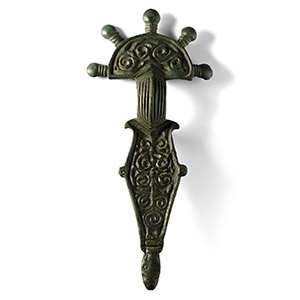
Large Visigothic Bronze Radiate Brooch
6th-8th century A.D.Sold for (Inc. bp): £234
Comprising: D-shaped headplate with five radiating collared knops, running scroll to the plaque; carinated bow with vertical ribbing; lozengiform foot with lateral spurs and running scroll design, beast-head finial; pin-lugs and pierced catch to reverse. 63 grams, 15 cm
Ex European collection, 1990s. Ex Cambridgeshire, UK, collection. -
Migration Period Gold Cosmetic Set with Garnets
Early 5th century A.D.Estimate: £4,000 - 6,000 (+bp*)
Opening Bid: £2,000
Comprising a beaded wire suspension loop with two attachments: long-handled spoon with small bowl; rectangular-section pick with hooked end; each with a teardrop-shaped panel with beaded wire rim to each face, the outer ones each with an inset garnet cloison, the rear ones set with a glass cabochon. 23.11 grams, 11.4 cm
Acquired on the UK art market. Private collection, London, UK. This lot has been checked against the Interpol Database of stolen works of art and is accompanied by search certificate number no.12913-244535.
A similar implement, silver and gold-plated, was found in the grave of a small child in Untersiebenbrunn, in Lower Austria. These are precious items that belong to the polychrome style of the 5th century Roman jewellery adopted by so-called ‘barbarians’. -
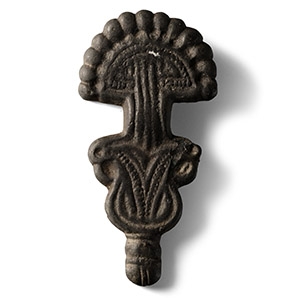
Merovingian Bronze Radiate Brooch
5th-6th century A.D.Sold for (Inc. bp): £65
Miniature bow brooch with D-shaped headplate and thirteen radiating lobes cast in one piece, flat 'bow', trapezoidal footplate with mask finial, remains of pin-lug and catch to the reverse. 13.1 grams, 48 mm
Ex DRG Coins and Antiquities, Bishops Stortford, Essex, UK. From the private collection of a West London, UK, gentleman, formed since the early 2000s. Accompanied by a handwritten dealer's ticket.
