
Loading, please wait...
LOT 1480
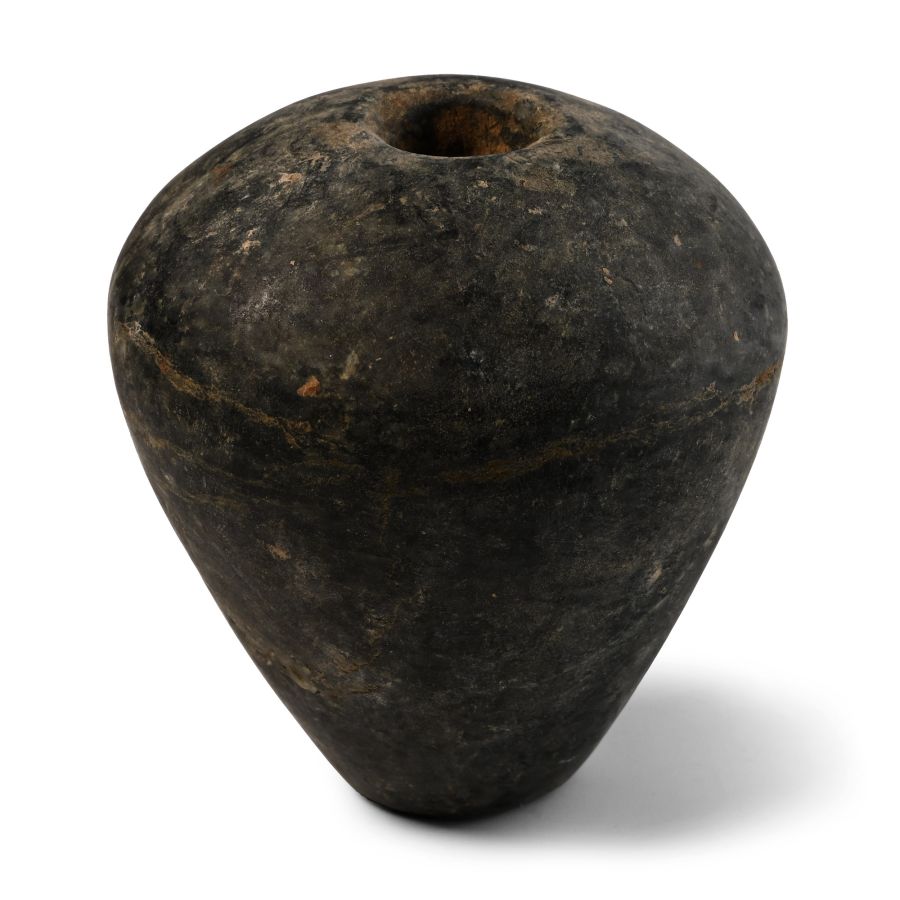
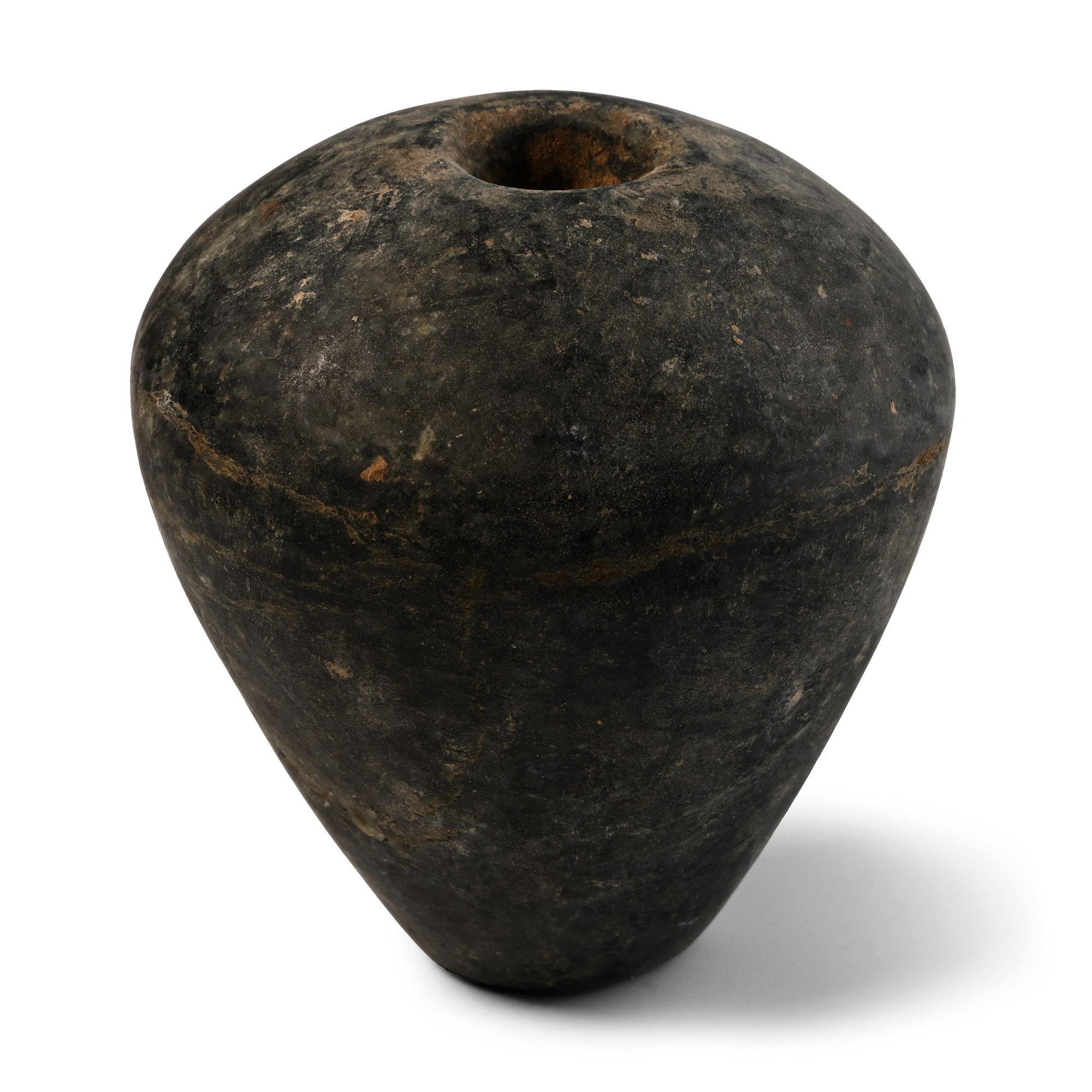
Mesopotamian Veined Mottled Grey Stone Macehead
3RD-2ND MILLENNIUM B.C.
2 3/4 in. (424 grams, 72 mm).
Piriform with vertical socket expanding towards the narrower end; polished surface.
ProvenanceEx 1990s collection and with a central London gallery.
LiteratureCf. Gorelik, M., Weapons of Ancient East, IV millennium BC-IV century BC, Saint Petersburg, 2003, in Russian, see pl.XXXI, no.30, from Armenia, for similar.
CONDITIONTimeLine Auctions follows a vetting process to ensure the authenticity and legality of all items, reinforcing our commitment to integrity and responsible trading. Each antiquity, antique, and coin lot undergoes thorough examination by a vetting committee of at least ten external specialists, professional trade association members, scientists, and archaeologists: Our Vetting Process
AUCTIONS:
TimeLine is a leading auction house specialising in antiquities, ancient art, collectables, natural history, coins, medals, and books. Our auctions offer museums, collectors, historians, and enthusiasts the opportunity to acquire unique and historically significant pieces.
-
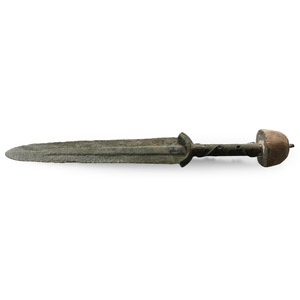
Luristan Bronze Short Sword
2nd-1st millennium B.C. and laterSold for (Inc. bp): £468
With tapering, double-edged triangular blade and central midrib; crescent-shaped, tri-lobed guard at the shoulder; restored decorated cylindrical hilt with domed stone pommel. 878 grams, 54.2 cm
From a North West London collection; previously acquired in the 1980s. -
.jpg)
Elamite Decorated Bronze Axehead
2nd-1st millennium B.C.Sold for (Inc. bp): £572
With a crescentic blade, ornamental curved edging to the upper shaft hole, a collar to the lower shaft hole, raised band around the edge of the blade. 330 grams, 11.6 cm
French collection, 1980s. Acquired on the London art market. Private collection, London, UK. -
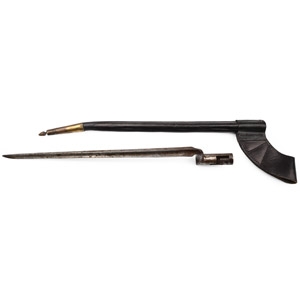
US Confederate Bayonet with Scabbard
19th century A.D.Sold for (Inc. bp): £59
Comprising a tubular socket for fixing to a muzzle of a weapon, long tapering triangular blade with a raised rib on the underside and a 'US / JB(?)' stamp at the base; with a later(?) civil war type scabbard. 500 grams total, 64.5 cm
From the private collection of author and historian Dr DeWitt Bailey, one of the global authorities on the confederate army in the US civil war; thence by descent to his grandson.
