
Loading, please wait...
LOT 1067
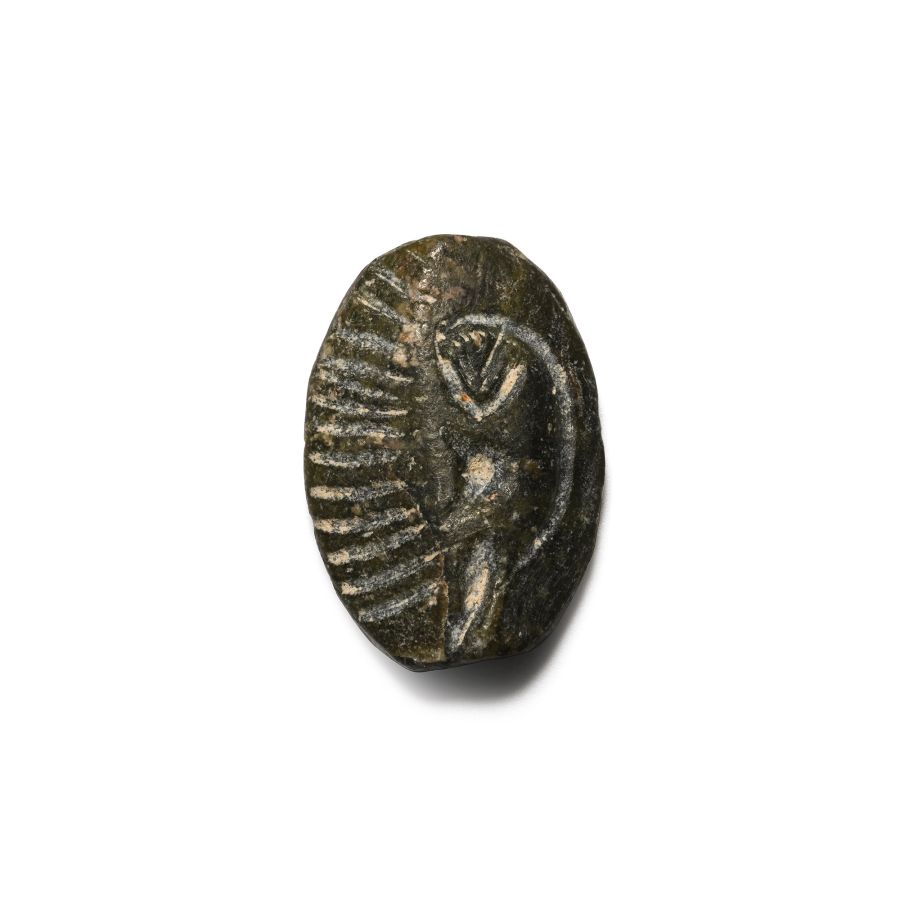
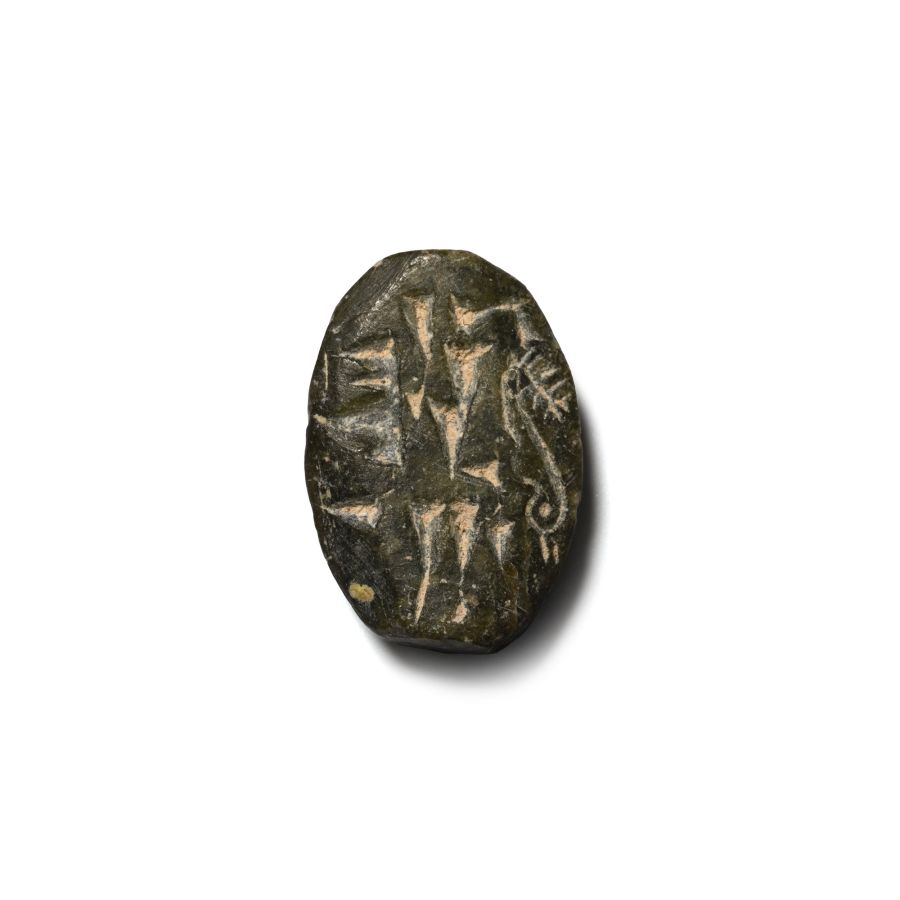
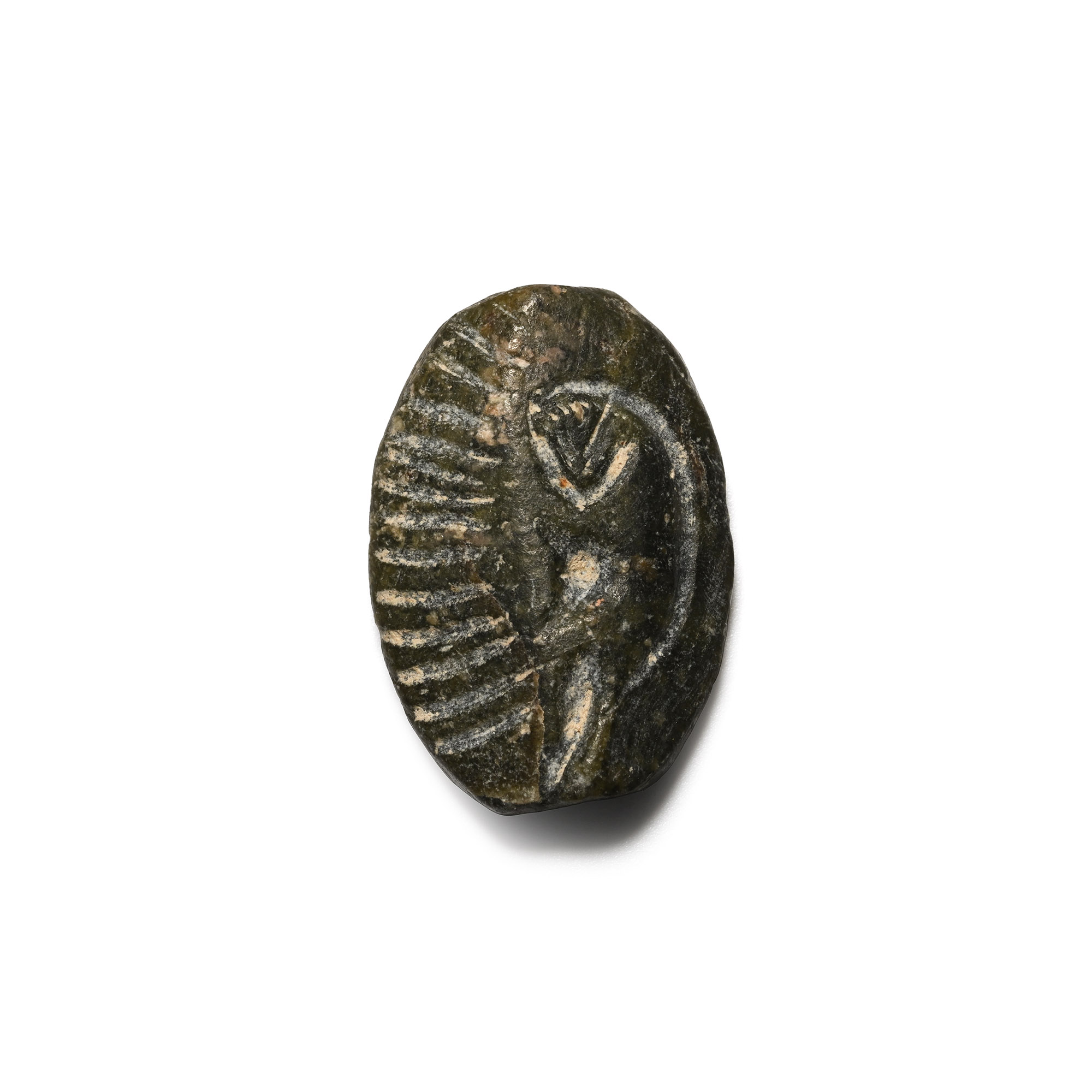
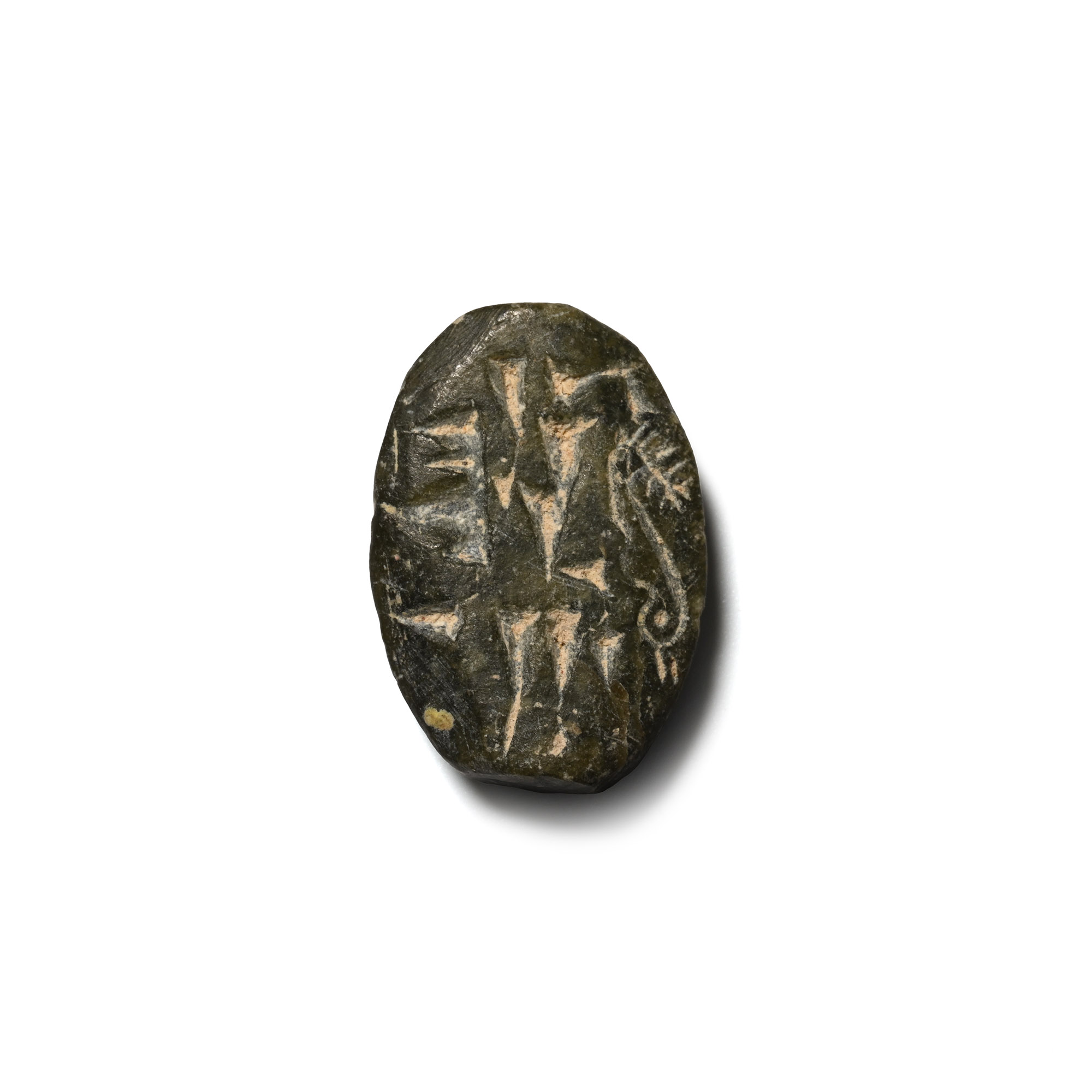
Mesopotamian Stone Seal with Engraved Design
3RD-2ND MILLENNIUM B.C.
7/8 in. (2.98 grams, 22 mm).
Bifacial with one chamfered edge, cuneiform legend to the flat face.
ProvenanceAcquired in the mid 1980s-1990s.
Private collection, Switzerland, thence by descent.
Private collection, since the late 1990s.
This lot has been cleared against the Art Loss Register database, and is accompanied by an illustrated lot declaration signed by the Head of the Antiquities Department, Dr Raffaele D'Amato.
TimeLine Auctions follows a vetting process to ensure the authenticity and legality of all items, reinforcing our commitment to integrity and responsible trading. Each antiquity, antique, and coin lot undergoes thorough examination by a vetting committee of at least ten external specialists, professional trade association members, scientists, and archaeologists: Our Vetting Process
AUCTIONS:
TimeLine is a leading auction house specialising in antiquities, ancient art, collectables, natural history, coins, medals, and books. Our auctions offer museums, collectors, historians, and enthusiasts the opportunity to acquire unique and historically significant pieces.
-
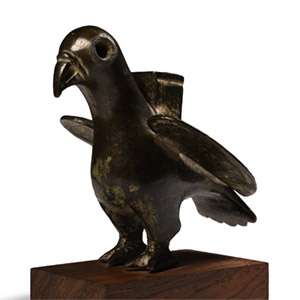
Western Asiatic Bronze Incense Burner in the Shape of an Eagle
9th-11th century A.D.Estimate: £4,000 - 6,000 (‡+bp*)
Opening Bid: £1,800
With outstretched wings and erect body, open beak and eyes hollowed to accept inserts, five-feather spread tail and a rectangular socket to the back; mounted on a custom-made display stand. 430 grams total, 11 cm including stand
Béla Hein collection, Paris, France, before 1931. Accompanied by an academic report by Dr Raffaele D’Amato. This lot has been checked against the Interpol Database of stolen works of art and is accompanied by a search certificate number no.12569-232077. This lot has been cleared against the Art Loss Register database, and is accompanied by an illustrated lot declaration signed by the Head of the Antiquities Department, Dr Raffaele D'Amato.
Béla Hein (1883-1931) was a prominent dealer and collector of African art in early 20th century Paris. In the early 1920s, he founded a gallery specialising in African art, contemporary sculpture, and a variety of curiosities, including antiquities. Hein's influence extended across the art world, and his collection reflected a keen eye for both historical and aesthetic significance. -
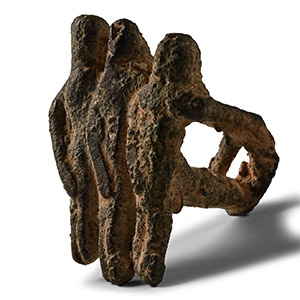
Bactrian Bronze Stamp Seal with Human Figures
1st millennium B.C.Sold for (Inc. bp): £52
Formed as three nude male figures each with one hand to the mouth and the other covering the anus; with vertical bar handle and ring finial. 99 grams, 54 mm
Acquired in the mid 1980s-1990s. Private collection, Switzerland, thence by descent. Private collection, since the late 1990s. This lot has been cleared against the Art Loss Register database, and is accompanied by an illustrated lot declaration signed by the Head of the Antiquities Department, Dr Raffaele D'Amato. -
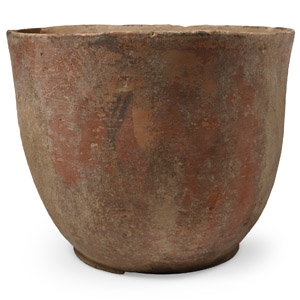
Western Asiatic Bichrome Terracotta Cup
3rd-1st millennium B.C.Sold for (Inc. bp): £26
Drum-shaped with low flared base, gently everted rim; painted vertical frond motifs. 535 grams, 12.5 cm
From a West London, UK, collection, 1990s. This lot has been cleared against the Art Loss Register database, and is accompanied by an illustrated lot declaration signed by the Head of the Antiquities Department, Dr Raffaele D'Amato.
