
Loading, please wait...
LOT 1315
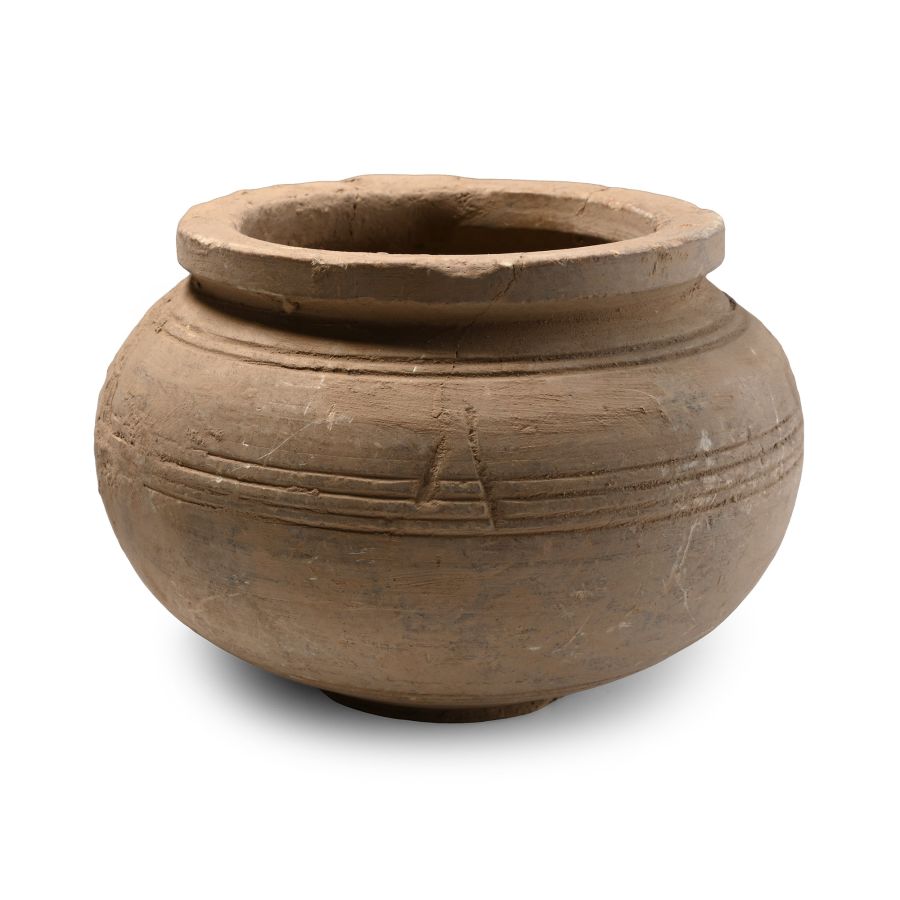
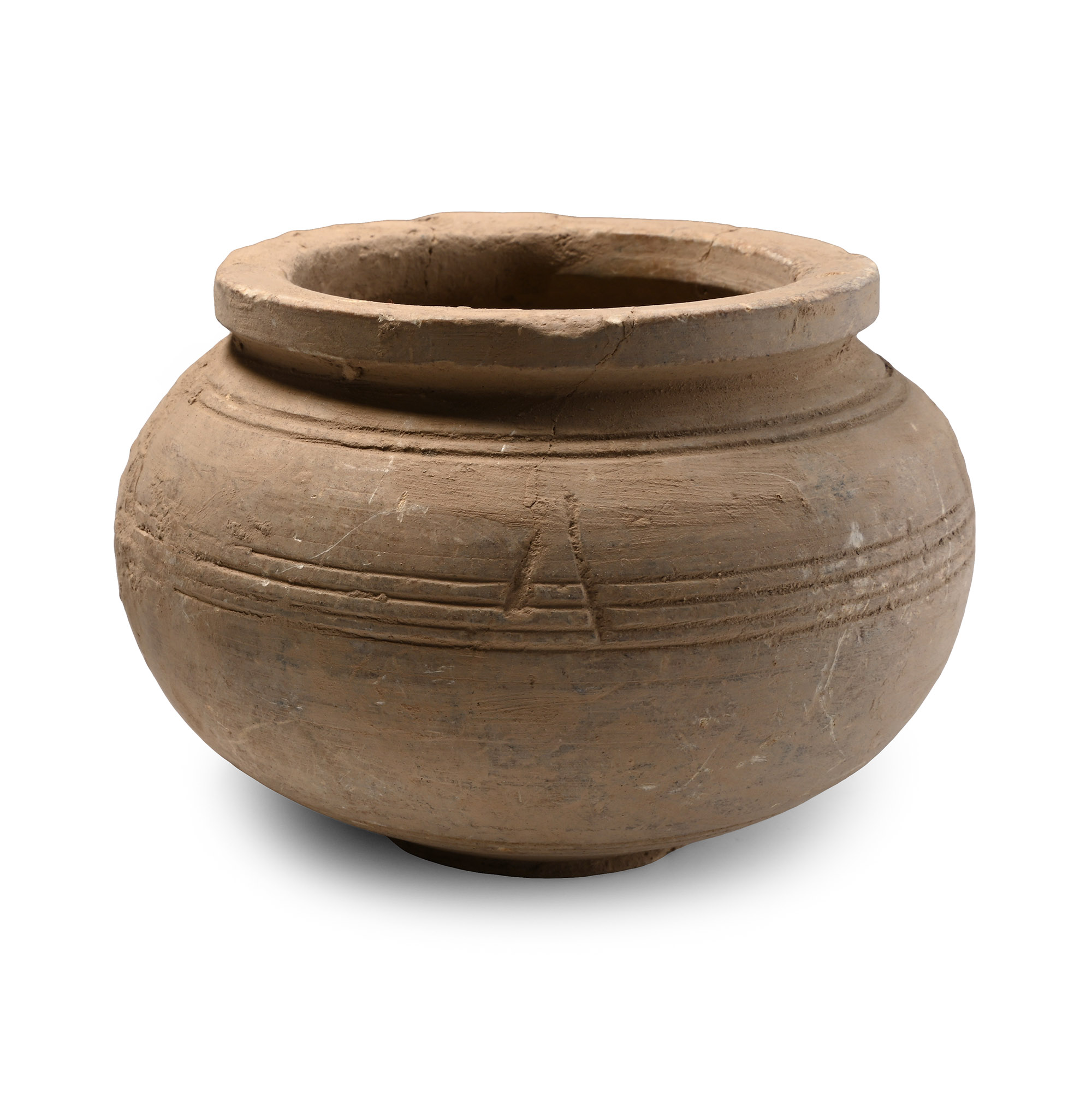
Mesopotamian Stone Jar
1ST MILLENNIUM B.C.
4 1/2 in. (616 grams, 11.3 cm wide).
Comprising a bulbous body with circumferential bands, undercut at the neck with everted rectangular-section rim to the mouth, disc base with rectangular socket.
ProvenanceEx Mayfair, London, UK, gallery, 2000s.
LiteratureSee Aruz, J., Art Of The First Cities The Third Millennium B.C. from the Mediterranean to the Indus, The Metropolitan Museum of Art, New York, 2003, for discussion.
CONDITIONTimeLine Auctions follows a vetting process to ensure the authenticity and legality of all items, reinforcing our commitment to integrity and responsible trading. Each antiquity, antique, and coin lot undergoes thorough examination by a vetting committee of at least ten external specialists, professional trade association members, scientists, and archaeologists: Our Vetting Process
AUCTIONS:
TimeLine is a leading auction house specialising in antiquities, ancient art, collectables, natural history, coins, medals, and books. Our auctions offer museums, collectors, historians, and enthusiasts the opportunity to acquire unique and historically significant pieces.
-
.jpg)
Western Asiatic Mixed Bead Necklace String
1st millennium B.C. and laterSold for (Inc. bp): £39
Restrung designer necklace string of ceramic and stone beads of mainly oblate form, central feature a large cylindrical and annular bead; restrung. 27.7 grams, 30 cm
Acquired 1980-2015. Ex Abelita family collection. -
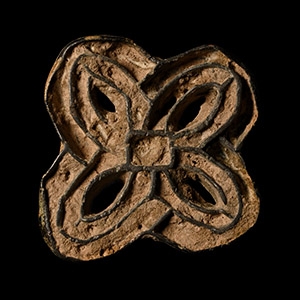
West Central Asian Bronze Stamp Seal Matrix with Rosette Cross
Circa 2300-2000 B.C.Sold for (Inc. bp): £94
Openwork quatrefoil with triangular loop to the reverse; accompanied by typed and signed note by the late W.G. Lambert, Professor of Assyriology at the University of Birmingham, 1970-1993, which states: 'Stamp Seal of Bronze, 43 x 43 x 19 mm. This is an open-work compartmented seal bearing the shape of the design: a rosette with four petals, with an extra layer around the edge. on the back there is a handle of thick sheet metal in an inverted V-shape. This comes from West Central Asia and dates to c. 2300-2000 B.C. It is an unusual design. The outer rim is dented a little, otherwise it is in good condition.' 26 grams, 44 mm
Ex collection of a late London gentleman, 1990s. Accompanied by an original typed and signed scholarly note by the late W.G. Lambert, Professor of Assyriology at the University of Birmingham, 1970-1993. This lot has been cleared against the Art Loss Register database, and is accompanied by an illustrated lot declaration signed by the Head of the Antiquities Department, Dr Raffaele D'Amato. -
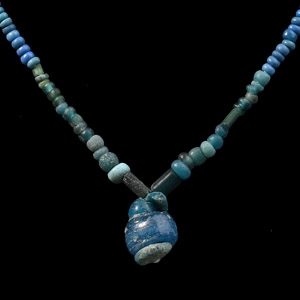
Achaemenid Blue Glass Bead Necklace String
6th-4th century B.C. and laterSold for (Inc. bp): £85
Restrung group of oblate and other types with annular centrepiece. 7.46 grams, 39 cm
London, UK, collection, 2000s.
