
Loading, please wait...
LOT 1104
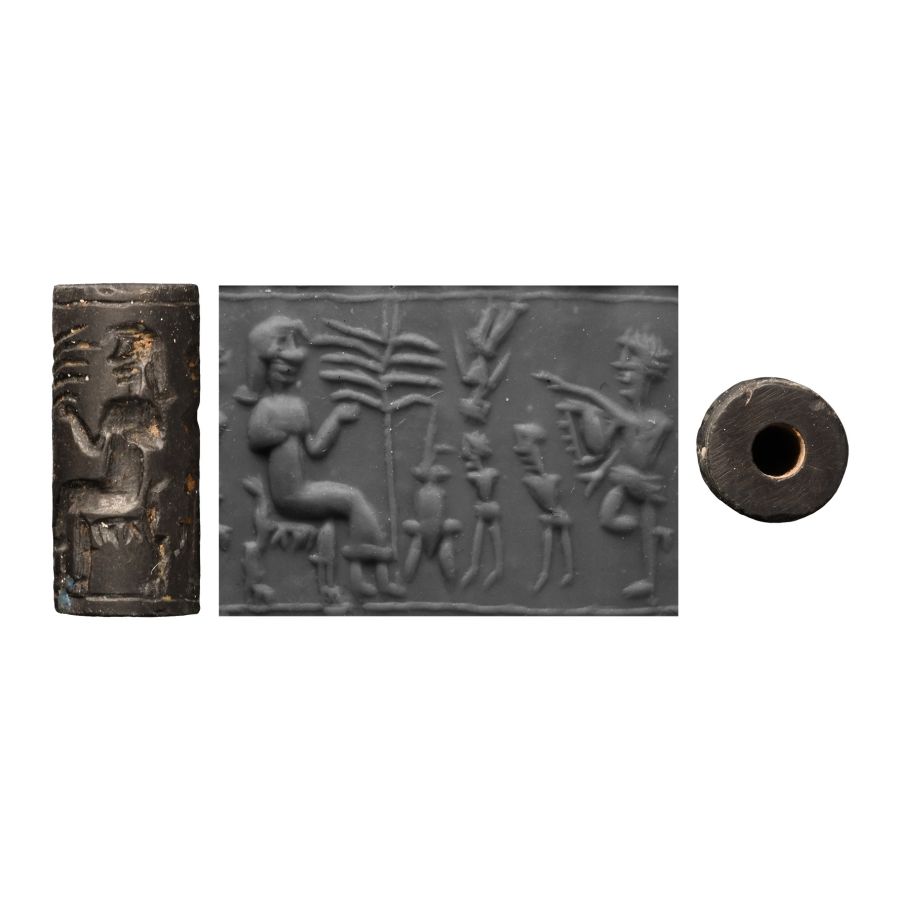
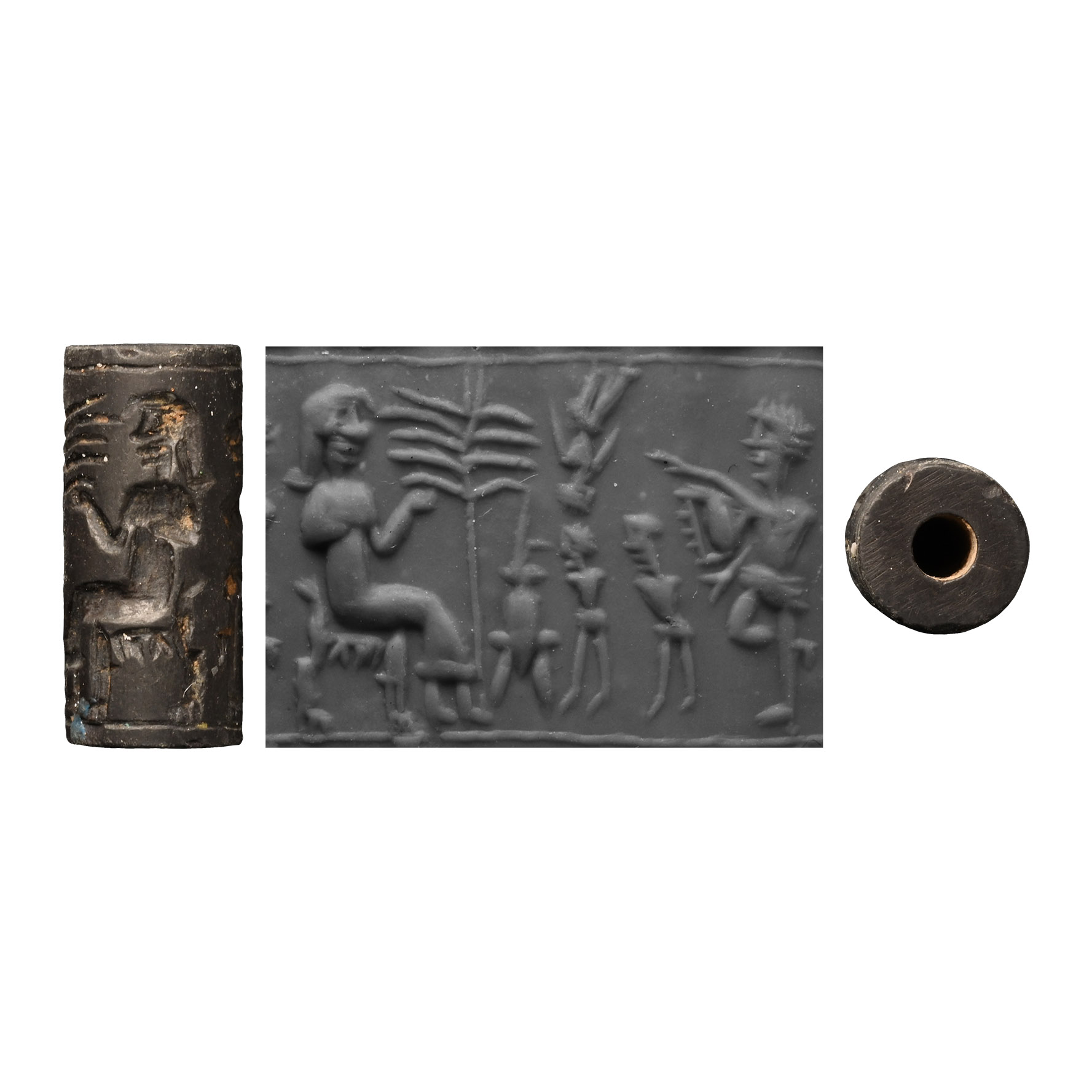
Mesopotamian Stone Cylinder Seal with Banquet Scene
3RD-2ND MILLENNIUM B.C.
3/4 in. (3.05 grams, 18 mm).
In a single register, the scene comprising a seated female figure, possibly a deity, accompanied by an animal at her feet and a tree in the background; four male figures before the female, possibly worshippers and entertainers, two of the figures tête-bêche, with a larger dancing figure behind them holding a lyre-like instrument; accompanied by a museum-quality impression.
ProvenanceFrom the property of late Mr SM, London, UK, 1969-1999.
Accompanied by an old bag with reference no.V-352.
TimeLine Auctions follows a vetting process to ensure the authenticity and legality of all items, reinforcing our commitment to integrity and responsible trading. Each antiquity, antique, and coin lot undergoes thorough examination by a vetting committee of at least ten external specialists, professional trade association members, scientists, and archaeologists: Our Vetting Process
AUCTIONS:
TimeLine is a leading auction house specialising in antiquities, ancient art, collectables, natural history, coins, medals, and books. Our auctions offer museums, collectors, historians, and enthusiasts the opportunity to acquire unique and historically significant pieces.
LOT 1104
Mesopotamian Stone Cylinder Seal with Banquet Scene
Estimate £400 - 600€460 - 700 (for guidance only)$540 - 810 (for guidance only)
-
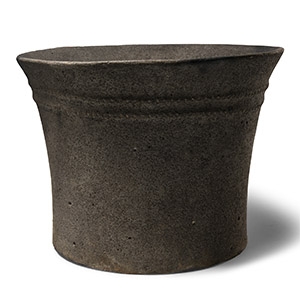
Large Bactrian Stone Vessel
2nd millennium B.C.Sold for (Inc. bp): £169
With slightly dished base, trumpet-shaped sidewall, parallel circumferential ridges below the rim with segmented detailing. 7.45 kg, 25.7 cm wide
From a collection acquired on the UK art market from various auction houses and collections mostly before 2000. From an important Cambridgeshire estate; thence by descent. -
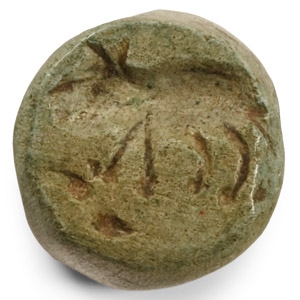
Western Asiatic Bifacial Stone Stamp Seal
1st millennium B.C. or laterSold for (Inc. bp): £7
With intaglio bovine to one face and canine to the other. 1.68 grams, 11 mm
From the H.N. collection, Milton Keynes, Berkshire, UK, 1990s. -
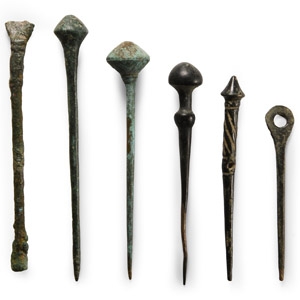
Western Asiatic Clothing Pin Group
1st millennium B.C.Sold for (Inc. bp): £33
Comprising four pins with conical finials, a looped pin, and a section of a pin with flared finial. 34.5 grams total, 52-80 mm
UK private collection before 2000. On the UK art market. Property of a London gentleman.
