
Loading, please wait...
LOT 1307
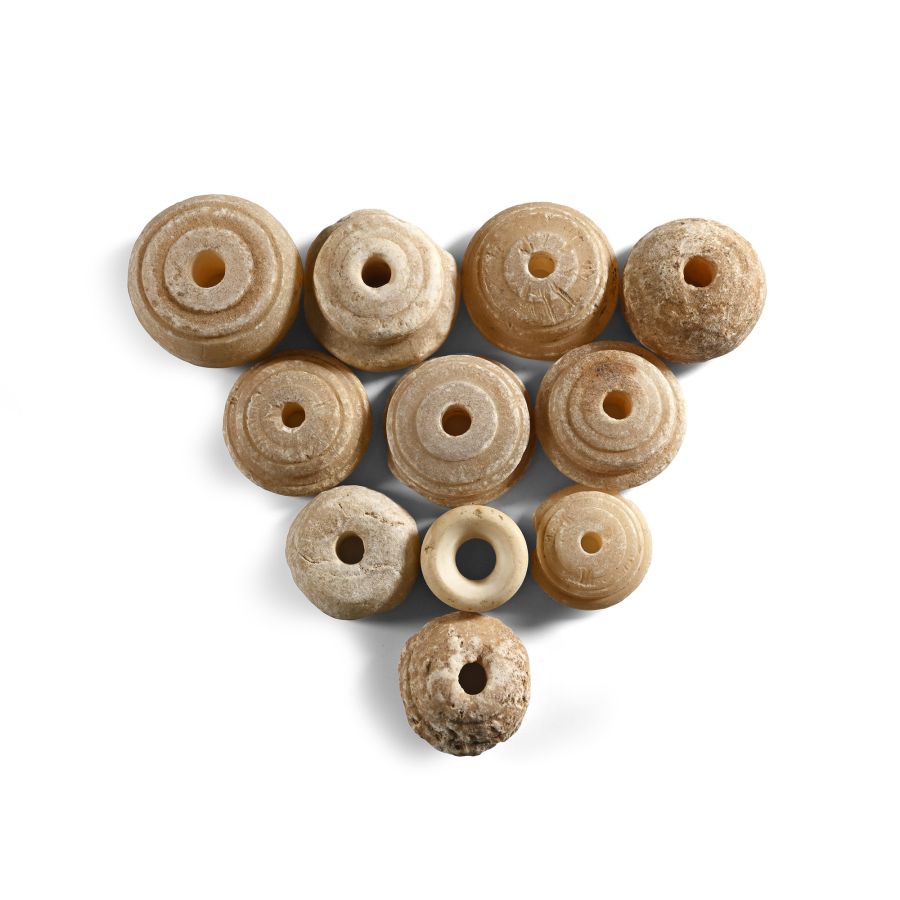
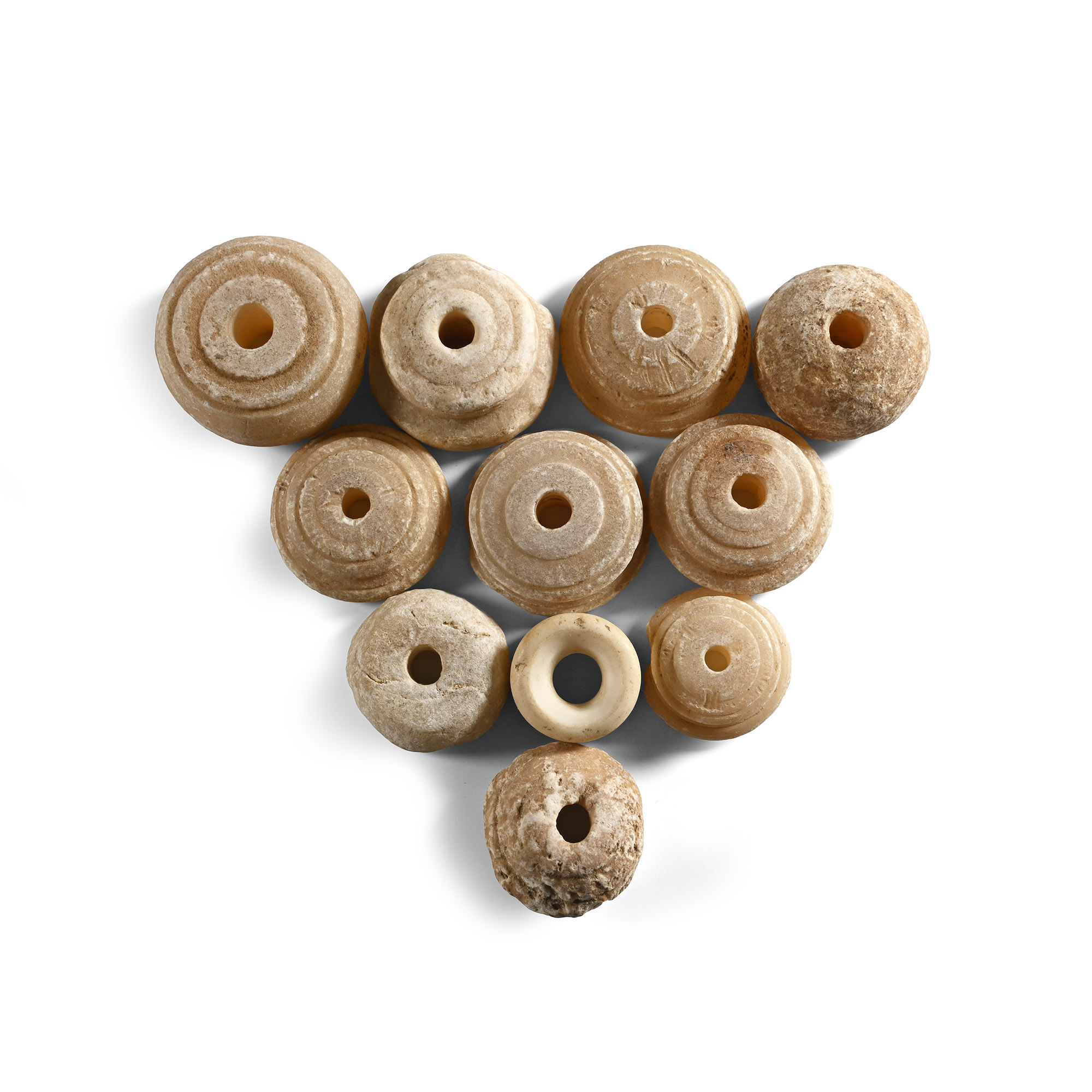
Mesopotamian Spindle Whorl Collection
2ND-1ST MILLENNIUM B.C.
7/8 - 1 1/4 in. (165 grams total, 21.7-33.6 mm).
Comprising eleven examples, mainly domed with groove decoration. [11, No Reserve]
ProvenanceAcquired in the 1990s.
Ex Abelita family collection.
This lot has been cleared against the Art Loss Register database, and is accompanied by an illustrated lot declaration signed by the Head of the Antiquities Department, Dr Raffaele D'Amato.
TimeLine Auctions follows a vetting process to ensure the authenticity and legality of all items, reinforcing our commitment to integrity and responsible trading. Each antiquity, antique, and coin lot undergoes thorough examination by a vetting committee of at least ten external specialists, professional trade association members, scientists, and archaeologists: Our Vetting Process
AUCTIONS:
TimeLine is a leading auction house specialising in antiquities, ancient art, collectables, natural history, coins, medals, and books. Our auctions offer museums, collectors, historians, and enthusiasts the opportunity to acquire unique and historically significant pieces.
-
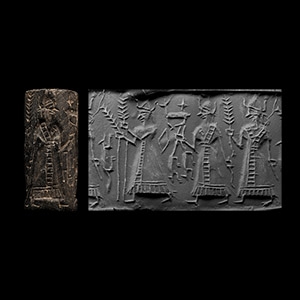
Large West Iranian Grey Stone Cylinder Seal with Figures
Circa 1200-1000 B.C.Sold for (Inc. bp): £2,340
Accompanied by a copy of an old scholarly note, typed and signed by W.G. Lambert, late Professor of Assyriology, University of Birmingham, 1970-1993, which states: ' Cylinder seal of black stone, 45 x 20 mm., condition fine. This seal shows three walking figures in a row, to be identified as gods from their headdresses. They are all clad in the same garb: long robes reaching the ankles, with a fringe reaching from the shoulder to the bottom, and another one around the bottom. The first one carried two rodents by their tails in one hand and holds a small scimitar in the other. The middle one holds up a twig of vegetation in one hand and a short rod in the other. The rear deity holds a twig in each hand, with (apparently) a string falling from each hand to the ground. There is a rodent sideways filling space between the second and last gods, and for a terminal there is a lozenge, a horned animal with front and rear legs close together, and a simple cross. This is a rare seal from west Iran, dating to c. 1200-1000 B.C. The twig as a divine symbol is well known from seals of this period excavated at Susa and Choga Zanbil, and other details are paralleled, such as the angular depiction of the hands holding the various objects.'; supplied with a museum-quality impression. 23.9 grams, 45 mm
From the private collection of a North American lady, formed 1970s-early 1990s, with collection reference no.P27. Accompanied by a copy of a scholarly note, typed and signed by Professor Wilfrid George Lambert dated January 1990. This lot has been cleared against the Art Loss Register database, and is accompanied by an illustrated lot declaration signed by the Head of the Antiquities Department, Dr Raffaele D'Amato. -
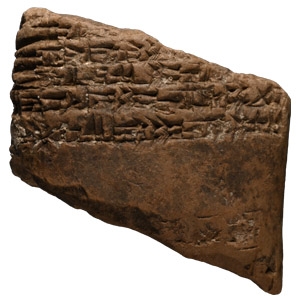
Old Babylonian Cuneiform Administrative Tablet Fragment
Circa 2000-1600 B.C.Sold for (Inc. bp): £234
Fragment of a pillow-shaped tablet, cuneiform text to both broad faces and one edge. 58.8 grams, 50 mm
Specialised collection of cuneiform texts, the property of a London gentleman and housed in London before 1992. Thence by descent to family members. Examined by Professor Wilfrid George Lambert FBA (1926-2011), historian, archaeologist, and specialist in Assyriology and Near Eastern archaeology, in the late 1980s and early 1990s. This small collection is exceptional for the variety of types, including some very rare and well preserved examples. This lot has been cleared against the Art Loss Register database, and is accompanied by an illustrated lot declaration signed by the Head of the Antiquities Department, Dr Raffaele D'Amato. -
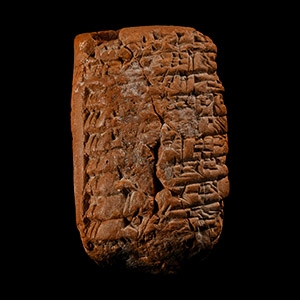
Old Babylonian Cuneiform Tablet Recording Transactions Involving Named Individuals
2000-1600 B.C.Sold for (Inc. bp): £572
Pillow-shaped with impressed cuneiform text to outer face; partly opened to reveal core; stabilised. 43.5 grams, 57 mm
Acquired on the German art market, 1989-1995. with The Museum Gallery, 19 Bury Place, London, WC1, UK, 1998-2003. Property of a London based academic, 2003-present. This lot has been cleared against the Art Loss Register database, and is accompanied by an illustrated lot declaration signed by the Head of the Antiquities Department, Dr Raffaele D'Amato.
