
Loading, please wait...
LOT 1299
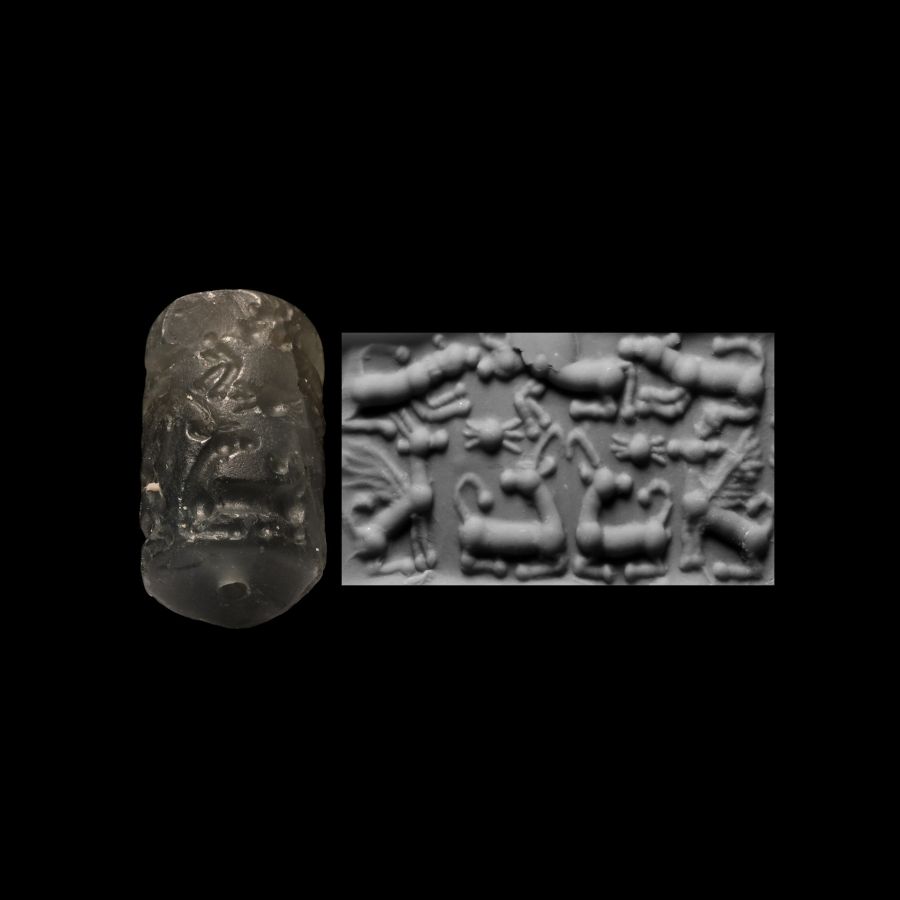
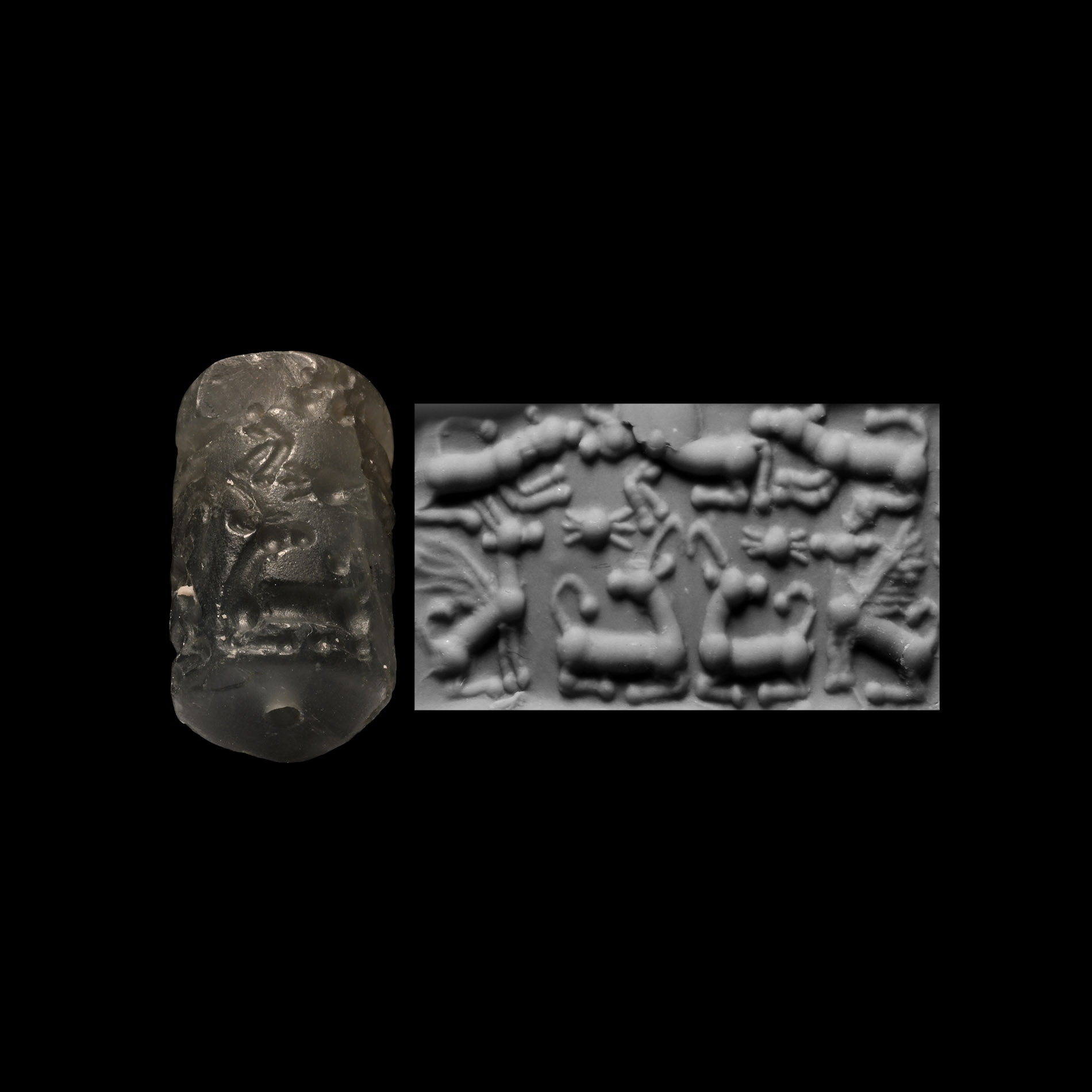
Mesopotamian Rock Crystal Cylinder Seal with Animals
CIRCA 7TH CENTURY B.C.
3/4 in. (5.25 grams, 18 mm).
With frieze in two registers: above, mainly running felines; below, addorsed pairs of gryphons sitting and bovines resting, solar disc above; supplied with a museum-quality impression.
ProvenanceEx London, UK, collection, by family descent before 1988.
Accompanied by a previous catalogue information slip.
TimeLine Auctions follows a vetting process to ensure the authenticity and legality of all items, reinforcing our commitment to integrity and responsible trading. Each antiquity, antique, and coin lot undergoes thorough examination by a vetting committee of at least ten external specialists, professional trade association members, scientists, and archaeologists: Our Vetting Process
AUCTIONS:
TimeLine is a leading auction house specialising in antiquities, ancient art, collectables, natural history, coins, medals, and books. Our auctions offer museums, collectors, historians, and enthusiasts the opportunity to acquire unique and historically significant pieces.
-
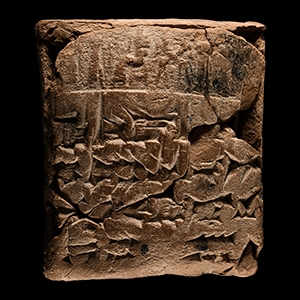
Sumerian Tablet within Envelope with Cylinder Seal Impressions
3rd millennium B.C.Sold for (Inc. bp): £2,470
Comprising an envelope with intact tablet within, the outer face covered with cylinder seal impressions, small part opening to reveal the tablet inside. 115 grams, 55 mm
Specialised collection of cuneiform texts, the property of a London gentleman and housed in London before 1992. Thence by descent to family members. Examined by Professor Wilfrid George Lambert FBA (1926-2011), historian, archaeologist, and specialist in Assyriology and Near Eastern archaeology, in the late 1980s and early 1990s. The collection is exceptional for the variety of types, including some very rare and well preserved examples. -
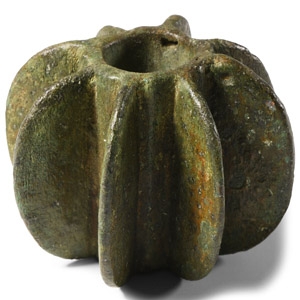
Western Asiatic Finned Macehead
Circa 1000 B.C.Sold for (Inc. bp): £143
With eight projecting vertical flanges and a circular shaft hole. 310 grams, 67 mm
From a collection acquired on the UK art market from various auction houses and collections mostly before 2000. From an important Cambridgeshire estate; thence by descent.
In the Caucasus, the combat mace was very popular throughout the late Bronze Age and the Early Iron Age. The maces could have spiked bronze knobs or often less corrugated, or round, knobs which could also be effectively used. -
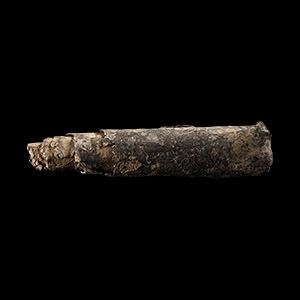
Aramaic Lead Magical Scroll
2nd-8th century A.D.Estimate: £400 - 600 (+bp*)
Opening Bid: £200
Tightly-bound sheet lead scroll with Aramaic text. 37.5 grams, 71 mm
Collected from 1969-1999. From the collection of the late Mr S.M., London, UK.
