
Loading, please wait...

LOT 0194
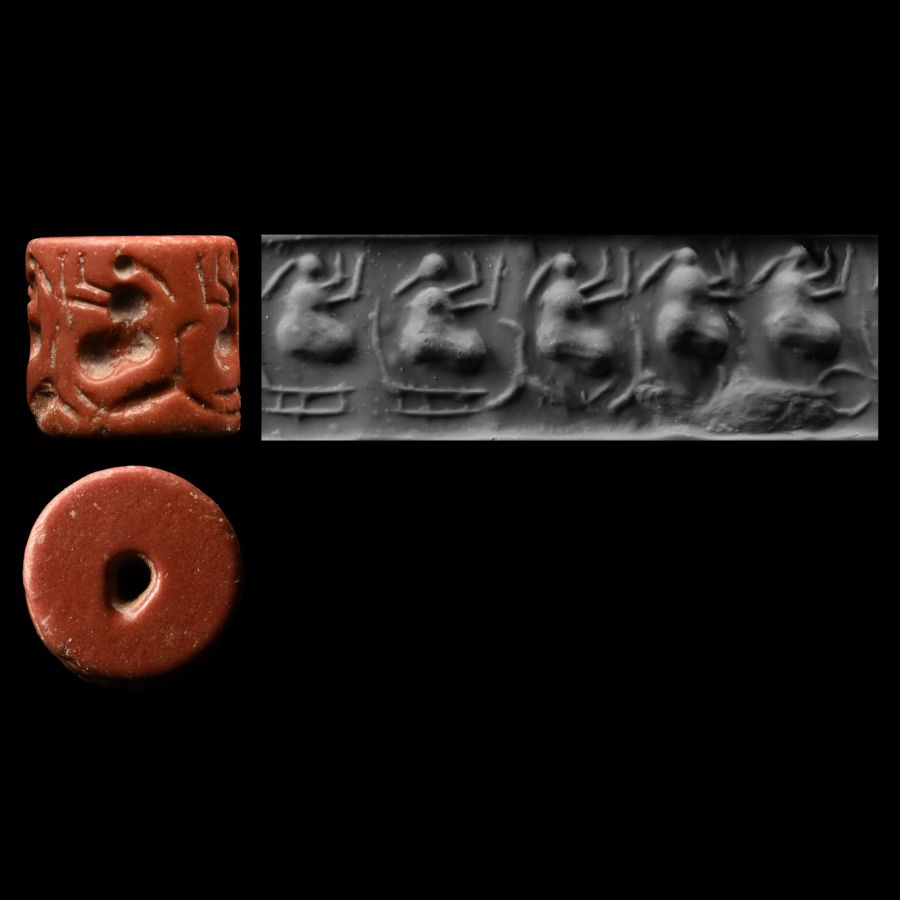
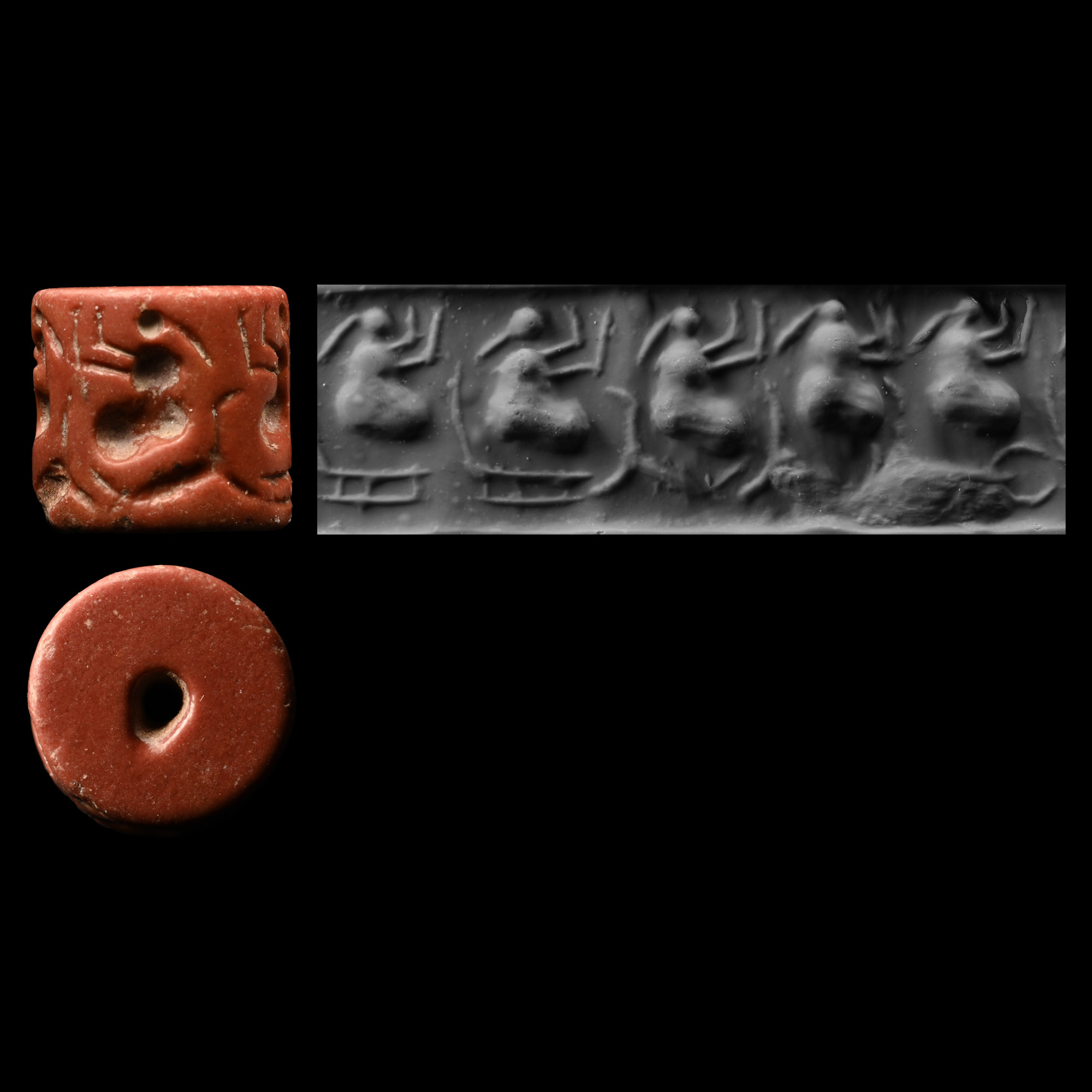
Mesopotamian Red Stone Cylinder Seal
3RD MILLENNIUM B.C.
1 in. (30 grams, 24 mm).
Drum-shaped with frieze of crouching worshippers, each with arms raised and hair worn in a braid behind the head; supplied with a museum-quality impression.
ProvenanceEx S. collection, London, UK, 1980s-2000s.
LiteratureCf. Teissier, B., Ancient Near Eastern Cylinder Seals in the Marcopoli Collection, Berkeley, 1984, item 3, for type.
CONDITIONTimeLine Auctions follows a vetting process to ensure the authenticity and legality of all items, reinforcing our commitment to integrity and responsible trading. Each antiquity, antique, and coin lot undergoes thorough examination by a vetting committee of at least ten external specialists, professional trade association members, scientists, and archaeologists: Our Vetting Process
AUCTIONS:
TimeLine is a leading auction house specialising in antiquities, ancient art, collectables, natural history, coins, medals, and books. Our auctions offer museums, collectors, historians, and enthusiasts the opportunity to acquire unique and historically significant pieces.
LOT 0194
Mesopotamian Red Stone Cylinder Seal
Estimate £700 - 900€810 - 1,040 (for guidance only)$950 - 1,220 (for guidance only)
-
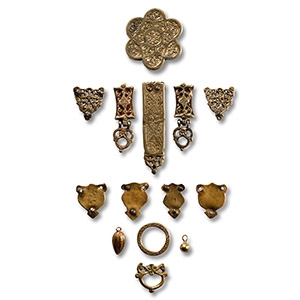
Golden Horde Belt Buckle and Fittings Group
13th-14th century A.D.Estimate: £3,000 - 4,000 (+bp*)
Opening Bid: £1,500
Comprising: hexafoil strap- or belt-fitting with panels of scrolled tendrils and reserved petals, reverse damaged; tongue-shaped hollow strap-end with openwork arabesque finial, bands of scrolled tendrils to obverse, incised arabesque to reverse; two rectangular belt mounts each with openwork obverse, hanged looped fitting to lower edge; four discoid mounts with three pierced lugs; two triangular plaques with openwork scrolled tendril design, pin to each angle; spherical dangle; ribbed scaphoid dangle; openwork hoop with scrolled tendrils; annular mount with ropework motif to obverse. 45 grams total, 9-49 mm
Mr M.B., Mainz, Germany, since the 1980s. Private collection, London. Accompanied by an academic report by Dr. Jack Ogden of Strptwist Ltd, reference 190623 with description of the items and the techniques used to produce them, and the metallic composition of the gold (56.36% to 64.25% on the items tested). -
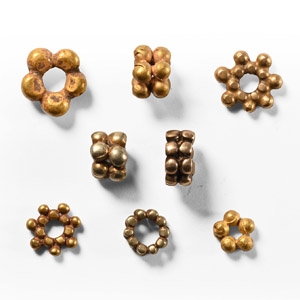
Western Asiatic Granulated Gold Bead Group
2nd-1st millennium B.C.Sold for (Inc. bp): £234
Comprising annular collars of various types. 3.16 grams total, 4-7 mm
Collected from 1970-1999. From the collection of the late Mr S.M., London, UK. -
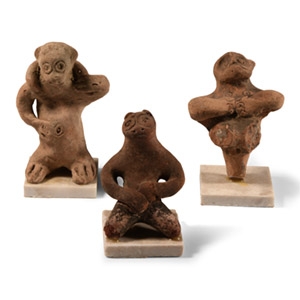
Indus Valley Terracotta Monkey Figurine Group
1st millennium B.C.Sold for (Inc. bp): £143
Each a simian with exaggerated eyes, mounted on a stand. 428 grams total, 8.2-10.3 cm
From a collection acquired on the UK art market from various auction houses and collections mostly before 2000. From an important Cambridgeshire estate; thence by descent.
