
Loading, please wait...
LOT 1370
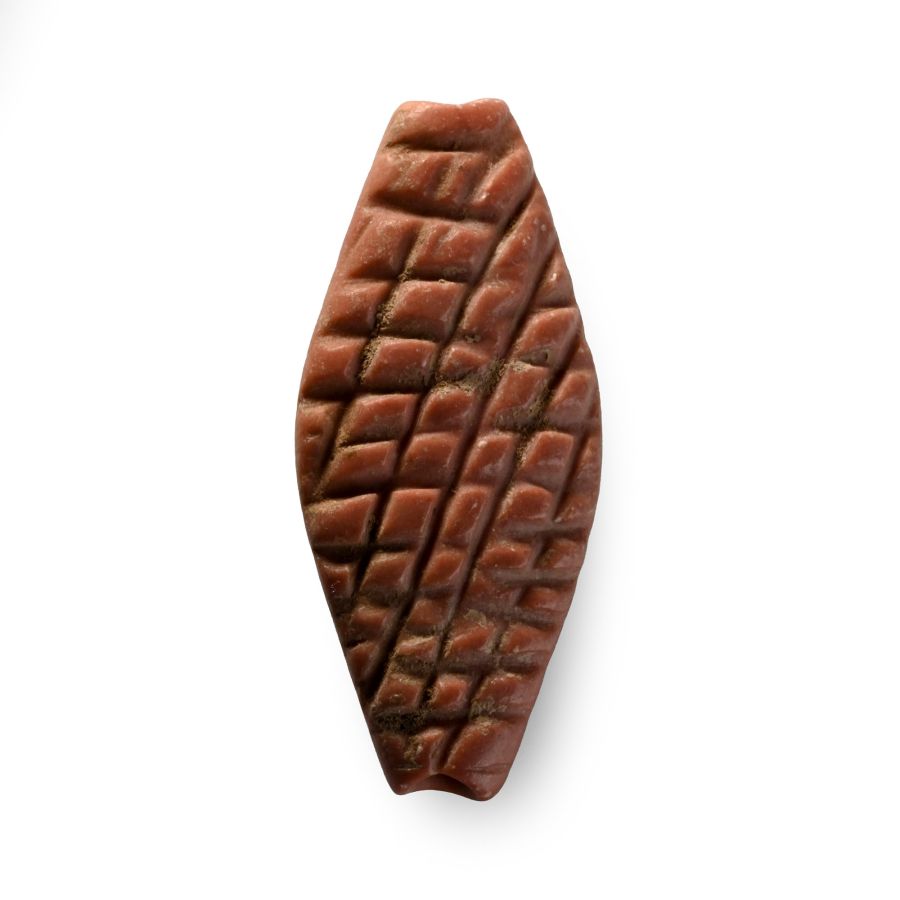
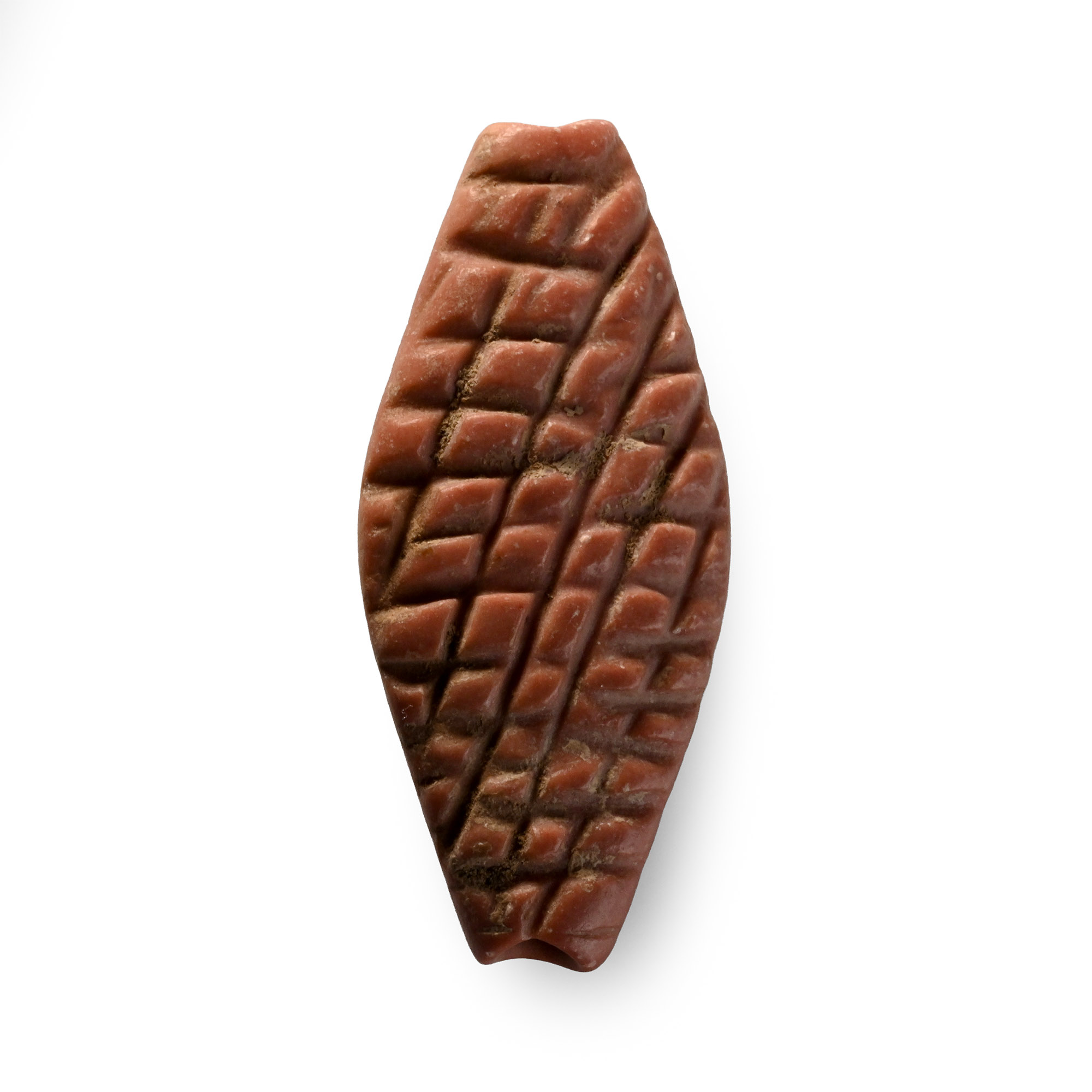
Mesopotamian Pink Stone Stamp Seal
CIRCA 4TH MILLENNIUM B.C.
2 in. (13.8 grams, 52 mm).
Modelled as an elongated rhomb pierced lengthways; accompanied by a copy of an old scholarly note, typed and signed by W.G. Lambert, late Professor of Assyriology, University of Birmingham, 1970-1993, which states: 'Stamp seal of pink stone, 51 x 23 x 10 mm,, [sic] an elongated rhomb, pierced lengthways. Design: criss-cross. Mesopotamia or Syria, c. 3500 B.C. Condition very good.' [No Reserve]
ProvenancePreviously in an old British collection formed in the 1960s.
Ex 1990s London collections, having been studied and catalogued by professor Lambert in the early 1990s.
Formerly with a Mayfair art dealer S.A.
Property of a London gallery.
Accompanied by an original scholarly note, typed and signed by Professor Wilfrid George Lambert.
TimeLine Auctions follows a vetting process to ensure the authenticity and legality of all items, reinforcing our commitment to integrity and responsible trading. Each antiquity, antique, and coin lot undergoes thorough examination by a vetting committee of at least ten external specialists, professional trade association members, scientists, and archaeologists: Our Vetting Process
AUCTIONS:
TimeLine is a leading auction house specialising in antiquities, ancient art, collectables, natural history, coins, medals, and books. Our auctions offer museums, collectors, historians, and enthusiasts the opportunity to acquire unique and historically significant pieces.
-
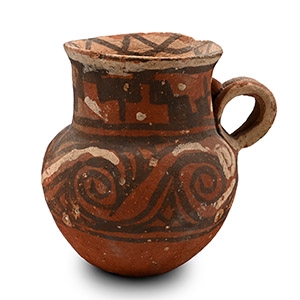
Western Asiatic Red-Painted Terracotta Vessel
8th-9th century A.D.Estimate: £150 - 200 (+bp*)
Opening Bid: £75
With broad shoulder and a wide neck, flared rim; ribbed loop handle with applied pellet above; polychrome painted scroll and mesh designs. 320 grams, 11.5 cm wide
UK collection, 1990s. Acquired on the UK art market, before 2000. Private collection, Mr M.V., a London-based businessman. -
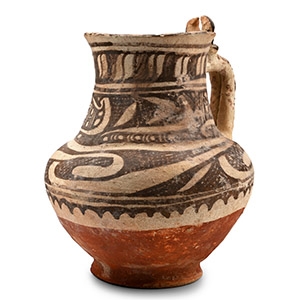
Large Western Asiatic Terracotta Painted Jug
8th-9th century A.D.Estimate: £400 - 600 (+bp*)
Opening Bid: £200
With squat profile, broad shoulder, wide neck and flared rim; strap handle with thumb-pad to the rim; bands of reserved tendrils on a hatched field. 818 grams, 18.5 cm
UK collection, 1990s. Acquired on the UK art market, before 2000. Private collection, Mr M.V., a London-based businessman. -
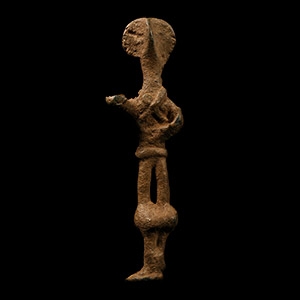
Canaanite Bronze Warrior God with Raised Arm
Early 2nd millennium B.C.Estimate: £1,200 - 1,700 (+bp*)
Opening Bid: £625
Standing on a columnar base and wearing a waist-belt and crossed baldrics. 97 grams, 12.1 cm
Acquired in Paris and London, 1970s. From a collection of Canaanite gods in bronze, from the collection of a London, UK, gentleman. This lot has been cleared against the Art Loss Register database, and is accompanied by an illustrated lot declaration signed by the Head of the Antiquities Department, Dr Raffaele D'Amato.
