
Loading, please wait...
_900x900.jpg "Mesopotamian Pictographic Clay Tablet")
_200x200.jpg "Mesopotamian Pictographic Clay Tablet")
.jpg "Mesopotamian Pictographic Clay Tablet")
LOT 0205
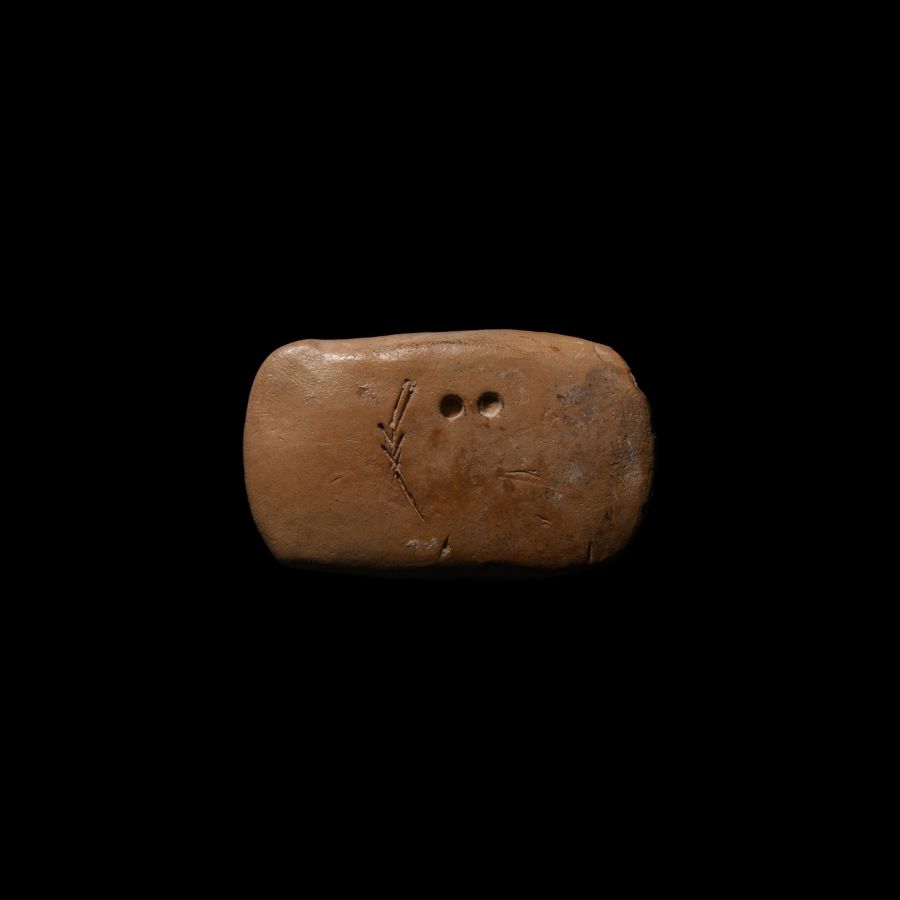
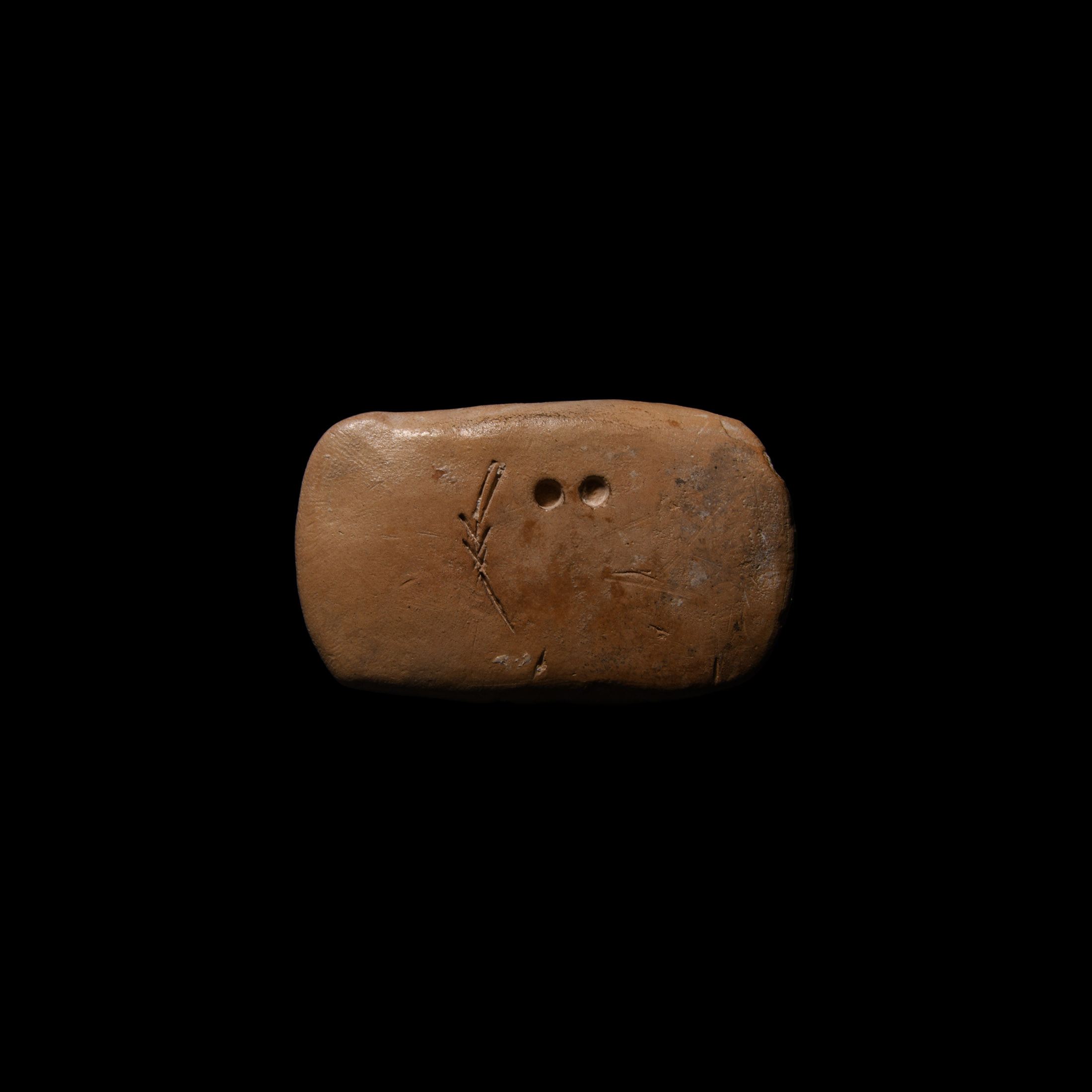
Mesopotamian Pictographic Clay Tablet
CIRCA 3000 B.C.
2 3/4 in. (42 grams, 69 mm).
Inscribed on one face with a seven-panelled pictographic grid, with a branch above; the reverse inscribed with a branch and a motif containing two drilled circles.
ProvenanceSpecialised collection of cuneiform texts, the property of a London gentleman and housed in London before 1992.
Thence by descent to family members.
Examined by Professor Wilfrid George Lambert FBA (1926-2011), historian, archaeologist, and specialist in Assyriology and Near Eastern archaeology, in the late 1980s and early 1990s.
The collection is exceptional for the variety of types, including some very rare and well preserved examples.
This lot has been checked against the Interpol Database of stolen works of art and is accompanied by search certificate no.11335-190939.
Cf. similar tablet in the collection of the British Museum, London, under accession number 114789.
CONDITIONTimeLine Auctions follows a vetting process to ensure the authenticity and legality of all items, reinforcing our commitment to integrity and responsible trading. Each antiquity, antique, and coin lot undergoes thorough examination by a vetting committee of at least ten external specialists, professional trade association members, scientists, and archaeologists: Our Vetting Process
AUCTIONS:
TimeLine is a leading auction house specialising in antiquities, ancient art, collectables, natural history, coins, medals, and books. Our auctions offer museums, collectors, historians, and enthusiasts the opportunity to acquire unique and historically significant pieces.
-
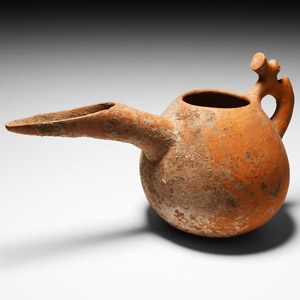
Amlash Terracotta Vessel
1st millennium B.C.Estimate: £300 - 400 (+bp*)
Opening Bid: £150
Of zoomorphic form, with a globular body, u-section spout and handle with figurative animal design. 545 grams, 26.5 cm wide
Fine condition.
Acquired 1970s-1990s. Ex Rabi Gallery, Mayfair, London, UK. From a specialist collection of pottery.
Likely representing a wading bird. -
.jpg)
Babylonian Clay Brick Fragment with Cuneiform
Circa 2nd millennium B.C.Sold for (Inc. bp): £234
Comprising one 'dressed' face bearing a recessed panel of text. 186 grams, 12.5 cm
Acquired 1970-1990. Ex collection of a deceased gentleman by descent to his family. -
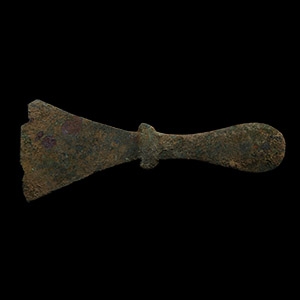
Western Asiatic Bronze Flat Axe
Circa 3rd-2nd millennium B.C.Sold for (Inc. bp): £59
Comprising a wedge-shaped blade and piriform handle. 156 grams, 17.7 cm
UK private collection formed before 2000. Ex North London, UK, gallery.
These blades were fitted directly to the handle or via a sheath. Flat axes, whose axis is parallel to that of the handle, often had a rounded edge like in our specimen, or a flared and bevelled edge, while flat adzes have an axis perpendicular to that of the handle and a bevel edge on one side only. Their shape comes directly from the lithic axes of the Neolithic and Chalcolithic periods.
