
Loading, please wait...
LOT 1158
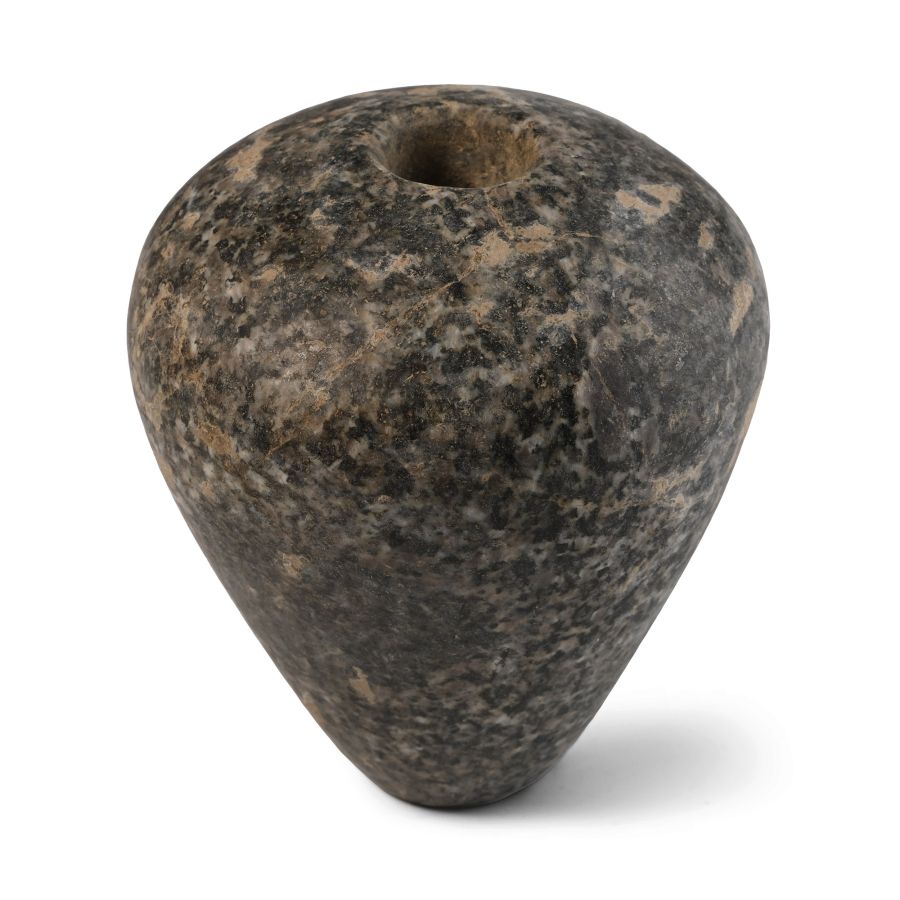
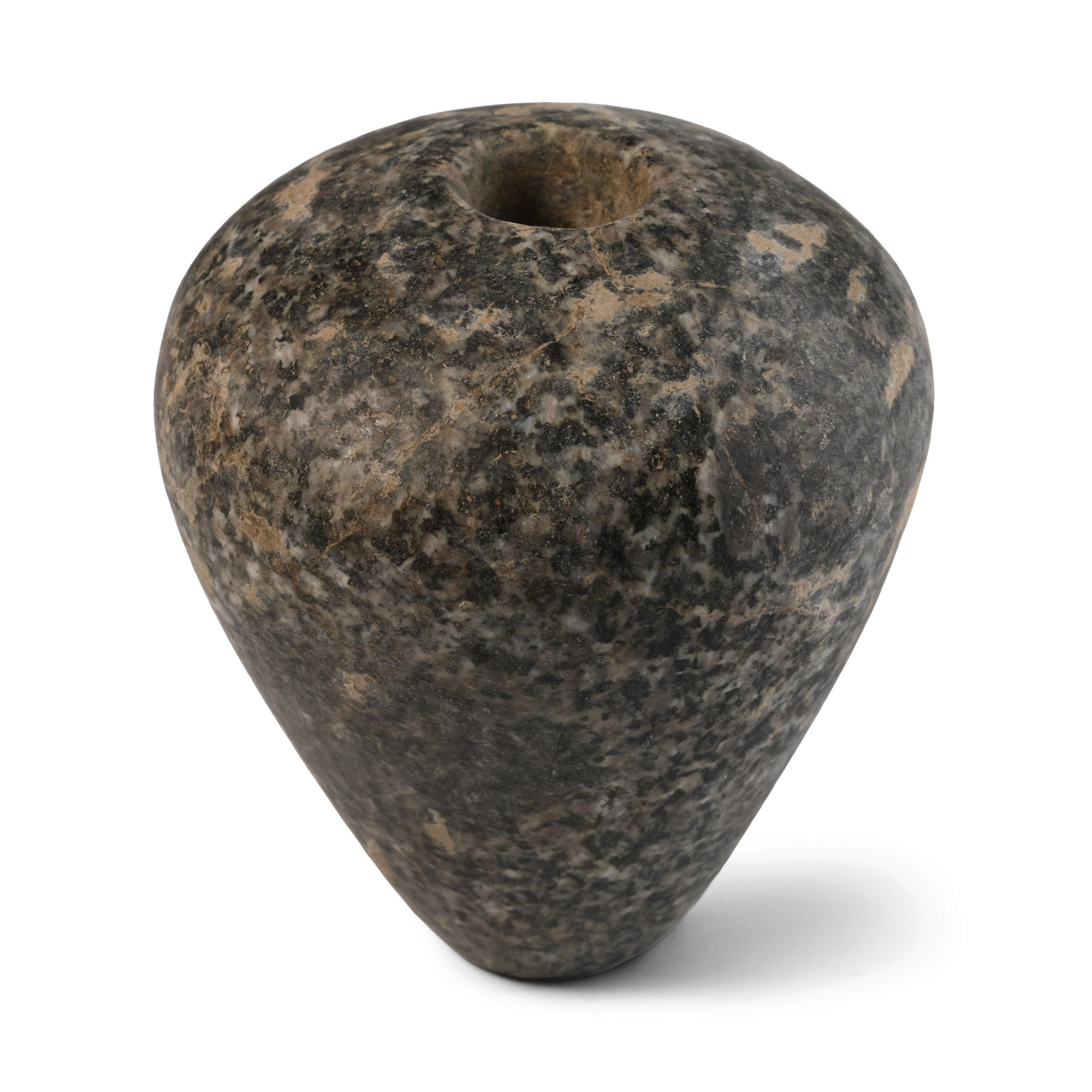
Mesopotamian Mottled Grey Stone Macehead
3RD-2ND MILLENNIUM B.C.
3 1/4 in. (580 grams, 82 mm).
Piriform with vertical socket expanding towards the narrower end.
ProvenanceEx 1990s collection and with a central London gallery.
LiteratureCf. Gorelik, M., Weapons of Ancient East, IV millennium BC-IV century BC, Saint Petersburg, 2003, in Russian, see pl.XXXI, no.30, from Armenia, for similar.
CONDITIONTimeLine Auctions follows a vetting process to ensure the authenticity and legality of all items, reinforcing our commitment to integrity and responsible trading. Each antiquity, antique, and coin lot undergoes thorough examination by a vetting committee of at least ten external specialists, professional trade association members, scientists, and archaeologists: Our Vetting Process
AUCTIONS:
TimeLine is a leading auction house specialising in antiquities, ancient art, collectables, natural history, coins, medals, and books. Our auctions offer museums, collectors, historians, and enthusiasts the opportunity to acquire unique and historically significant pieces.
-
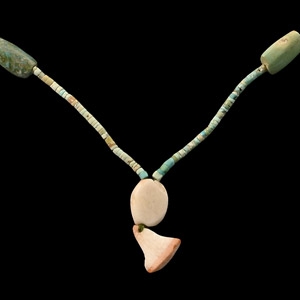
Bactrian Turquoise Bead Necklace
1st millennium B.C.Estimate: £150 - 200 (+bp*)
Opening Bid: £75
Restrung designer group of turquoise-coloured seed beads with fan-shaped, lentoid and other beads. 4.57 grams, 56.5 cm
Ex Jack Ogden and Faustus Gallery, Mayfair, London, UK, 1980s-1990s, and latterly a London gentleman's collection. -
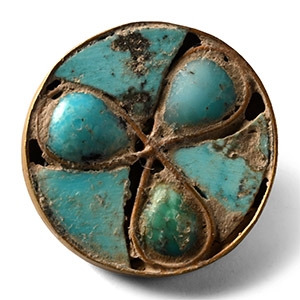
Western Asiatic Turquoise Inlaid Gold Stud
1st millennium B.C.Sold for (Inc. bp): £169
Discoid stud with low sidewall, two loops to underside, three cabochons to the upper face with interstitial cloisons. 1.38 grams, 12 mm
From the collection of a late Japanese gentleman, 1970s onwards. -
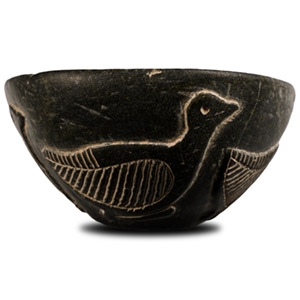
Western Asiatic Stone Bowl with Birds
3rd millennium B.C.Estimate: £3,000 - 4,000 (‡+bp*)
Opening Bid: £1,600
Hemispherical in profile with narrow rim, frieze of perching birds in relief, each with a pellet eye, stub beak, large comma-shaped hatched wing and leg held horizontally beneath the body; rim chipped. 273 grams, 11.2 cm
with Holy Lands House, Israel, 1960s. Private collection, 2005. This lot has been checked against the Interpol Database of stolen works of art and is accompanied by a search certificate no.12595-232195.
The chlorite stone vessels of early Bactria were kidney-shaped vessels with simple geometric decoration or, like our specimen, semi-circular. Small cylindrical vases were used as cosmetic containers, together with chlorite cosmetic flasks.
