
Loading, please wait...
LOT 1406
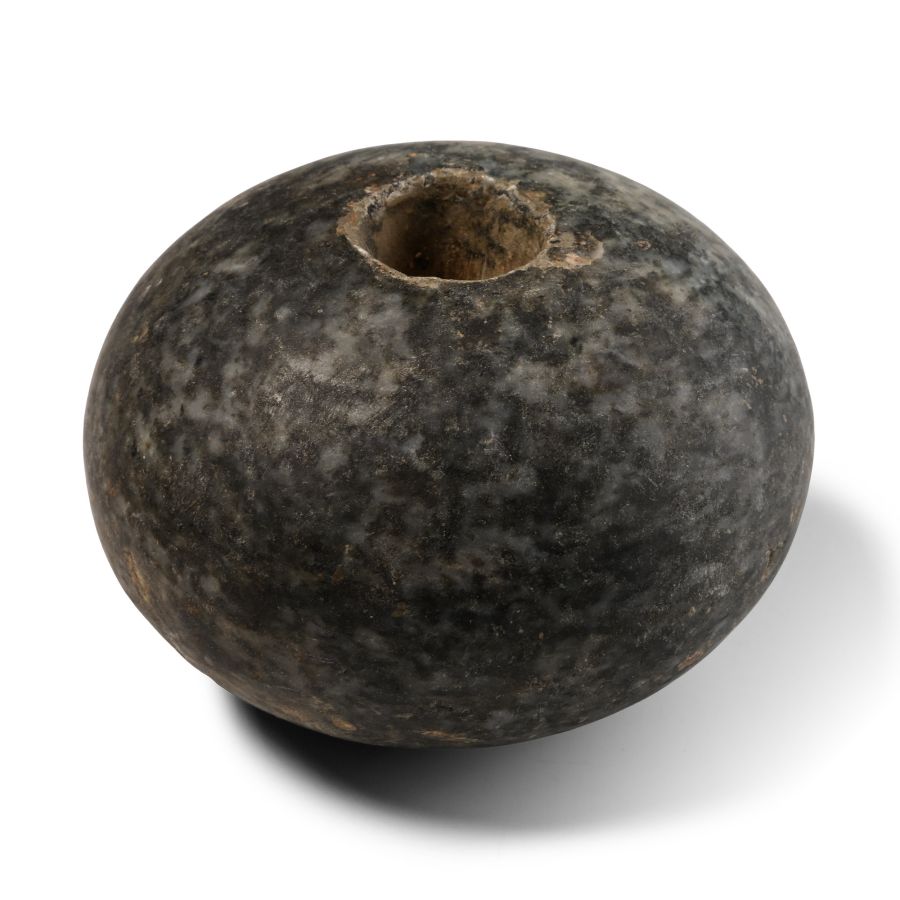
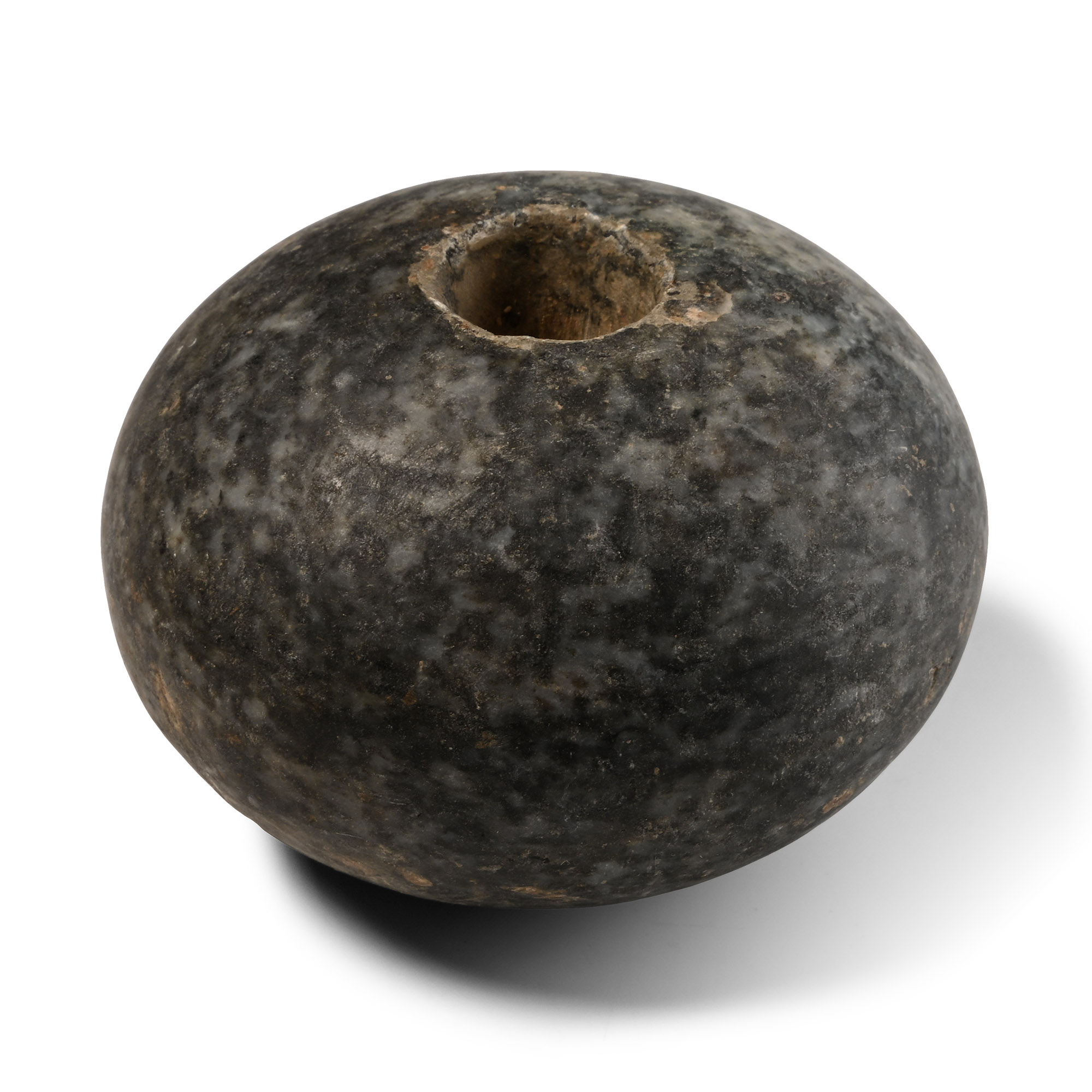
Mesopotamian Mottled Grey Stone Macehead
3RD-2ND MILLENNIUM B.C.
2 7/8 in. (434 grams, 73 mm).
With squat oblate body and central mounting hole.
ProvenanceEx 1990s collection and with a central London gallery.
CONDITIONTimeLine Auctions follows a vetting process to ensure the authenticity and legality of all items, reinforcing our commitment to integrity and responsible trading. Each antiquity, antique, and coin lot undergoes thorough examination by a vetting committee of at least ten external specialists, professional trade association members, scientists, and archaeologists: Our Vetting Process
AUCTIONS:
TimeLine is a leading auction house specialising in antiquities, ancient art, collectables, natural history, coins, medals, and books. Our auctions offer museums, collectors, historians, and enthusiasts the opportunity to acquire unique and historically significant pieces.
-
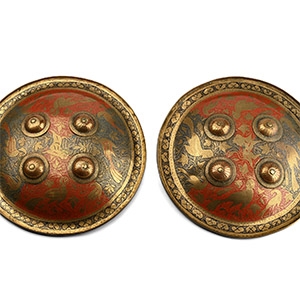
Indo-Persian Enamelled Brass Shield Pair
20th century A.D.Sold for (Inc. bp): £156
Each with flange rim and four applied bosses to the face for attachment of the rear straps, design of reserved foliage, birds and harpies on an enamelled field. 996 grams total, 27.3 cm
Property of a Berkshire, UK, gentleman collector. -
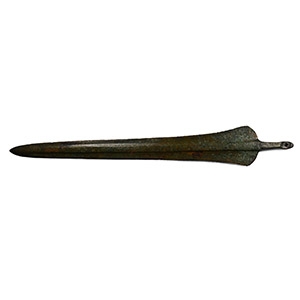
Luristan Bronze Spearhead Blade
14th-10th century B.C.Sold for (Inc. bp): £211
With rounded shoulders and square-sectioned mid-rib running to the blade tip; short tang with fastening hole. 45 grams, 46.5 cm
Acquired 1980-2015. Ex Abelita family collection. This lot is accompanied by an illustrated lot declaration signed by the Head of the Antiquities Department, Dr Raffaele D’Amato. This lot is accompanied by an illustrated lot declaration signed by the Head of the Antiquities Department, Dr Raffaele D'Amato.
The spearhead belongs to the type VI spearhead of the Khorasani classification. It is characterised by a long blade and short tang, slightly rounded shoulders and pronounced midrib. Similar weapons were excavated by Prof. Negahban in the royal cemetery of Marlik. -
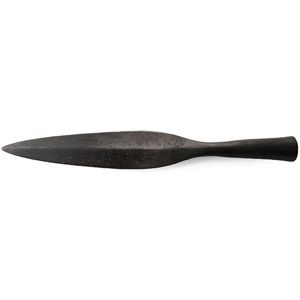
Viking Age Iron Socketted Spearhead
Circa 9th-11th century A.D.Sold for (Inc. bp): £91
Leaf-shaped blade with raised midrib extending to round-section tapering socket with fastening hole; professionally cleaned, conserved, and restored. 204 grams, 29 cm
From the family collection of a South East London collector; formerly acquired in the late 1950s.
